
The Lady with the Lamp
Born May 12, 1820, Florence Nightingale founded modern nursing through her Crimean War service, her pioneering use of statistics, and the world's first secular nursing school.
Florence Nightingale was born on May 12, 1820, in the city she was named for — Florence, Italy. Her wealthy English parents were traveling the continent in grand style, and her older sister, Frances Parthenope, had been named for Naples. It was a fashionable way to begin a life that would break every fashion of its time.
In Victorian England, nursing was not a respectable profession. Hospitals were filthy, nurses were untrained, and a lady of Nightingale's station was expected to marry well and run a fine household. Nightingale refused the script. After visiting the pioneering deaconess-run hospital at Kaiserswerth, Germany, in 1850 and 1851, she trained herself in the unglamorous work of caring for the sick — and in 1853 took charge of a small London establishment for gentlewomen during illness.
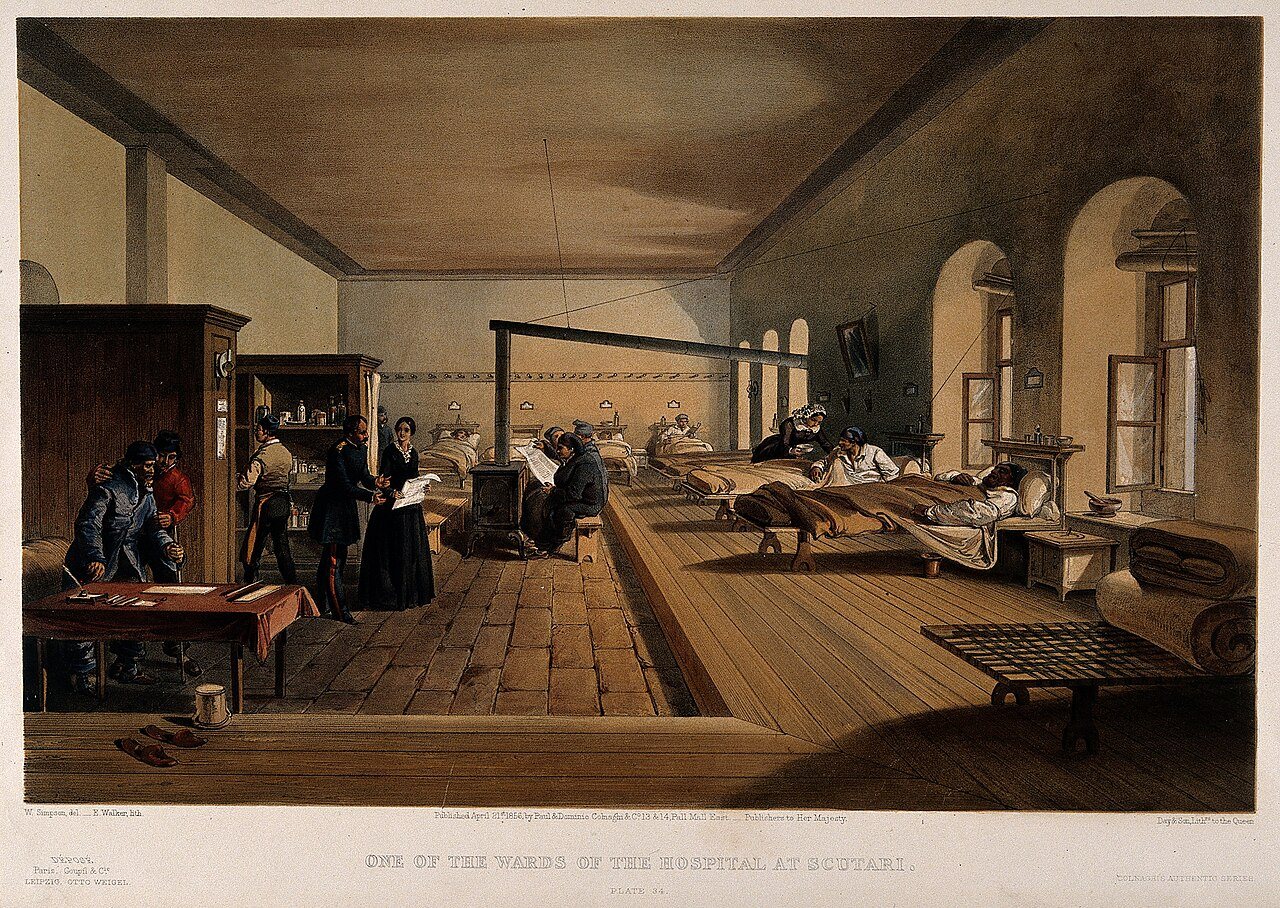
Then came the Crimean War, and the reports that reached London: British soldiers dying in droves, not of battle wounds, but of disease in the military hospitals at Scutari, near Constantinople. In October 1854, Sidney Herbert, the Secretary at War, invited her to take nurses to the front. On November 4, 1854, Nightingale arrived at Scutari with 38 nurses — and found a nightmare of overcrowding, filth, and rotten food. She went to war against the conditions themselves: scrubbing wards, improving ventilation, organizing proper food and clean linen, keeping meticulous records of every death.
Each night she walked the wards with a lamp, checking on the wounded — and the image followed her home. The press called her "The Lady with the Lamp," and she became a national heroine before the war even ended.
But her real revolution came after. Nightingale was a statistician as much as a nurse. She invented the polar area diagram — the "Nightingale rose" — to make the Army's appalling death data impossible to ignore, becoming one of the first people to use graphics to argue for reform. In 1860 she founded the Nightingale School of Nursing at St Thomas' Hospital in London, the first secular nursing school in the world, which made nursing a trained, respected profession for women. Her 1859 book, Notes on Nursing, became a bestseller.
In 1907 she became the first woman to receive the Order of Merit, one of Britain's highest honors. She died in 1910 at age 90, and every year since, May 12 — her birthday — has been celebrated as International Nurses Day.
Nightingale proved that compassion without data is sentiment, and data without compassion is arithmetic. She brought both to the hospital ward, and medicine has never been the same.
Photo: E. Walker after W. Simpson, 1856, CC BY 4.0, Wellcome Collection (via Wikimedia Commons).