The 'Folly' That Sailed Up the Hudson
On August 17, 1807, Robert Fulton's steamboat defied a jeering crowd to sail from New York to Albany, launching the steam age on America's rivers.
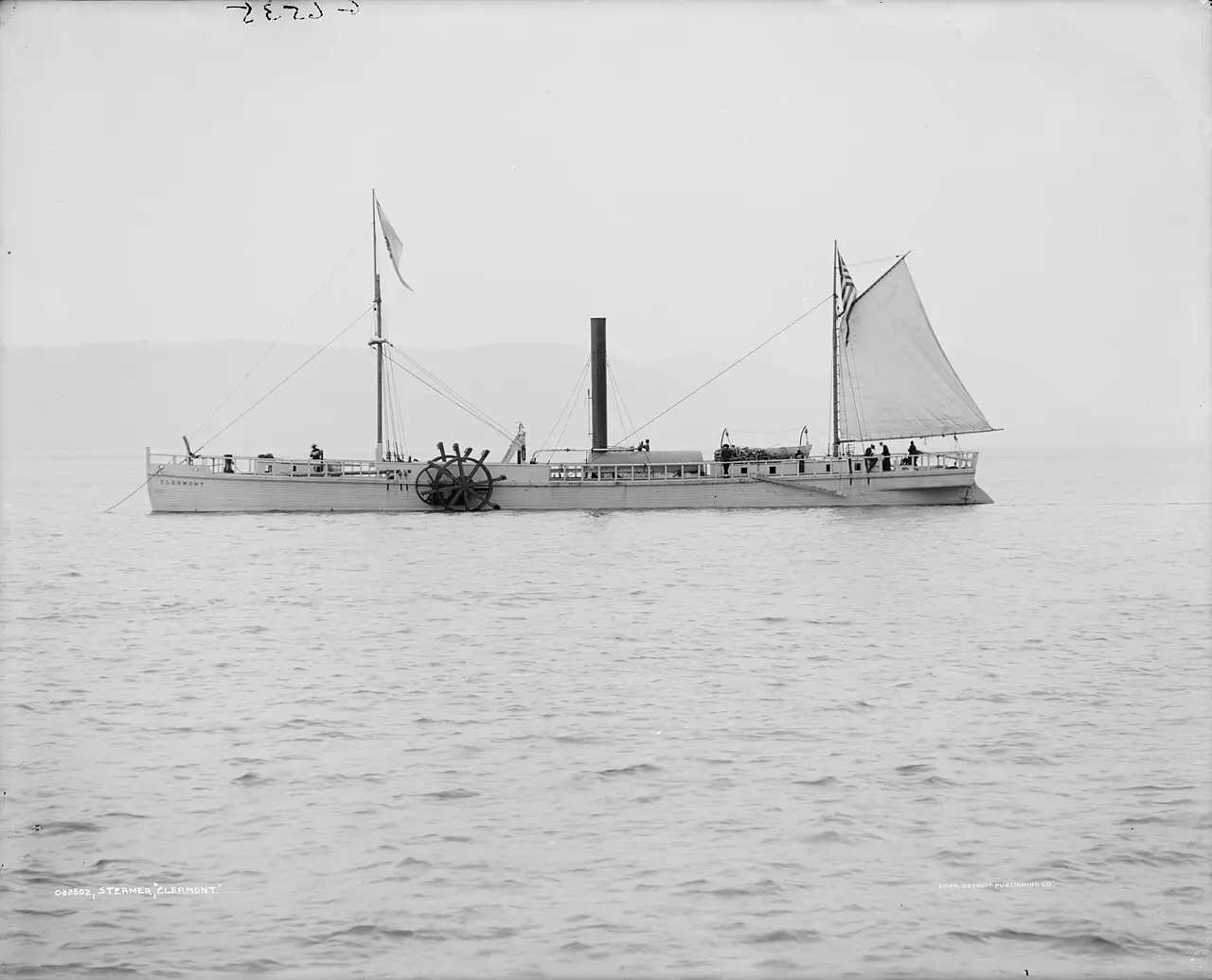
They came to watch it fail.
On the afternoon of Monday, August 17, 1807, a crowd packed the Manhattan waterfront to see Robert Fulton's new steamboat attempt what every expert called impossible: sail 150 miles up the Hudson River to Albany, against wind and tide, powered by nothing but fire and steam. They had a nickname for the ungainly vessel waiting at the wharf: "Fulton's Folly." As she pulled away, Fulton heard the sarcastic remarks ripple through the onlookers.
The skeptics had earned their doubt. For decades, inventors had tried to make steamboats practical and failed. In 1784, James Rumsey had run a steamboat up the Potomac; in 1788, John Fitch had steamed twenty miles from Philadelphia to Burlington. Both were marvels — and both were commercial dead ends. Steamboats were noisy, dirty novelties that moved no faster than a good wagon and frightened everyone who rode them. When Fulton returned to New York in 1806 with financing from Robert Livingston — the former Chancellor of New York, who held a twenty-year state monopoly on steam navigation if someone could build a boat that made four miles an hour — the mockery was already waiting.
Fulton's boat, officially the North River Steamboat, was roughly 142 feet long, with a single 19-horsepower engine driving two fifteen-foot paddlewheels. She left New York on August 17 under Captain Andrew Brink with a party of invited guests. Almost immediately, she stalled — and the jeers from the wharf must have swelled. But Fulton calmly went below, found the trouble, and within half an hour the paddlewheels were turning again. This time, she did not stop.
Averaging nearly five miles an hour, the steamer ground her way upriver. Fulton later wrote to his friend Joel Barlow that he had overtaken "many sloops and schooners, beating to the windward, and parted with them as if they had been at anchor," adding: "The power of propelling boats by steam is now fully proved." After thirty-two hours of steaming — plus a twenty-hour stop at Livingston's riverside estate, Clermont Manor — the boat reached Albany. The return trip took just thirty hours. Hudson River sloops needed a week for the same journey.
Within a month, the boat was running twice-weekly scheduled service between the two cities, sometimes carrying a hundred passengers at a time, at $7 a ticket. Curiously, the name everyone knows today — the Clermont — was never used in her own lifetime; she was simply "the Steamboat." Only after Fulton's death in 1815 did the name of Livingston's estate attach itself to the vessel.
It hardly matters what she was called. Fulton's Folly proved that steam could be a scheduled, profitable business, not a parlor trick — and within a generation, steamboats ruled America's rivers. The era of wind and tide on the Hudson ended the day the crowd came to laugh and stayed to watch history.
Photo: Detroit Publishing Co., public domain (via Wikimedia Commons).