
Seventeen Words That Made a Nation
On August 17, 1945, Sukarno and Hatta proclaimed Indonesia's independence in Jakarta, birthing the world's fourth-largest nation.
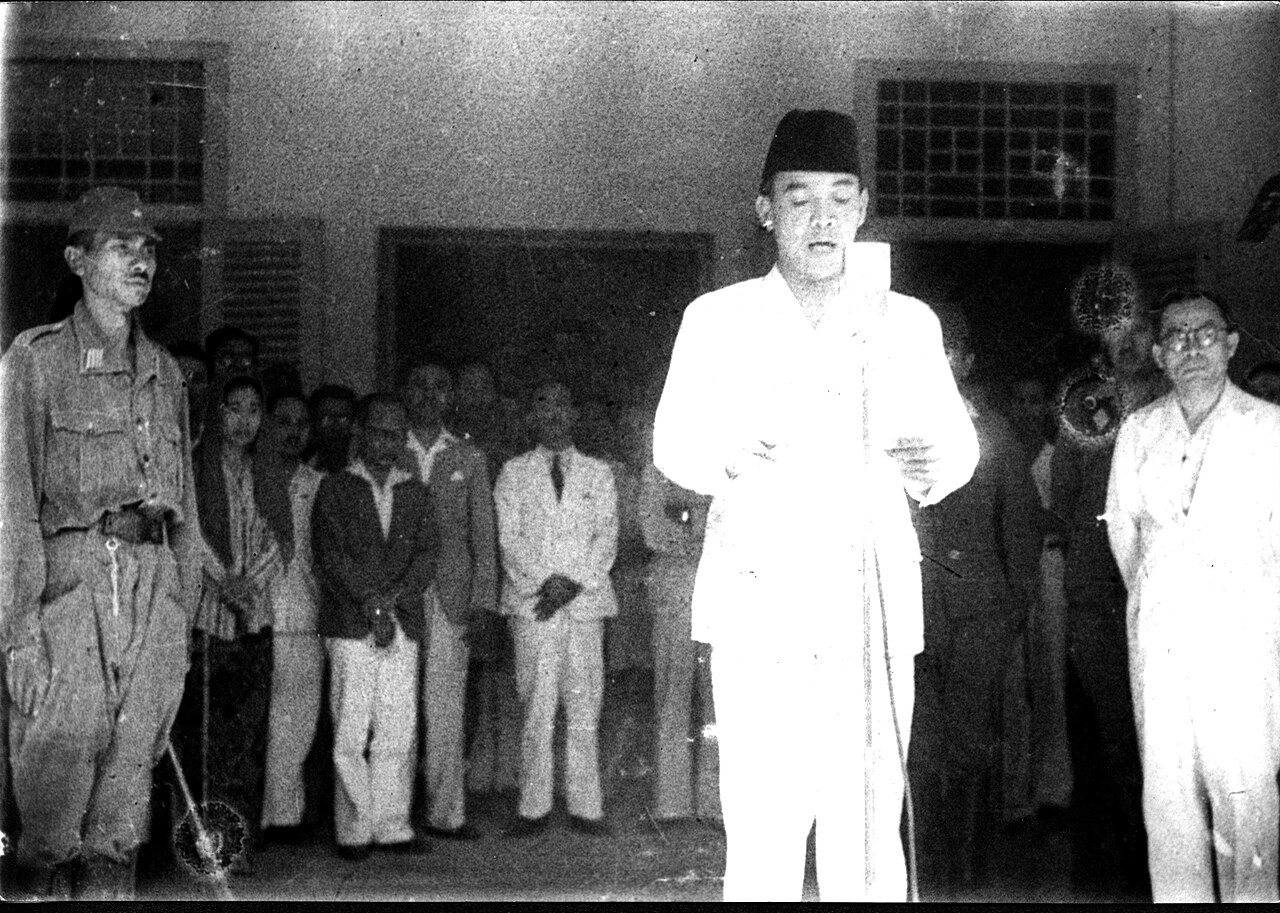
It took less than a minute to read, but it ended more than three centuries of colonial rule. On the morning of August 17, 1945, two men stepped onto the porch of a Jakarta house and spoke a new country into existence.
Days earlier, Japan — which had seized the Dutch East Indies in 1942 — had surrendered to the Allies. Radical youth groups urged independence leaders Sukarno and Mohammad Hatta not to wait: they had spent years organizing under occupation, and the moment was ripe. On the night of August 16, Sukarno, Hatta, and Achmad Soebardjo drafted a short declaration at the Jakarta home of Rear-Admiral Maeda, a sympathetic Japanese officer; Sayuti Melik typed it out. The next morning, at 10 a.m., Sukarno read it aloud outside his own house at 56 Pegangsaan Timur, with Hatta beside him.
The proclamation almost did not happen that week. The elder leaders were cautious: Sukarno and Hatta had just returned from Dalat, Vietnam, where Japan's Marshal Terauchi had promised Indonesia independence, and they wanted certainty about the surrender before acting. The younger generation — the pemuda — wanted no delay and no Japanese fingerprints on the declaration; Sutan Sjahrir had urged Hatta to declare independence at once, warning that the Allies might dismiss a Japanese-sponsored Indonesia as a sham. In the small hours of August 16, around 4 a.m., the youths seized Sukarno and Hatta and spirited them to Rengasdengklok, a town in Karawang, where they were kept at the house of Djiaw Kie Siong to force a decision. It took negotiations through the day — Achmad Soebardjo traveled out to Rengasdengklok and pledged the proclamation would be made in Jakarta — before the leaders returned to the capital that evening.
The proclamation was simple and defiant: "We, the people of Indonesia, hereby declare the independence of Indonesia." It was signed, in the older Dutch spelling, "Soekarno—Hatta." Only a few hundred people heard it live, but word raced across the archipelago.
The Dutch did not accept it. The following day the Preparatory Committee for Indonesian Independence elected Sukarno president and Hatta vice-president, and the flag — red over white — was raised for the first time. What followed was more than four years of diplomatic struggle and armed revolution before the Netherlands finally transferred sovereignty on December 27, 1949.
The cost of that struggle was written in Surabaya. In the autumn of 1945, British troops arriving to disarm the Japanese clashed with Indonesian nationalists, and a firebrand broadcaster named Bung Tomo used radio to rally the city with cries of freedom or death. After the British commander, Brigadier Mallaby, was killed near the Red Bridge on October 30, the British struck back on November 10 with naval and air bombardment. The Indonesians lost the city within days but fought on for three weeks in what became the bloodiest single engagement of the revolution — Indonesian dead estimated between 6,300 and 15,000. Surabaya's resistance became the revolution's rallying cry, and Indonesia remembers November 10 as Heroes' Day.
August 17 became Indonesia's national day by government decree in 1946, and it is still celebrated across the islands every year. The proclamation matters far beyond one country: it marked one of the first blows of the great postwar wave of decolonization, when colonies across Asia and Africa would claim the same right Sukarno and Hatta had declared from a Jakarta porch.
Photo: Frans Mendur, public domain (via Wikimedia Commons).