The Few Against the Many: Agincourt, October 25, 1415
On October 25, 1415, a starving English army faced a French force three times its size — and won one of history's most famous battles.
On the morning of October 25, 1415 — the feast day of St. Crispin — two armies faced each other across a rain-soaked field near the village of Agincourt in northern France. On one side stood about 6,000 Englishmen: sick, hungry, and exhausted after weeks of marching, most of them archers in cloth caps rather than knights in armor. On the other, a French army perhaps three times their number, glittering with noblemen in plate steel. By sunset, the field belonged to the English, in one of the most astonishing upsets in military history.
The English were there because their king, Henry V, had revived England's old claim to the French throne and invaded that summer. In August he landed in Normandy with some 11,000 men and laid siege to the port of Harfleur. The town held out for five weeks — and disease did what the French army could not. By the time Harfleur surrendered, Henry had lost roughly half his force. He gave up the campaign and marched his shrunken army toward the English-held port of Calais, hoping to sail home. The French cut him off at Agincourt, and Henry had no choice but to fight.
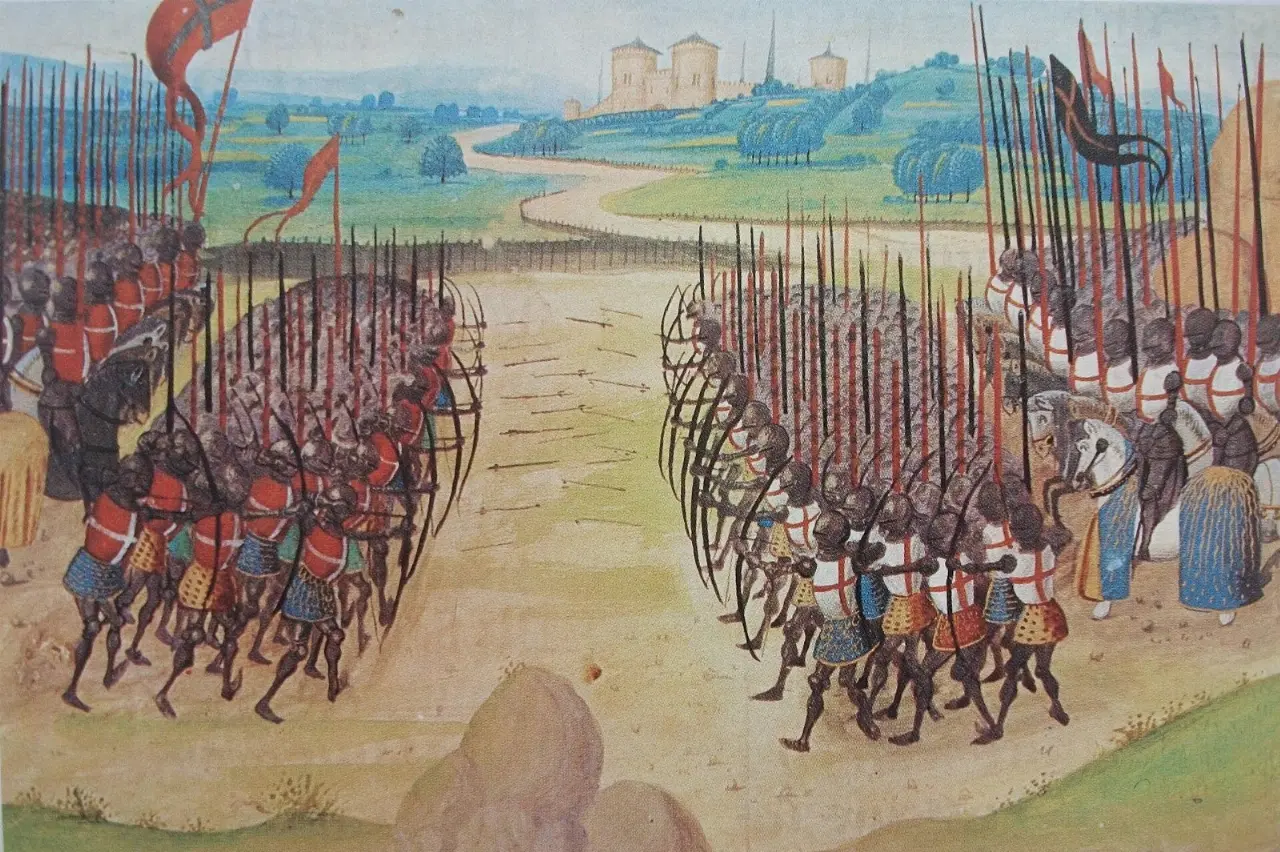
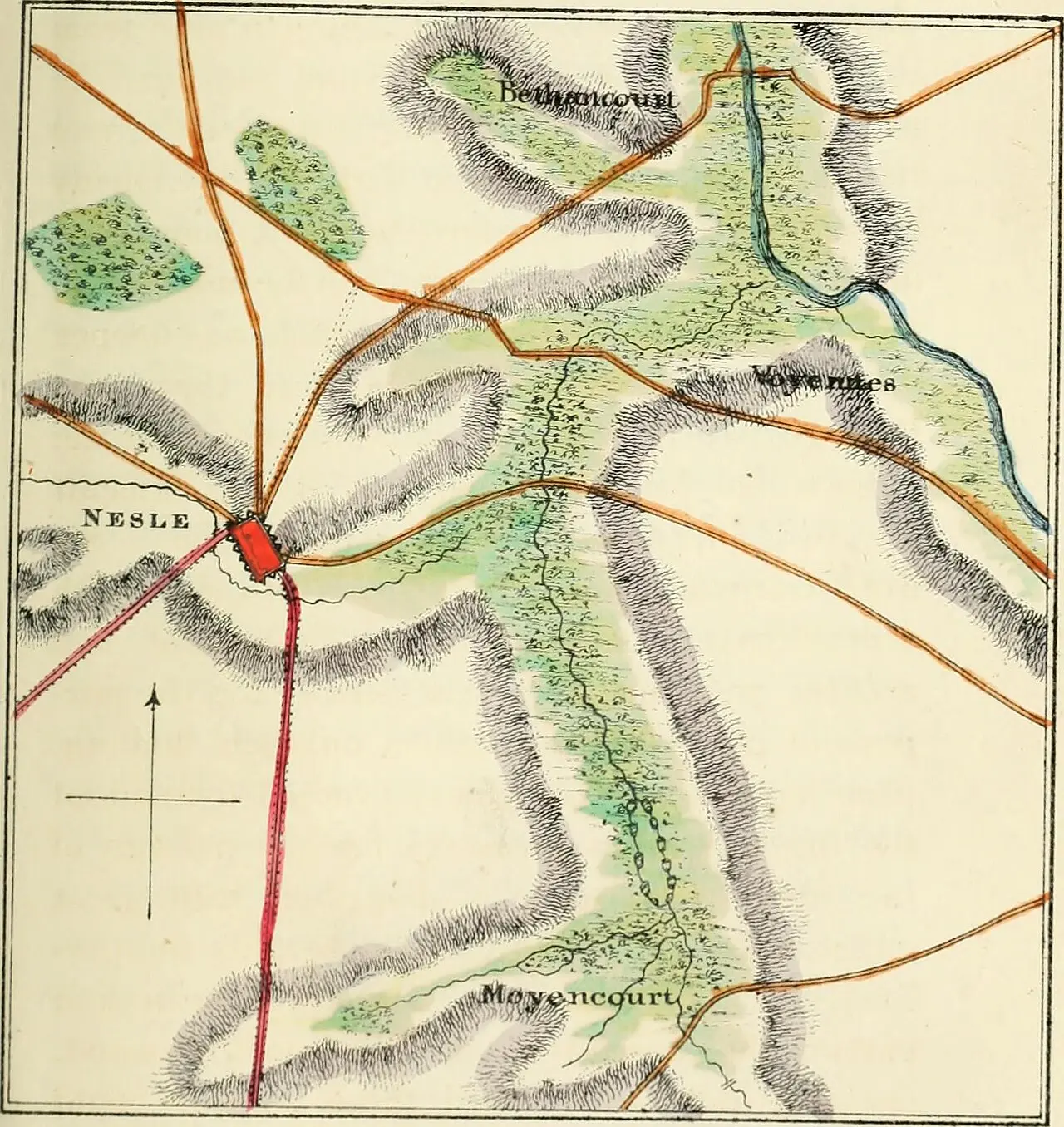
He drew his men up in a narrow line on about a thousand yards of open ground between two woods — ground churned to thick mud by recent rain. His longbowmen, who made up nearly four-fifths of his army, took position on the flanks behind a bristling row of sharpened wooden stakes. Across the field, the French — commanded by Constable Charles d'Albret, since King Charles VI was too ill to lead — formed in three great divisions, their dismounted knights eager to close with the enemy.
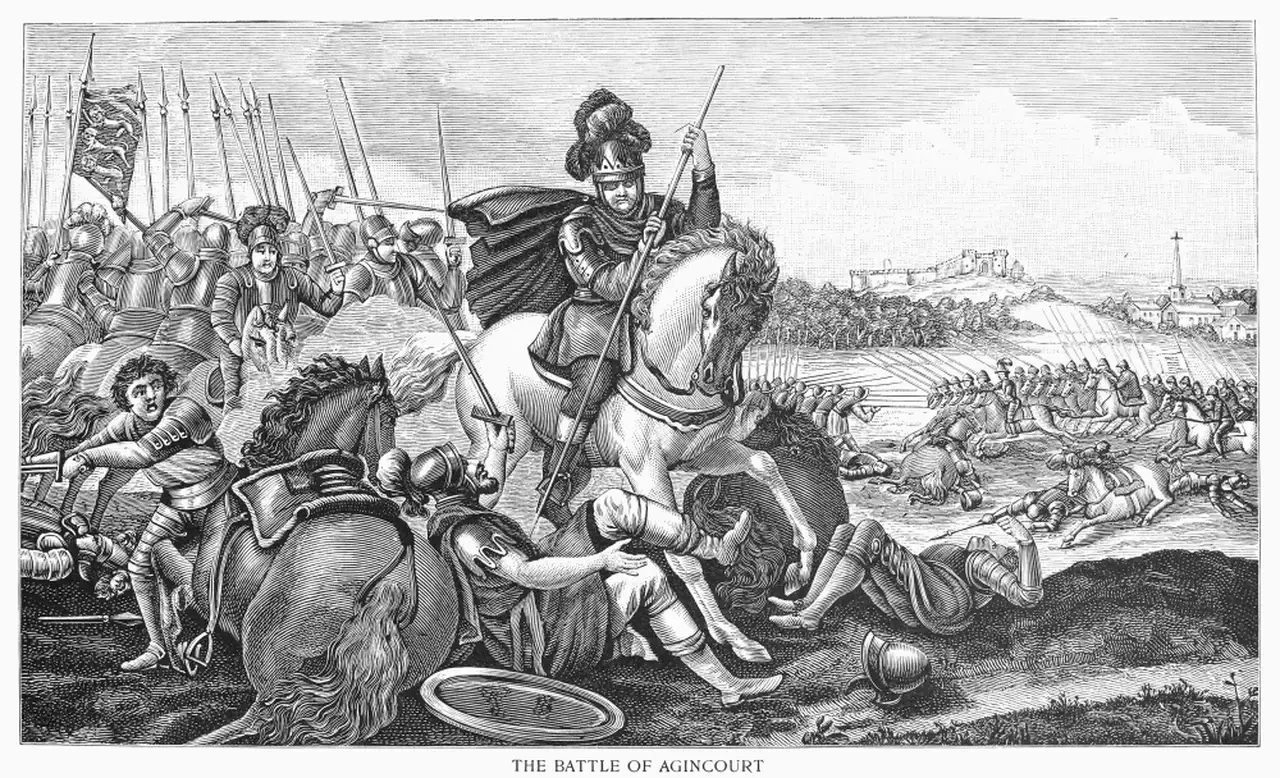
Around 11 a.m. the battle began. The French knights, weighed down by armor, advanced slowly through the sucking mud while English longbows — deadly at 250 yards — poured arrows into them. French cavalry charges broke against the line of stakes. As more knights crowded onto the narrow field, they could barely move, let alone swing a weapon. Then Henry ordered his lightly equipped archers forward with swords and axes, and the packed French ranks collapsed. By late afternoon it was over: nearly 6,000 Frenchmen lay dead — a shattering toll of France's nobility — against English losses of only a few hundred. Henry himself had fought in the thick of it, hand to hand.
The victory remade the war. After further campaigning, the Treaty of Troyes in 1420 recognized Henry as heir to the French throne and regent of France. He died just two years later of camp fever near Paris, never crowned in Paris himself. But Agincourt had already passed into legend — above all through Shakespeare's "Henry V," written nearly two centuries later, with its immortal St. Crispin's Day speech: "We few, we happy few, we band of brothers."
Agincourt became the archetype of the disciplined underdog: proof that training, terrain, and technology could humble the flower of chivalry. (Modern historians debate the exact odds — some now think the French advantage was closer to four-to-three than three-to-one — but no one disputes that the English were badly outnumbered, exhausted, and far from home.) For England, it joined Crécy and Poitiers as proof of a national way of war; for France, it was a catastrophe that took a generation to undo.
Image: Miniature of the Battle of Agincourt from a 15th-century chronicle of Enguerrand de Monstrelet, public domain (via Wikimedia Commons).
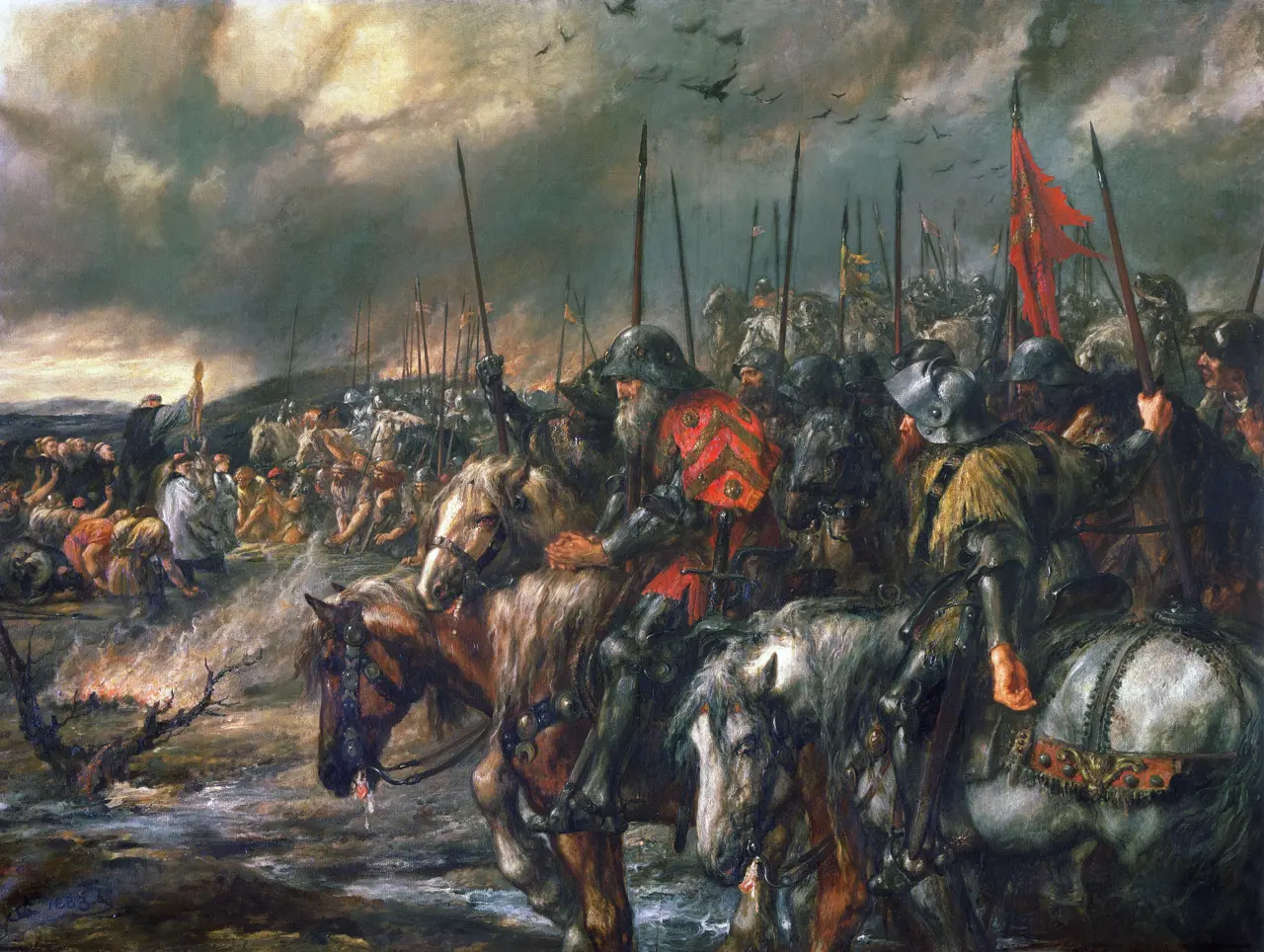
More images (via Wikimedia Commons, public domain): John Gilbert, "The Morning of the Battle of Agincourt"; an engraving of the Battle of Agincourt; a map of the battlefield from Nicolas's History of the Battle of Agincourt (Internet Archive).