A Seat Changes Hands: China Takes Its Place at the UN
On October 25, 1971, the UN General Assembly voted 76-35 to give China's seat — and its Security Council veto — to Beijing.
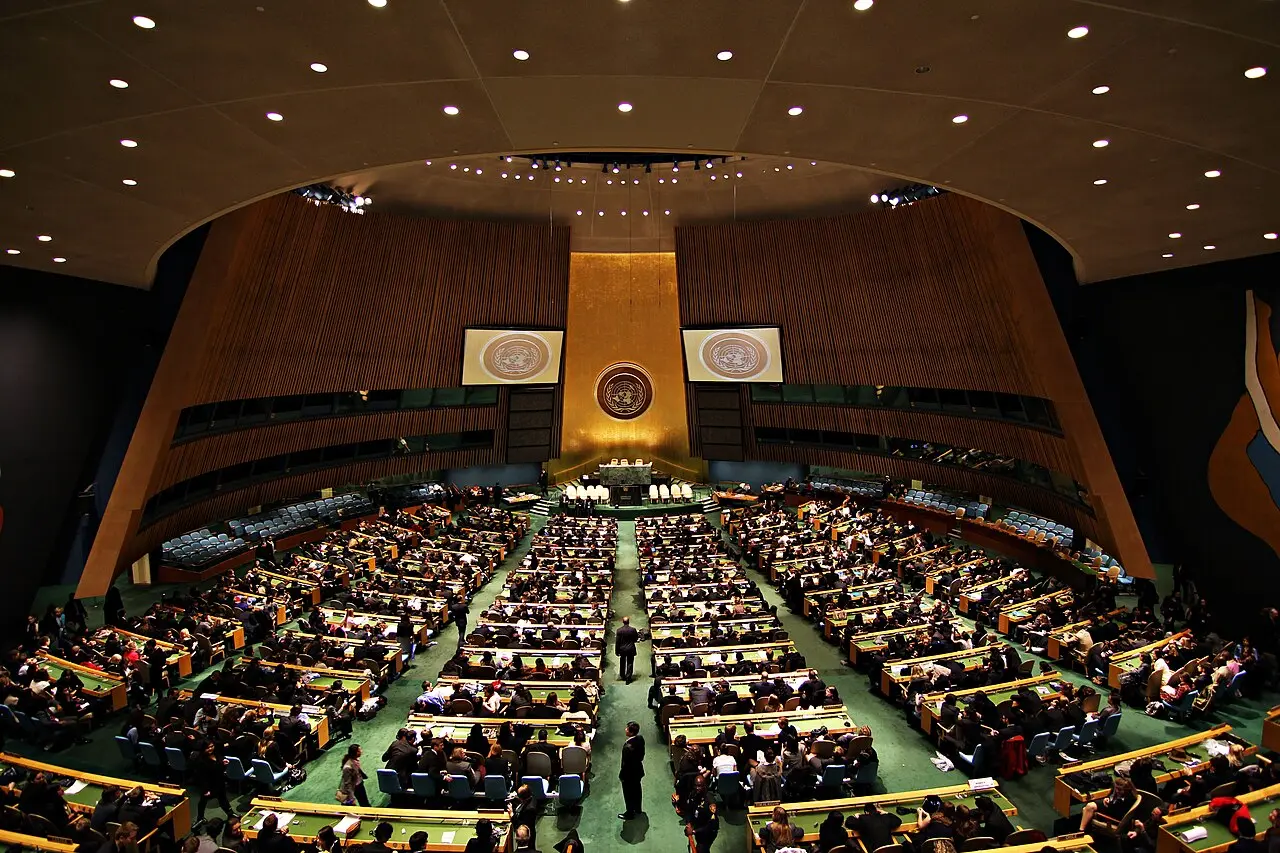
The applause went on so long that people in the hall began hugging each other. A Pakistani journalist who witnessed the moment said he had never heard anything like it in his life.
It was October 25, 1971, and the United Nations General Assembly had just done something that would reshape world politics for the next half-century: it voted to give China's seat at the UN — including its permanent seat on the Security Council — to the government in Beijing.
To understand why that vote mattered, you have to go back to 1949. When the People's Republic of China was founded that October, the defeated Nationalist government of Chiang Kai-shek fled to the island of Taiwan. But the "China" seat at the United Nations — one of the five permanent Security Council seats written into the UN Charter — stayed with Chiang's government in Taipei. For 22 years, a government ruling one island spoke for the whole of China at the UN, while the government ruling the mainland, with its hundreds of millions of people, was locked out.
The United States worked hard to keep it that way. Year after year, Washington rallied enough votes to block Beijing's admission. But the ground was shifting. Through the 1960s, dozens of newly independent nations in Asia, Africa, and Latin America joined the UN, and more and more of them recognized Beijing. Meanwhile, the Nixon administration itself had quietly begun reaching out to China — Henry Kissinger had made his secret trip to Beijing that July. The American dam was already leaking.
At the 26th General Assembly, Albania and other friendly nations sponsored Resolution 2758. It did two things at once: it "restored all its rights" to the People's Republic of China, recognizing its representatives as "the only legitimate representatives of China to the United Nations" — and it expelled "the representatives of Chiang Kai-shek" from the UN and all its related organizations, forthwith.
There was a procedural fight first. Washington tried to have the question declared an "important question," which would have required a two-thirds majority to change China's representation. That motion failed. Then came the main vote: 76 in favor, 35 against, 17 abstentions. The resolution passed by an overwhelming majority. The chamber erupted — cheering, applause, delegates embracing.
The practical consequences arrived quickly. On November 15, 1971, a delegation from Beijing led by Qiao Guanhua took its seats in the General Assembly. Within weeks and months, UN agencies — the ILO, the FAO, the IAEA, and others — followed the Assembly's lead. One of the five permanent members of the Security Council, with its veto power, had changed hands.
The vote did not settle the deeper question it touched — the status of Taiwan remains one of the most sensitive issues in world politics, and Resolution 2758 is still invoked in arguments about it today. But as a piece of 20th-century history, October 25, 1971, was the day the world's biggest diplomatic club finally admitted the world's most populous country, after keeping it outside the door for more than two decades. The applause in that hall was the sound of the map being redrawn.
Image: The United Nations General Assembly hall in New York during a session, photographed by Basil D. Soufi, CC BY-SA 3.0 (via Wikimedia Commons).