The Day the World Got on Rails
On September 15, 1830, the Liverpool and Manchester Railway opened as the world's first intercity steam railway — and the modern age of fast travel began.
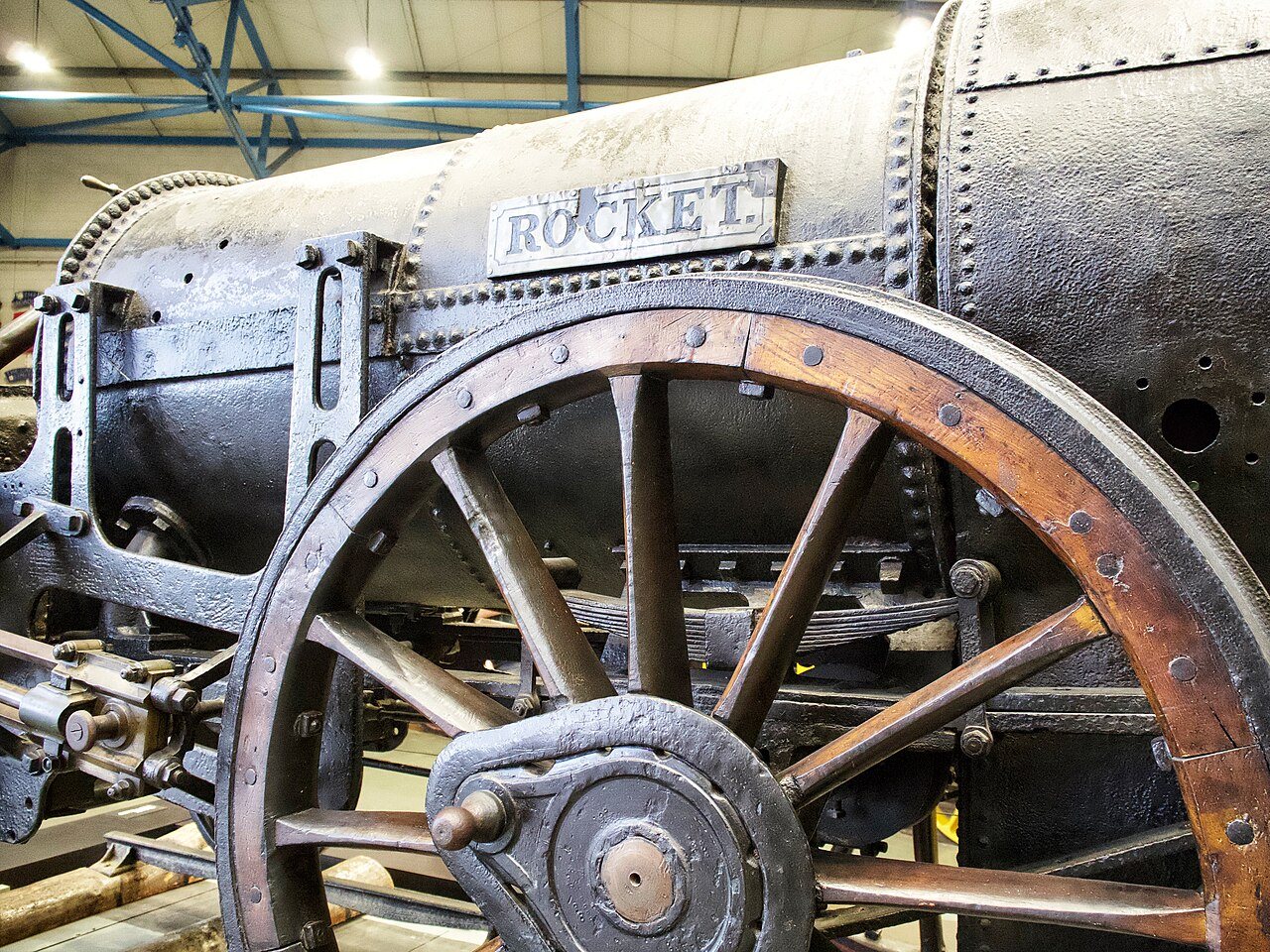
On the morning of September 15, 1830, no human being had ever traveled faster than about 25 miles an hour — and most had never gone half that fast. By nightfall, the speed limit of the world had changed forever.
The occasion was the opening of the Liverpool and Manchester Railway: a brand-new line of iron rails linking the great port of Liverpool with the manufacturing city of Manchester. For years, cotton and cloth had crawled between the two cities by canal — slow, expensive, and controlled by canal owners who charged what they liked. The railway's backers promised something radical: steam power, on a fixed timetable, for passengers and freight alike.
The man in charge was George Stephenson, a self-taught engineer from a Northumberland mining village, appointed the line's chief engineer in 1826. His route crossed Chat Moss, a four-mile peat bog that swallowed everything laid upon it — so Stephenson floated the track across it on a raft of timber and heather. His son Robert's locomotive, the Rocket, had already proved the concept by winning the Rainhill Trials the previous October, hitting speeds that left onlookers gasping.
Opening day was pure spectacle. Eight locomotives formed a procession with the Rocket at its head, carrying the Duke of Wellington — the hero of Waterloo, now prime minister — and a crowd of dignitaries. Thousands lined the route. For the first time in history, crowds watched machines carry people at speed, on schedule, between two great cities: the world's first intercity railway, and the first run entirely by steam locomotives.
But the celebration turned tragic at Parkside, when William Huskisson, a member of Parliament, stepped onto the tracks and was struck by the Rocket. He was rushed by train to Eccles, where he died that evening — the first widely reported railway passenger fatality, on the very day the railway age was born. The festivities went on in a quieter key.
The railway itself was an instant triumph. Within days, paying passengers were riding the line; within months, freight followed. The formula — steam locomotives, iron rails, timetables, stations — was copied across Britain and then around the world. Mail, newspapers, and fresh food began to move at railway speed. Towns that had been a day's journey apart became an hour's ride. The commute, the day trip, the national market: all of them start here.
Why does it matter? Before September 15, 1830, distance was destiny — where you were born was, for most people, where you would live and die. The Liverpool and Manchester Railway did not just connect two cities; it proved that steam could shrink the world. Every high-speed train gliding between cities today runs on the idea that debuted that September morning, with the Rocket at the front of the line.
Photo: Malcolmxl5, CC0 public domain dedication (via Wikimedia Commons).