The Day the Tank Went to War
On September 15, 1916, British tanks rolled into battle for the first time at Flers-Courcelette, stunning German troops and changing warfare forever.
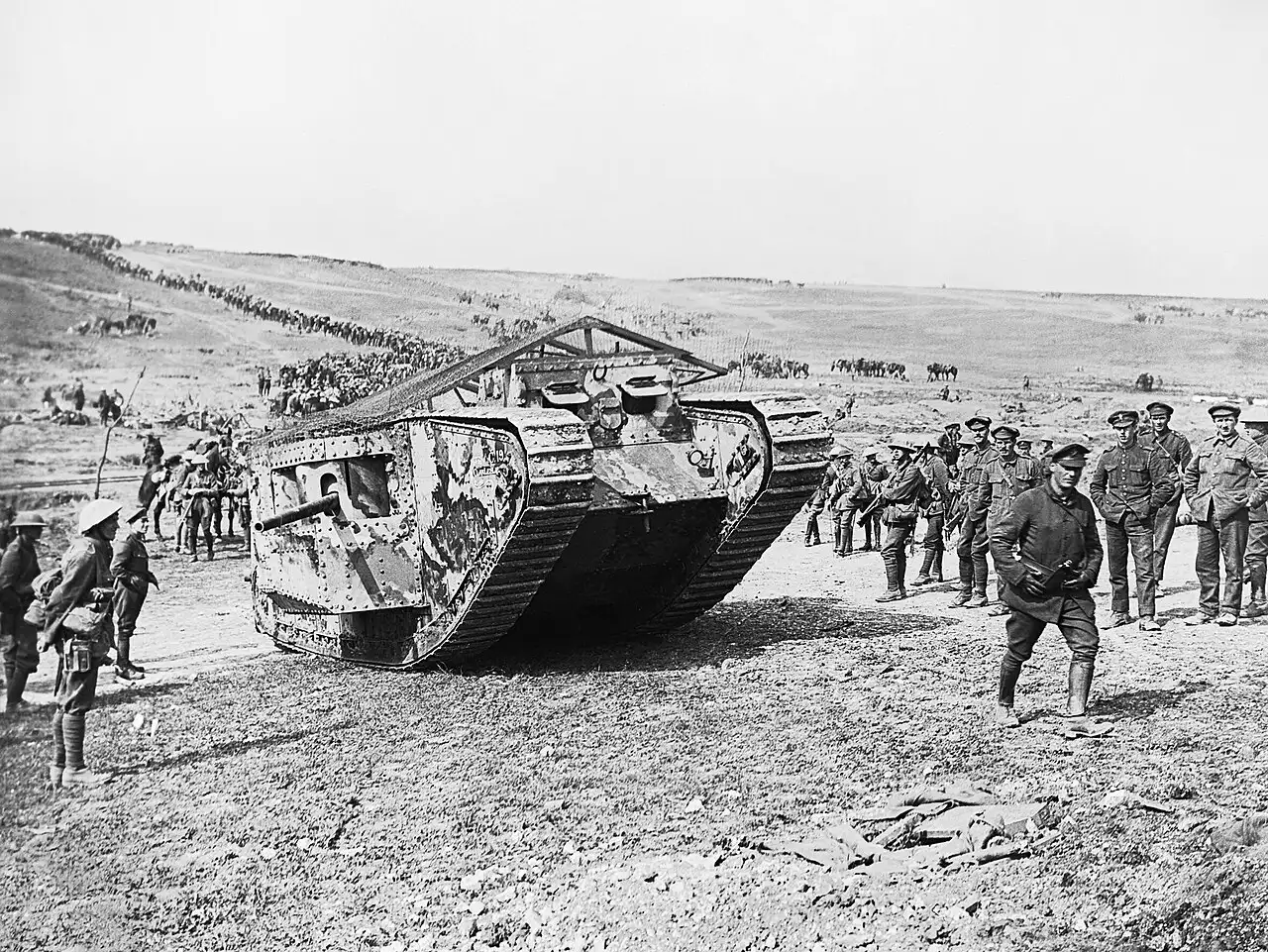
At dawn on September 15, 1916, German soldiers in their trenches near the French village of Flers saw something impossible lumbering toward them through the mist: a steel monster, thirty feet long, grinding forward on endless tracks, bullets bouncing off its armored sides.
It was the world's first tank attack.
The battle was Flers-Courcelette, part of the great Somme offensive that had been bleeding both armies white since July. Into that slaughter the British sent their newest secret weapon — a machine so secret it had been given a code name: "tank," as if the prototypes were water carriers bound for the desert. In truth they were land battleships, born of a committee backed by Winston Churchill, then running the Royal Navy, and championed by Colonel Ernest Swinton, who had seen what machine guns were doing to infantry and wanted an answer.
Of the roughly 50 tanks shipped to France, about 30 reached their start lines that morning — and fewer still made it across the shattered ground. Engines seized. Tracks snapped. Machines bogged down in the mud and ditches of no-man's-land. But the handful that reached the German trenches caused something close to panic. Accustomed to mowing down infantry, German troops found their rifles useless against moving armor; reports told of soldiers fleeing or throwing up their hands in surrender at the sight of the clanking beasts. With tank support, British infantry captured the village of Flers itself that day.
The photograph above shows one of them: a Mark I "Male" tank — the gun-armed version — of C Company, photographed that very morning in Chimpanzee Valley as it prepared to advance. Its crew had named it, with the dark humor of the trenches, Clan Leslie.
The debut was, by cold military arithmetic, a disappointment. Too few tanks, used in too small numbers, broke down too often to change the battle's outcome. Some commanders wanted the secret kept until hundreds could strike together. But the psychological shock was undeniable, and the idea was proven: armor could cross trenches, crush wire, and carry guns through machine-gun fire. Within two years, hundreds of improved tanks would spearhead Allied offensives — and every army on earth would set out to build its own.
Why does it matter? For thousands of years, battles had belonged to men and horses. On a misty morning in September 1916, the machine age arrived on the battlefield — clumsy, unreliable, and terrifying. The tank has dominated land warfare ever since, from the deserts of North Africa to the present day. It all started with a few dozen steel boxes crawling out of the mist at Flers.
Photo: Imperial War Museums, public domain (via Wikimedia Commons).