The Day the World Agreed to Heal the Sky
On September 16, 1987, diplomats signed the Montreal Protocol, which grew into the only universally ratified treaty in UN history — and it is why the ozone layer is healing today.
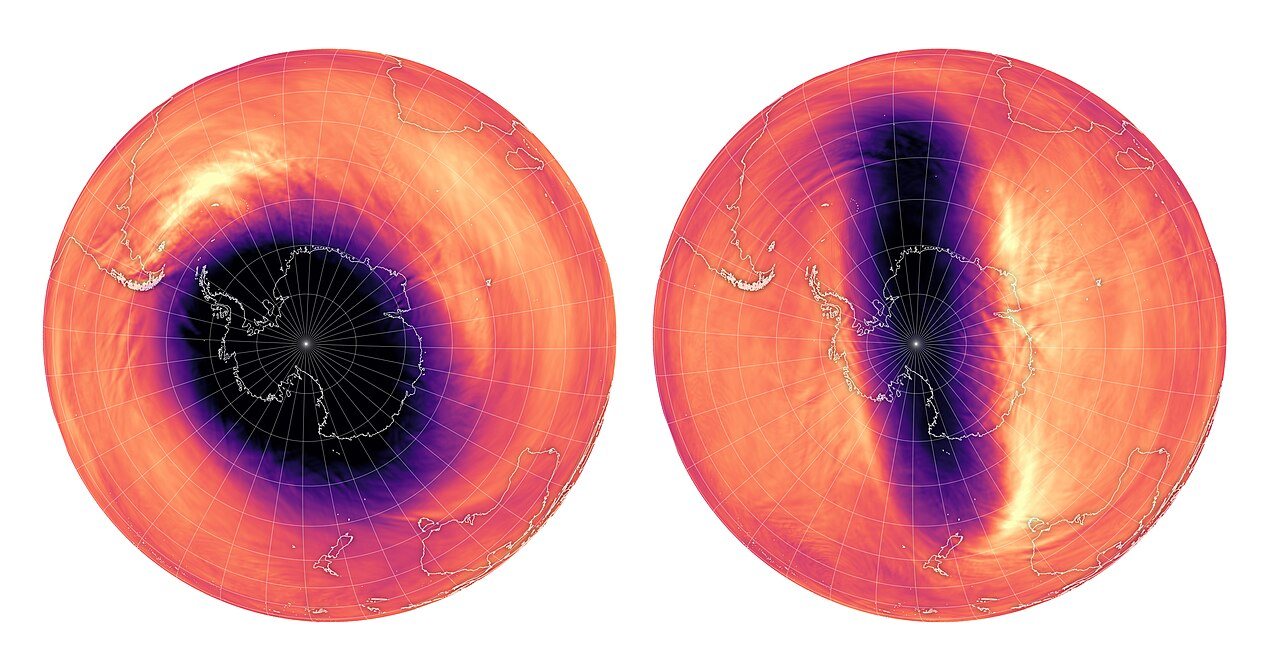
In the spring of 1985, three British scientists working in Antarctica noticed something that should not have been there: a vast, growing hole in the sky.
The hole was in the ozone layer, Earth's natural sunscreen, which shields life from the sun's harsh ultraviolet radiation. The culprits were chlorofluorocarbons — CFCs — clever human-made chemicals found in refrigerators, air conditioners, hairspray, and spray paint. Harmless at ground level, they drifted up into the stratosphere, where ultraviolet light broke them apart and set loose chlorine atoms, each one able to tear apart vast numbers of ozone molecules.
Two chemists, Mario Molina and F. Sherwood Rowland, had warned about exactly this back in 1974. Few people had listened. But the British Antarctic Survey measurements, taken by Joe Farman, Brian Gardiner, and Jonathan Shanklin, could no longer be ignored. The sky over Antarctica was thinning every spring, and without action it would keep getting worse.
What happened next still astonishes diplomats. The world acted — fast. In 1985, nations signed the Vienna Convention, a framework promising to protect the ozone layer. Then, on September 16, 1987, in Montreal, they signed the Montreal Protocol, which put real teeth behind the promise: a binding, step-by-step schedule to phase out CFCs and other ozone-eating chemicals.
Industry grumbled, but substitutes were invented and adopted. Wealthier countries moved first, while a special fund helped developing nations afford the switch. The treaty was strengthened again and again — in London, Copenhagen, and most recently Kigali in 2016, which began phasing out HFCs, the CFC replacements that turned out to be powerful greenhouse gases.
The result is unmatched in history. The Montreal Protocol has been ratified by 198 parties — every nation on Earth — making it the first universally ratified treaty in United Nations history. Former UN secretary-general Kofi Annan called it "perhaps the single most successful international agreement to date."
And it worked. Atmospheric chlorine is falling, and the ozone hole over Antarctica is slowly healing. Scientists project the ozone layer will return to its 1980 health between 2040 across most of the world and 2066 over Antarctica. Millions of cases of skin cancer and cataracts have been quietly prevented.
It matters because it is proof of something precious: humanity can spot a planetary threat, argue about it, agree on a fix — and follow through. The next time someone says the world can never cooperate on a global problem, point at the sky. We already did.
Photo: NASA Earth Observatory (Wanmei Liang), public domain (via Wikimedia Commons).