The Day China Paid for Rebellion
On September 7, 1901, China signed the Boxer Protocol, accepting a crushing indemnity and foreign troops on its soil after the Boxer Rebellion.
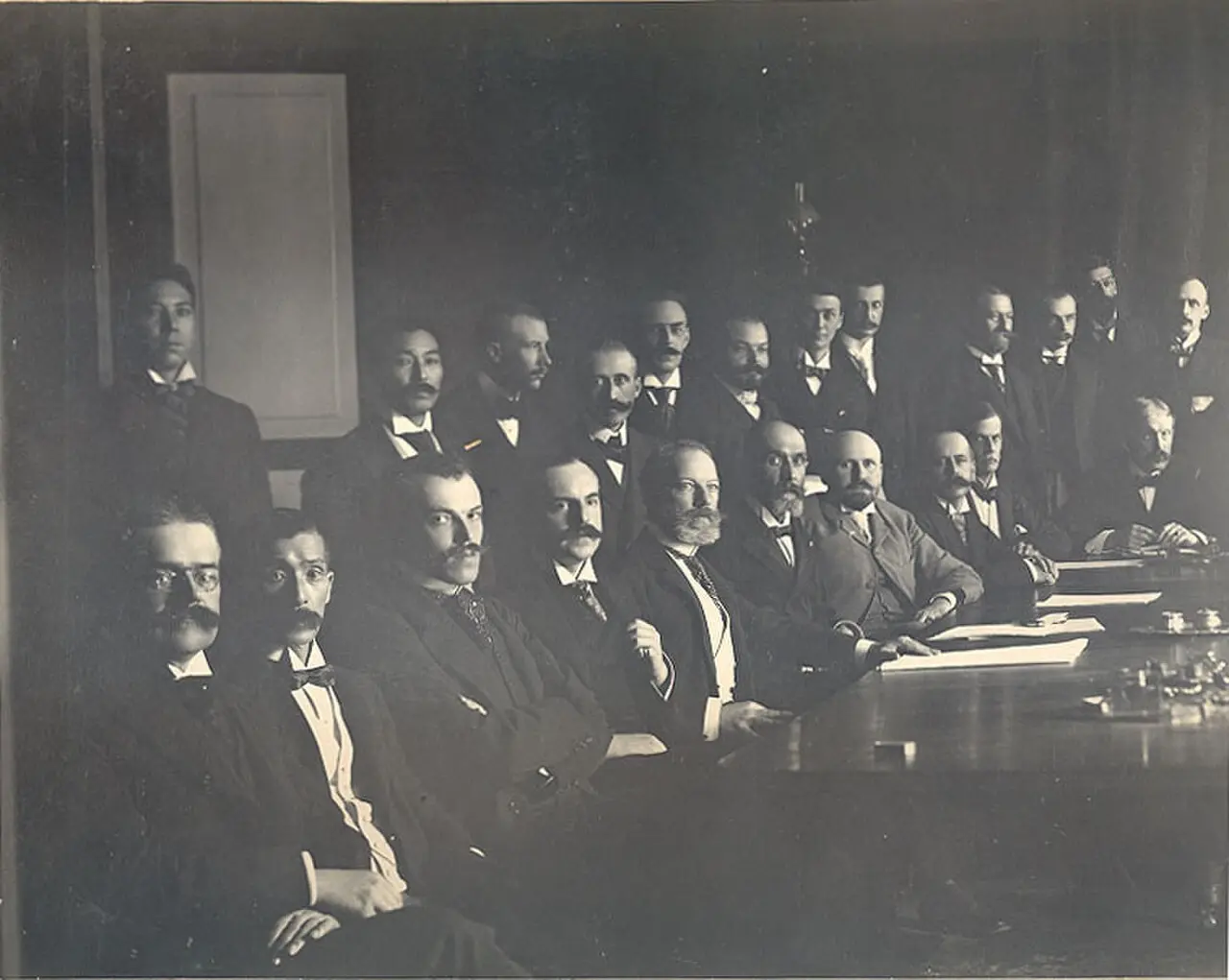
The punishment was designed to be impossible to forget. On September 7, 1901, in the Spanish Legation in Beijing, two of China's most senior statesmen put their names to the Boxer Protocol — the settlement that ended the Boxer Rebellion by making China pay for it, in silver, in sovereignty, and in humiliation, for decades to come.
The rebellion had begun with fists. The "Boxers" — members of a martial-arts movement calling itself the Society of Righteous and Harmonious Fists — rose against foreign missionaries, merchants, and the Chinese Christians they branded as traitors. By the summer of 1900 they were converging on Beijing with the tacit blessing of the Qing court. The siege of the foreign legations lasted 55 days before a relief force of eight nations — Britain, France, Germany, Russia, the United States, Japan, Italy, and Austria-Hungary — fought its way into the capital in August 1900.
The reckoning was methodical. With no leverage left, the Qing court sent its greatest negotiator, the 78-year-old Li Hongzhang, in failing health, together with Yikuang, Prince Qing. Across the table sat the envoys of eleven powers: the eight of the alliance plus Belgium, Spain, and the Netherlands.
The numbers were staggering. China agreed to pay 450 million taels of silver over 39 years at 4 percent interest — with interest, the true total approached 982 million taels, a burden on the imperial treasury for decades. And the money was only the beginning. China accepted a two-year ban on arms imports, the destruction of the Taku forts guarding the coast, and foreign troops stationed along the route from Beijing to the sea. The Legation Quarter of Beijing became an exclusive foreign zone, guarded by foreign soldiers.
The protocol reached into Chinese daily life. Anti-foreign societies were outlawed on pain of death. The civil-service examinations — the ladder of advancement for every ambitious family in the empire — were suspended for five years in the provinces where the violence had been worst. Officials judged complicit were punished, some with death. And there were the rituals of atonement: a special mission of apology to Berlin for the killing of the German minister, Baron von Ketteler, a commemorative arch raised in his name, and formal apologies to Japan for the murder of its diplomat.
Why it matters: the Boxer Protocol was the high-water mark of foreign domination over China — the moment the Qing dynasty's weakness was written down, priced, and signed. The indemnity drained an already failing treasury, and the humiliation fed the revolutionary anger that would topple the dynasty itself within a decade. Yet one unexpected seed survived the settlement: the United States eventually returned part of its share of the indemnity to fund scholarships for Chinese students and to help endow what became Tsinghua University — an investment in education, born from a bill for war.
Photo: unknown photographer, 1901, public domain (via Wikimedia Commons).