Black Saturday: The Day the Blitz Began
On September 7, 1940 — "Black Saturday" — German bombers struck London's docks, opening the Blitz and 57 nights of bombing.
The sirens sounded at 4:43 in the afternoon. On Saturday, September 7, 1940, Londoners looked up to see the sky filling with German bombers — more than 300 of them, with some 600 fighters riding alongside. It was "Black Saturday," the day the Blitz began.
The target was the city's lifeblood: the docks. Along the Thames in the East End — Millwall, Stepney, Bermondsey, Poplar — warehouses, wharves, and factories held the food, fuel, and timber a nation at war needed to survive. The first wave struck in the late afternoon, and by early evening the docklands were a wall of flame. Then, around 8 o'clock, a second wave arrived, guided to its targets by the glow of the fires below.
When the all-clear finally sounded, more than 430 people were dead and some 1,600 injured — the heaviest single day of bombing London had yet endured. In the East End, where the bombs fell thickest, the fires burned through the night, and thousands of Londoners spent their first night sheltering in Underground stations — the beginning of a nightly ritual that would come to define the Blitz.
The raid marked a fateful turn in the Battle of Britain. For weeks the Luftwaffe had been pounding the Royal Air Force's airfields, pushing Fighter Command toward the breaking point. But on September 7, the German commander Hermann Göring shifted the assault to London itself — a move many historians regard as a grave blunder. It gave the RAF's battered airfields a reprieve, and the reprieve proved decisive: the invasion of Britain that the bombing was meant to prepare never came.
What followed was 57 consecutive nights of bombing. Night after night the bombers returned — to London above all, but also to Coventry, Birmingham, Liverpool, and other cities. The Blitz ground on until May 1941, killing more than 40,000 British civilians and reducing whole neighborhoods to rubble.
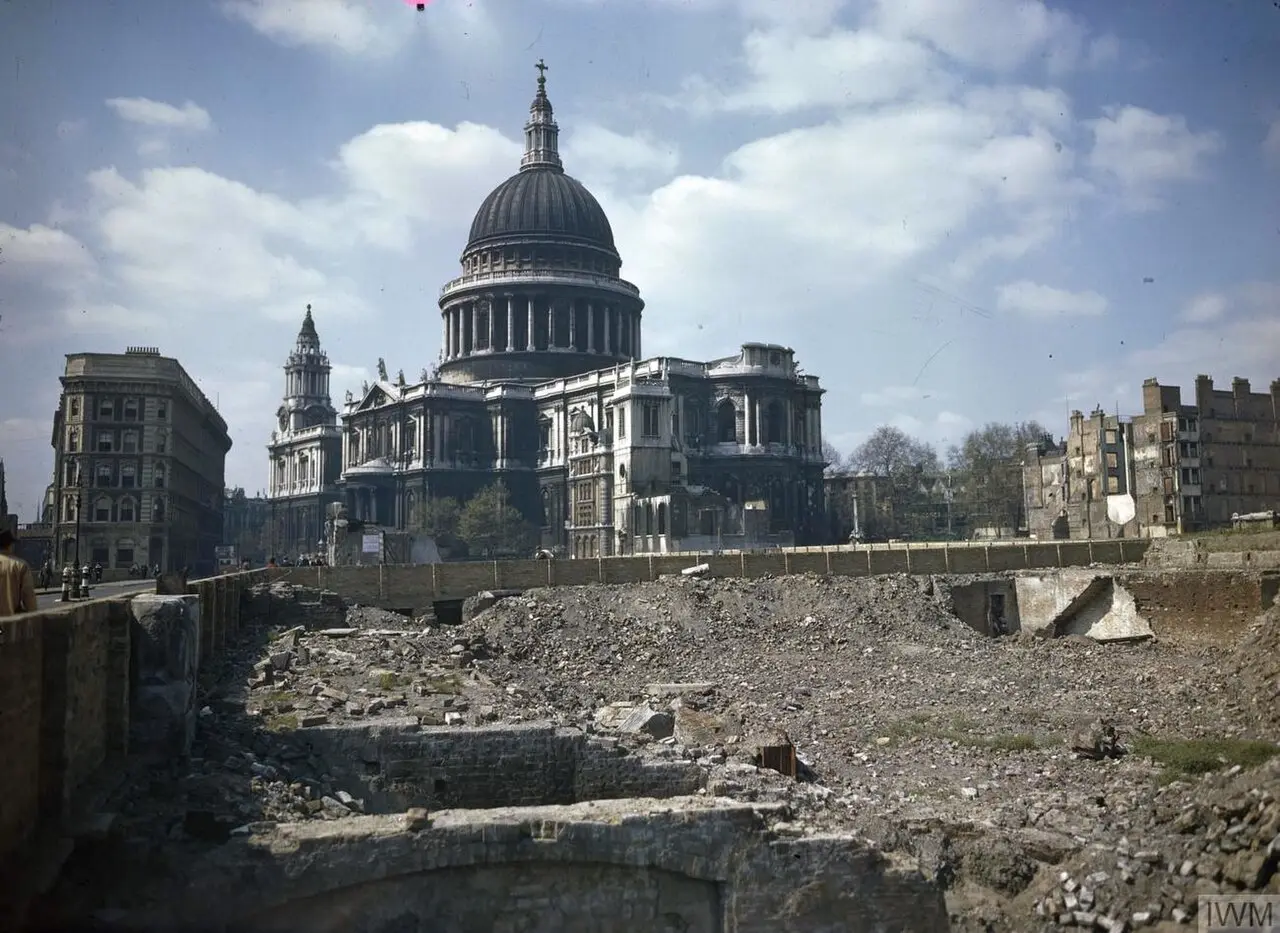
And yet the city held. Photographs of St Paul's Cathedral rising above the ruined streets — like the wartime colour image above — became symbols of defiance: the dome that would not fall, over a city that would not break.
Why it matters: the Blitz failed in its purpose. It did not break Britain's will or cripple its air defenses; instead, the decision to bomb London gave the RAF the breathing room it needed to win the Battle of Britain. "Black Saturday" is remembered as the day the war came home to ordinary Londoners — and the day they showed it would take more than bombs to move them.
Photo: UK Ministry of Information, public domain (via Imperial War Museum / Wikimedia Commons).