The Cry That Made Brazil
On September 7, 1822, Prince Dom Pedro raised his sword on the banks of the Ipiranga River and shouted "Independence or Death!" — and Brazil was born.
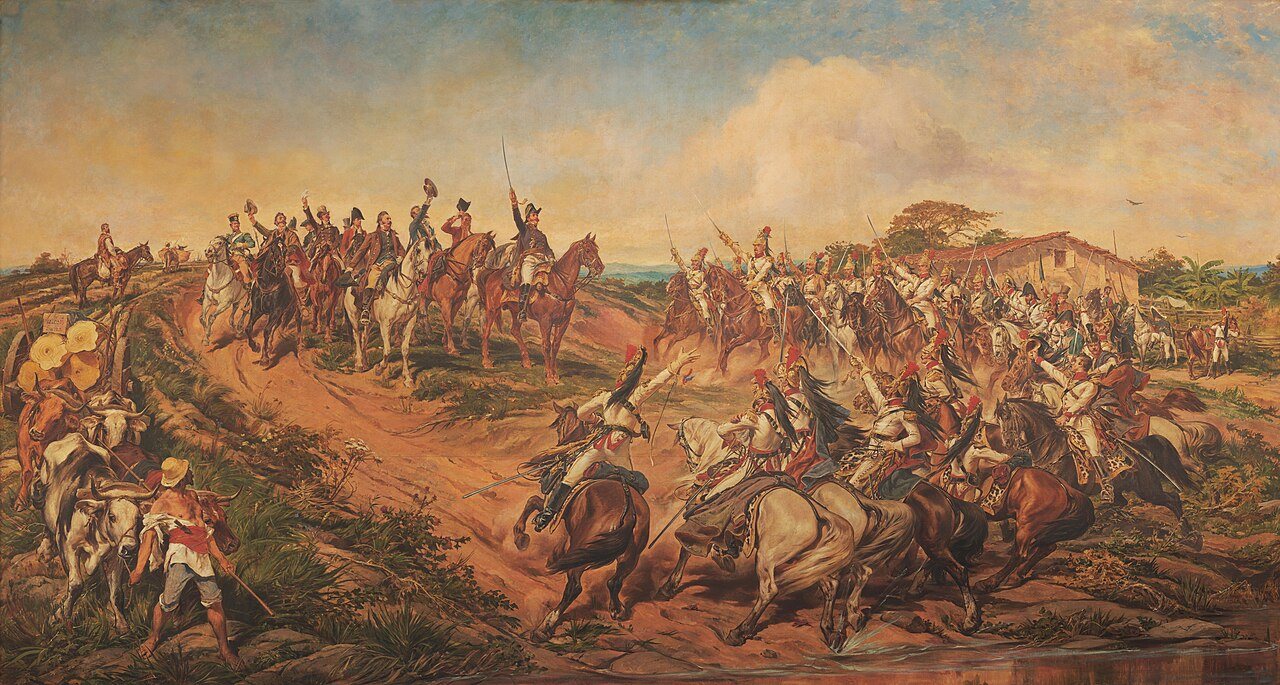
History's most dramatic moments sometimes arrive by horseback. On September 7, 1822, a messenger galloped up to Prince Dom Pedro of Portugal on the road near São Paulo, carrying a letter from his wife — and the fate of half a continent.
The letter, sent by Princess Maria Leopoldina, who was ruling Brazil as regent in her husband's absence, carried urgent news from Lisbon. On September 2, new decrees had arrived from the Portuguese court demanding that Brazil be dragged back to colonial status and that Pedro return to Portugal at once. Leopoldina had met with her ministers and decided: Brazil must break free. She wrote to Pedro advising him to proclaim independence immediately.
Pedro read the letter on the banks of a small stream called the Ipiranga. What happened next is the scene every Brazilian schoolchild knows. Surrounded by his honor guard, the young prince reportedly drew his sword and shouted the words that became Brazil's founding cry: "Independência ou Morte!" — "Independence or Death!"
The moment had been building for years. In 1808, the Portuguese royal family had fled Napoleon's armies and moved the entire court to Rio de Janeiro, turning Brazil from a colony into the seat of an empire. When the king returned to Lisbon in 1821, he left Pedro behind — and the Portuguese parliament promptly tried to strip Brazil of everything it had gained. On January 9, 1822, Pedro publicly refused to leave, a day Brazilians still celebrate as the Dia do Fico — "I'll Stay Day."
The Cry of Ipiranga, as September 7 became known, did not settle matters overnight. Pedro was acclaimed emperor on October 12, 1822, and crowned on December 1. Portuguese loyalists still held parts of the country, and it took years of fighting and diplomacy before Portugal formally recognized Brazil's independence in a treaty signed on August 29, 1825.
But the cry stuck. Unlike its Spanish American neighbors, which won independence through decades of grinding war, Brazil became an empire under its own monarch with comparatively little bloodshed — ending 322 years of Portuguese colonial rule.
There is a famous painting of the moment — Pedro Américo's enormous 1888 canvas "Independência ou Morte," showing the prince on horseback, sword raised, guards cheering. It was painted 66 years after the fact, and historians take its pageantry with a grain of salt: the real scene was muddier, smaller, and far less choreographed. But the painting captures how Brazil chose to remember the day: a young prince, a riverbank, and three words that made a nation.
Every September 7, Brazil still celebrates Independence Day with parades and fireworks — all tracing back to a letter, a horse, and a shout by a stream in São Paulo.
Painting by Pedro Américo (1888), public domain (via Wikimedia Commons).