
The Day Beatlemania Landed in America
On February 7, 1964, Pan Am Flight 101 touched down at JFK with four Liverpudlians aboard — and thousands of screaming fans waiting on the tarmac.
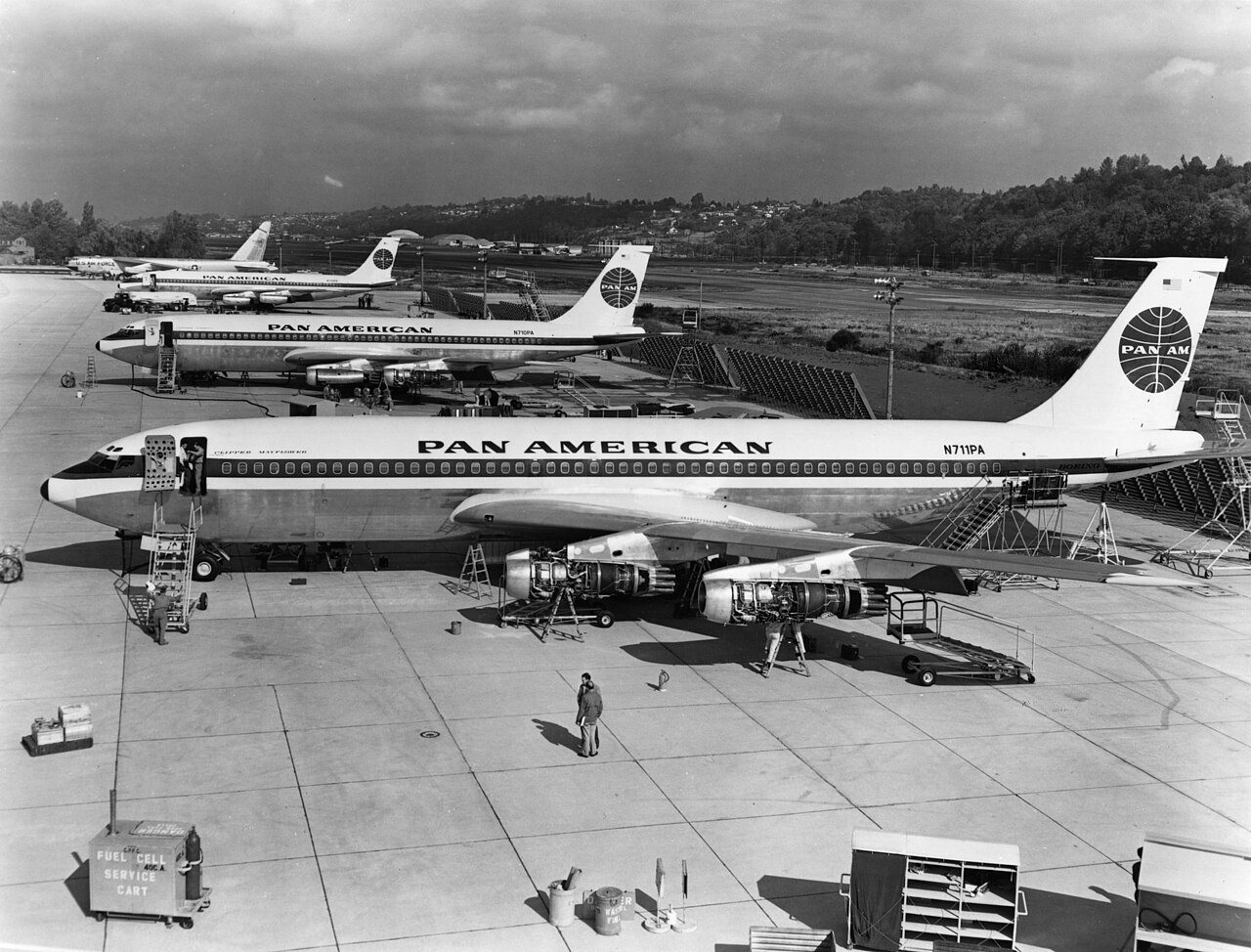
Just before touchdown, the pilot radioed ahead with a message for the four young men in the cabin: tell the boys there's a big crowd waiting for them.
On February 7, 1964, Pan Am Flight 101 — a Boeing 707 flying in from London Heathrow — landed at New York's John F. Kennedy Airport at about 1:20 in the afternoon. Aboard were John Lennon, 23, Paul McCartney, 21, George Harrison, 20, and Ringo Starr, 23: the Beatles, on their first visit to the United States.
The airport itself had only recently been renamed for President John F. Kennedy, assassinated less than three months earlier. And the crowd waiting on the observation deck — somewhere between 3,000 and 4,000 screaming fans, mostly teenage girls, alerted by local radio stations — was unlike anything the band had ever seen.
Six days earlier, the Beatles had scored their first No. 1 hit in America with "I Want to Hold Your Hand." But Beatlemania, as a British phenomenon, was still just that — British. The four Liverpudlians in their mod suits and pudding-bowl haircuts had no idea whether America would care at all. As the plane taxied in, the roar from the rooftop deck answered the question.
About 200 journalists were waiting too, and the band's first American press conference became an instant legend. Asked "How do you find America?" Ringo shot back: "Turn left at Greenland." The good-natured, wisecracking answers disarmed a press corps that had shown up cynical and ready for blood.
From the airport, the Beatles were driven to the Plaza Hotel in Manhattan, where they took the Presidential Suites on the 12th floor — rooms 1209 through 1216. The hotel's management was reportedly surprised to learn that the party of "English businessmen" who had booked was actually the most famous band on earth. At least 50 police officers were needed to hold back the crowds surging outside.
Once inside, the band did what any tourists would do: they watched television reports about themselves and took phone calls from local radio DJs, including the famous Murray the K.
What happened next is history. Two days later, on February 9, the Beatles appeared on The Ed Sullivan Show before an estimated 73 million viewers — about 40 percent of the entire U.S. population, a bigger share than any Super Bowl has ever drawn. Their first American public concert followed on February 11 at the Washington Coliseum, before 20,000 fans, then two back-to-back shows at Carnegie Hall in New York, where police had to close the surrounding streets. They flew home to England on February 22.
It had taken just over two weeks to change popular culture forever. The so-called British Invasion had begun, and America — still grieving its young president that winter — had found something to scream about again.
Photo: unknown photographer, public domain (via Wikimedia Commons).