Charles Dickens Is Born in Portsmouth, England
On February 7, 1812, Charles Dickens was born in Portsmouth, England, and grew up to become the Victorian era's most beloved novelist.
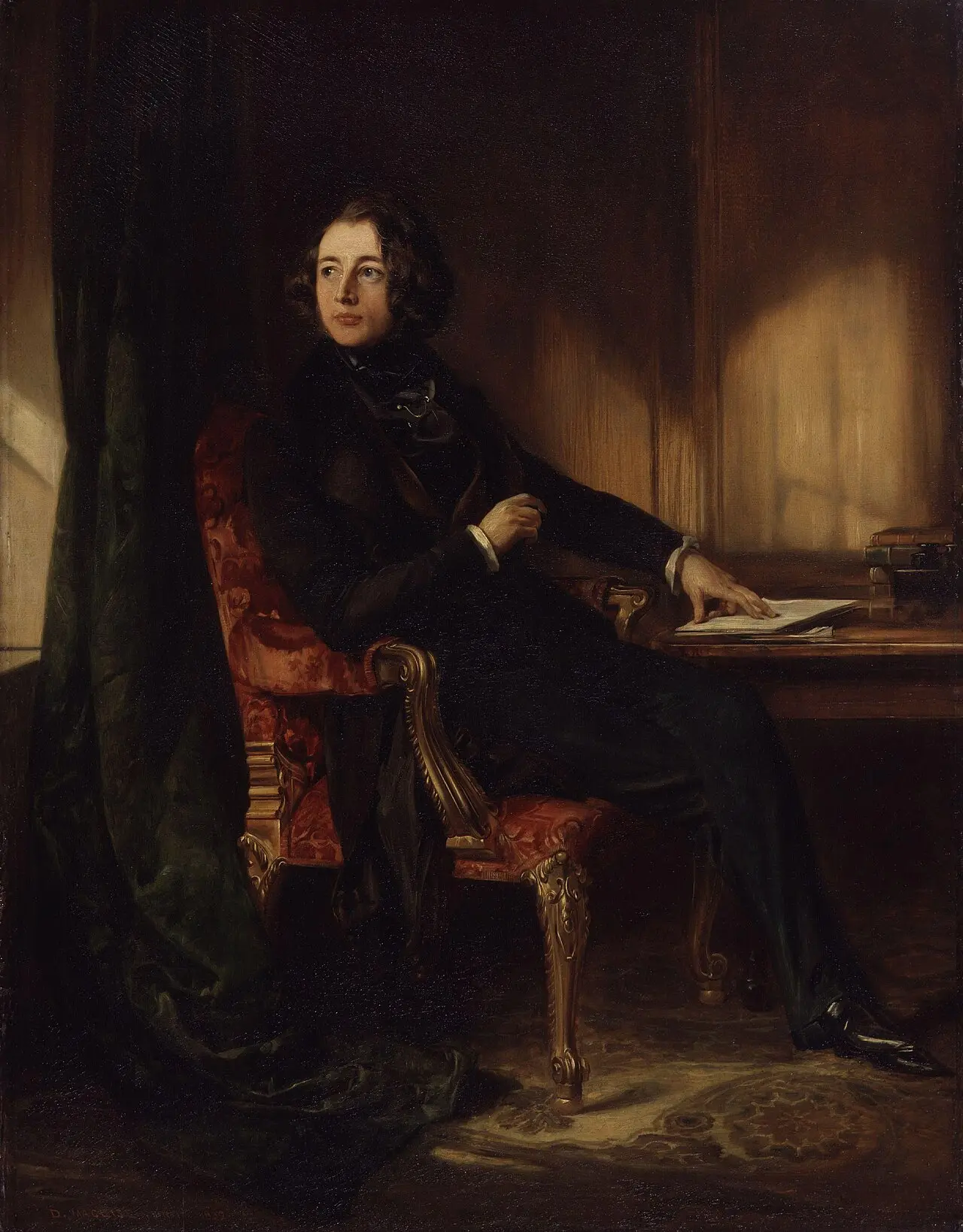
On a cold February morning in 1812, in a modest rented house on a naval port island off England's south coast, a baby boy was born who would one day make the whole English-speaking world laugh, weep, and look at its poor with new eyes. His name was Charles John Huffam Dickens.
He arrived on February 7, 1812, at 1 Mile End Terrace in Landport, on Portsea Island — the Portsmouth district where his father, John Dickens, was stationed as a clerk in the Royal Navy Pay Office. Charles was the second of eight children born to John and his wife Elizabeth, and his godfather was Christopher Huffam, a Navy rigger. The house, now numbered 393 Commercial Road, still stands; in 1904 it opened as the Charles Dickens Birthplace Museum.
His earliest years were comfortable ones. The family moved to London when he was a toddler, then to Chatham in Kent, where Charles spent what he remembered as an idyllic childhood — playing outdoors and reading voraciously. He devoured Robinson Crusoe and the Arabian Nights, the comic novels of Smollett and Fielding, and the farces of Elizabeth Inchbald, storing away the people and places that would later fill his books.
Then the money ran out. John Dickens, a cheerful man with no talent for managing money, sank into debt, and in 1824 he was thrown into the Marshalsea debtors' prison in London. Twelve-year-old Charles was pulled out of school and sent to work in a grimy riverside warehouse, pasting labels onto pots of shoe polish for a few shillings a week. He later described himself as a "very small and not-over-particularly-taken-care-of boy," and the shame and loneliness of those months never left him. They became the emotional engine of his fiction: the workhouses of Oliver Twist, the debtors' prison of Little Dorrit, the struggling young clerk of David Copperfield.
He clawed his way back through shorthand, studying at night until he could report court cases and then Parliament for the London newspapers. In December 1833 the Monthly Magazine published his first story, "A Dinner at Poplar Walk." Writing under the pen name "Boz," he published Sketches by Boz in 1836 — and that same year began the serial that made him famous, The Pickwick Papers. He was twenty-four. A torrent followed: Oliver Twist, Nicholas Nickleby, A Christmas Carol in 1843, David Copperfield, Bleak House, A Tale of Two Cities, Great Expectations — novels released in monthly installments that had readers crowding the docks for the next chapter.
He became the most famous writer — arguably the most famous celebrity — of his age, filling theaters on public reading tours in Britain and America. The fury at poverty and injustice he had learned at the blacking warehouse gave Victorian England a conscience it could not ignore: Bleak House helped drive the legal reforms of the 1870s, and his Christmas stories reshaped how the holiday itself is celebrated.
When he died in 1870 he was buried in Westminster Abbey's Poets' Corner. The word "Dickensian" entered the language for anything recalling his world — its fog, its orphans, its kindness and its cruelty. It all began on February 7, in a small house in Portsmouth, with a boy nobody had heard of.
Photo: Daniel Maclise, public domain (via Wikimedia Commons)