
The Day America Got Its Flag
On June 14, 1777, the Continental Congress adopted the Stars and Stripes as America's flag — the birthday celebrated every year as Flag Day.
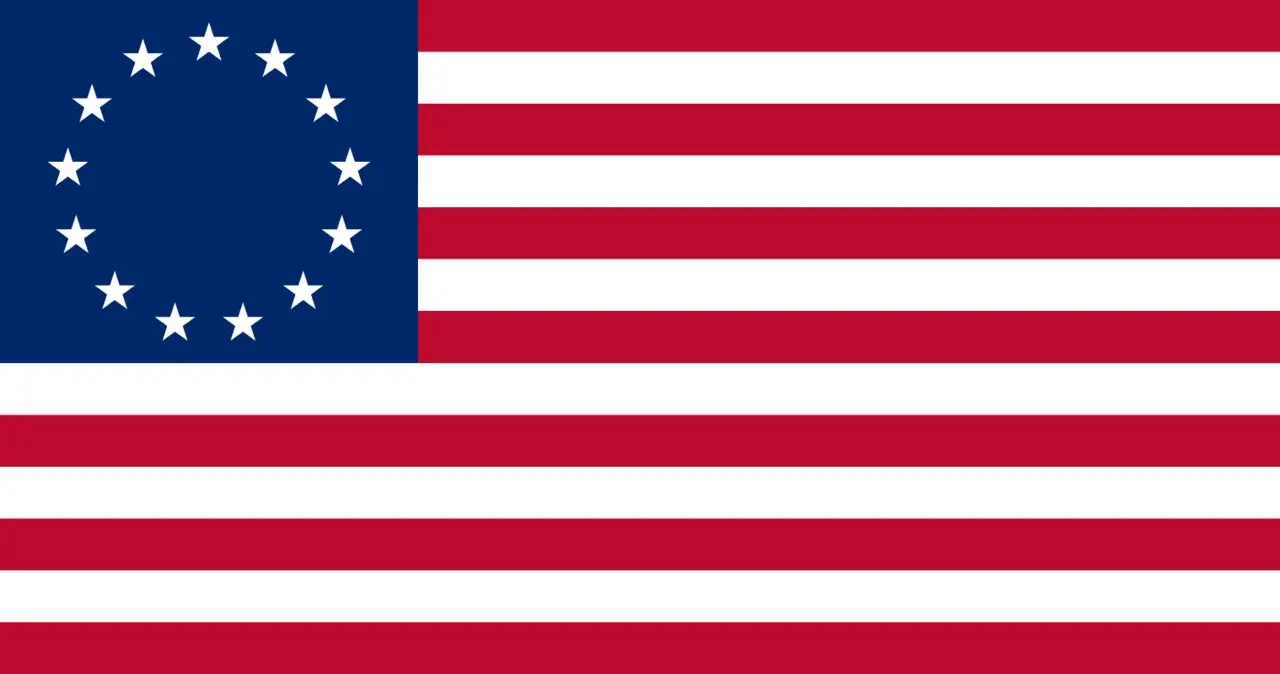
Picture the absurdity: a nation that had just declared independence from Britain was still flying a flag with Britain’s flag tucked into the corner.
For the first two years of the Revolutionary War, American forces sailed and marched under the Grand Union Flag — thirteen red and white stripes, but with the British Union Jack in the upper-left canton. It was the banner of colonists who still called themselves Englishmen. After July 4, 1776, it made no sense at all. A free country needed a flag of its own.
The push came from an unexpected direction. On June 3, 1777, a Native American nation petitioned Congress for “an American Flag,” wanting a banner under which its people could stand with the new nation. Eleven days later, on June 14, 1777, the Second Continental Congress answered with a resolution that every American schoolchild has since memorized in spirit: “Resolved, That the flag of the thirteen United States be thirteen stripes, alternate red and white; that the union be thirteen stars, white in a blue field, representing a new constellation.”
That is all it said — no designer named, no pattern for the stars, no explanation of the colors. Historians have searched in vain for why Congress chose red, white, and blue. Five years later, when Congress adopted the Great Seal, it attached meanings to the colors: red for hardiness and courage, white for purity and innocence, blue for vigilance, perseverance, and justice. A beloved legend credits Philadelphia seamstress Betsy Ross with sewing the first stars-and-stripes, though Congress never officially named any designer, and early flags arranged their stars in circles, rows, and every pattern in between.
The flag grew with the country. In 1794, Vermont and Kentucky joined the Union, and Congress added two stars and two stripes — the only official American flag ever to have more than thirteen stripes. By 1818, with twenty states, Congress settled the modern rule: thirteen stripes forever, and one star for every state, with new stars added each Fourth of July.
Why it matters: The resolution of June 14, 1777 gave a brand-new republic its most enduring symbol — the same flag that has flown over battlefields, courtrooms, the Moon, and every Olympic podium since. That is why June 14 is celebrated as Flag Day: a birthday party, every year, for a piece of cloth that carries a country’s story.
Photo: A 13-star, 13-stripe American flag in the traditional Betsy Ross style (digital illustration; the 1777 resolution did not specify the stars’ arrangement). Illustration by Jacobolus, public domain via Wikimedia Commons.