
The Ambush That Ended Bonnie and Clyde
On May 23, 1934, a six-man posse led by Texas Ranger Frank Hamer ambushed and killed outlaws Bonnie Parker and Clyde Barrow on a Louisiana road.
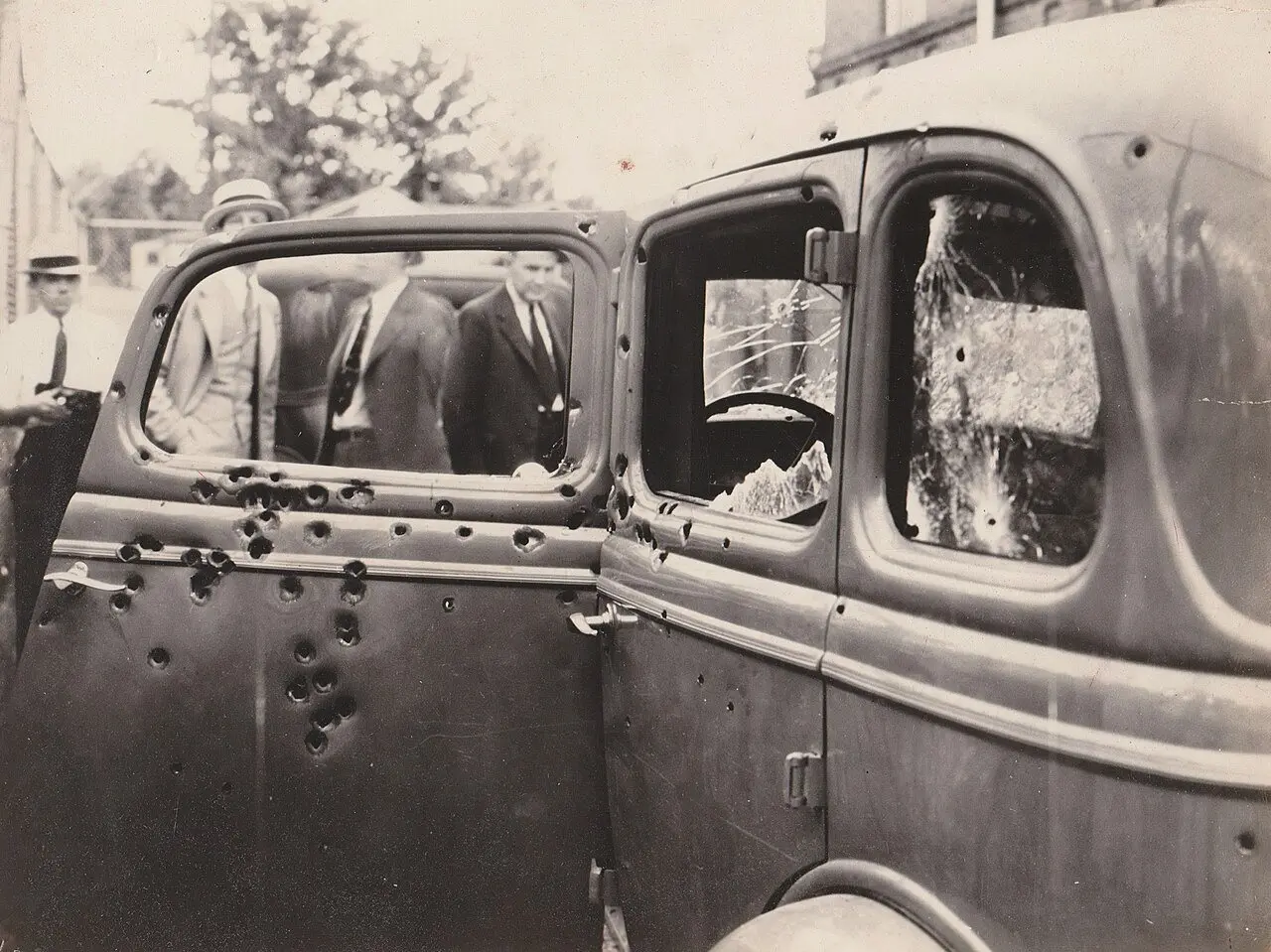
On the morning of May 23, 1934, a dusty dirt road ran through the pine woods near Gibsland, Louisiana — and six armed lawmen waited in the bushes beside it. They had been there since before dawn, because a farmer named Ivy Methvin had told them that two of the most wanted criminals in America were coming to visit his house that morning.
The fugitives were Bonnie Parker, 23, and Clyde Barrow, 24. For twenty-one months, since Clyde's release from prison in early 1932, the pair had torn across Texas, Oklahoma, New Mexico, Missouri, and Louisiana in a spree of bank robberies, gas-station holdups, car thefts, and gunfights. Their gang — which at times included Clyde's brother Buck, his wife Blanche, and others — killed nine law enforcement officers along the way, along with several civilians. And yet, for all their notoriety, their robberies were often small and desperate: many of their heists netted less than $1,500. They were cop-killers living out of stolen cars, lionized by newspaper readers who thrilled to their defiance of banks in the darkest years of the Great Depression.
The man who finally stopped them was Frank Hamer, a legendary Texas Ranger hired to end the spree. Hamer and his five fellow officers painstakingly tracked the couple's movements through Louisiana, where they had taken refuge with the family of gang member Henry Methvin. The Methvins, promised a pardon for Henry, agreed to help. On the night of May 22, word came that Bonnie and Clyde would visit the Methvin home near the crossroads of Sailes the next morning. Hamer's posse took up positions on Highway 154, about eight miles south of Gibsland, with Ivy Methvin's truck parked on the road as a decoy — appearing broken down, exactly the sort of roadside tableau that would slow two drivers who could not afford attention.
Around nine in the morning, the tan Ford V-8 rolled into view. The couple slowed for the truck. Ivy ducked away. And the officers opened fire.
The ambush was over in seconds — some accounts say more than 130 rounds were fired in under sixteen seconds. Neither Bonnie nor Clyde fired a shot. The coroner's later examination found 17 separate entry wounds on Clyde and 26 on Bonnie. Inside the bullet-torn car, the officers discovered an arsenal: stolen automatic rifles, sawed-off shotguns, handguns, and thousands of rounds of ammunition — the tools of a gang that had lived, as the saying went, by the gun.
The legend only grew from there. Tens of thousands of people attended Bonnie's funeral in Dallas, where the city's newspapers contributed the grandest floral tribute. The bullet-riddled "death car" itself became a morbid traveling attraction. But the reality was bleaker than the romance: as one Louisiana account put it, the real Clyde was a cold-blooded killer, not a folk hero, and Bonnie may never have fired a shot herself.
The ambush on that Louisiana road ended more than a crime spree. It closed the book on the Depression-era outlaw age — the brief, bloody period when car-owning bandits could outrun small-town sheriffs but not, in the end, a coordinated, professional manhunt. The myth of Bonnie and Clyde endures in films and songs, but the truth of May 23, 1934, is simpler and sadder: two very young people who chose violence found it waiting for them on a quiet road, and it did not miss.
Photo: FBI investigators, May 23, 1934, public domain (via Wikimedia Commons).