Signed on the South Lawn
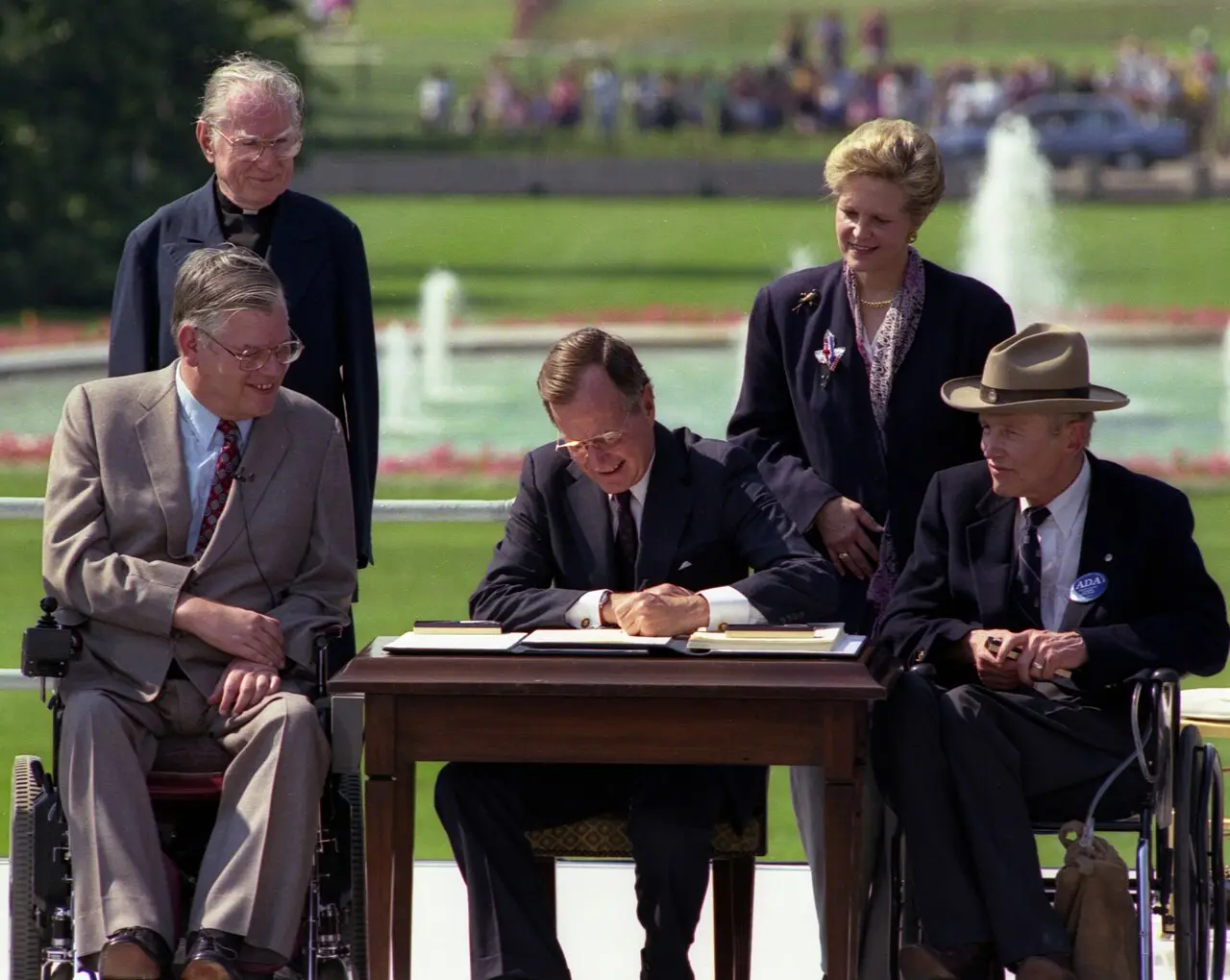
On July 26, 1990, more than 2,000 disability-rights advocates watched President George H. W. Bush sign the Americans with Disabilities Act into law.
On a hot summer afternoon in 1990, more than 2,000 people gathered on the South Lawn of the White House. They had come to watch a pen change the country.
It was July 26, 1990, and President George H. W. Bush was about to sign the Americans with Disabilities Act — the first comprehensive civil rights law for people with disabilities in the nation's history. It banned discrimination in jobs, public transportation, stores, restaurants, hotels, theaters, parks, telecommunications, and in state and local government services.
The road to that lawn had been long. Inspired by the civil rights movement of the 1960s, disability-rights advocates had won an early victory in 1973 with Section 504 of the Rehabilitation Act, which barred discrimination only in programs receiving federal money. The ADA went much further: it said the doors had to open everywhere.
Bush, signing before the crowd, told them the law "signals the end to the unjustified segregation and exclusion of persons with disabilities from the mainstream of American life." He admitted the country had not always lived up to its promises: "tragically, for too many Americans, the blessings of liberty have been limited or even denied. Today's legislation brings us closer to that day when no Americans will ever again be deprived of their basic guarantee of life, liberty, and the pursuit of happiness."
Beside him on the dais sat advocates in wheelchairs, including Evan Kemp, chairman of the Equal Employment Opportunity Commission — the movement's leaders, finally at the table where the decision was made.
The ADA reshaped the physical landscape of the country: curb cuts on every corner, ramps into public buildings, accessible restrooms, closed captioning. And it reshaped the legal one: tens of millions of Americans — nearly one in five, by census counts — gained enforceable protection against being shut out of work and public life.
Decades later, the law remains one of the broadest civil rights statutes ever passed. It began with activists who refused to accept that exclusion was natural — and ended, on that July afternoon, with a signature.
Photo: President George H. W. Bush signs the Americans with Disabilities Act on the South Lawn of the White House, July 26, 1990, flanked by disability advocates (public domain, White House Photo Office), via Wikimedia Commons.