Rivets, Denim, and the Birth of Blue Jeans
On May 20, 1873, a Reno tailor and a San Francisco merchant received U.S. Patent No. 139,121 for riveted work pants — the official birthday of blue jeans.
The most famous pants in history were born because work pants kept ripping. In the early 1870s, Jacob Davis, a Latvian immigrant working as a tailor in Reno, Nevada, had a steady stream of customers with the same complaint: the pockets of their work trousers tore out under the strain of picks, tools, and heavy labor. Davis had an idea borrowed from saddlery — fasten the weak points with small copper rivets, the metal studs used to reinforce leather harnesses. The riveted pants held. Miners and laborers snapped them up.
Davis knew he had something worth protecting, but a patent cost money he didn't have. So around 1872 he wrote a letter to the San Francisco dry-goods merchant who supplied his fabric: Levi Strauss. Strauss — born Löb Strauss in Buttenheim, Bavaria, in 1829 — had emigrated to America after his father's death and headed west for the Gold Rush, building a thriving wholesale business instead of panning for gold. He liked Davis's idea, put up the money, and the two became partners. Davis moved to San Francisco to run the factory floor while Strauss handled the business — a partnership of the workbench and the counting house that would last for decades.
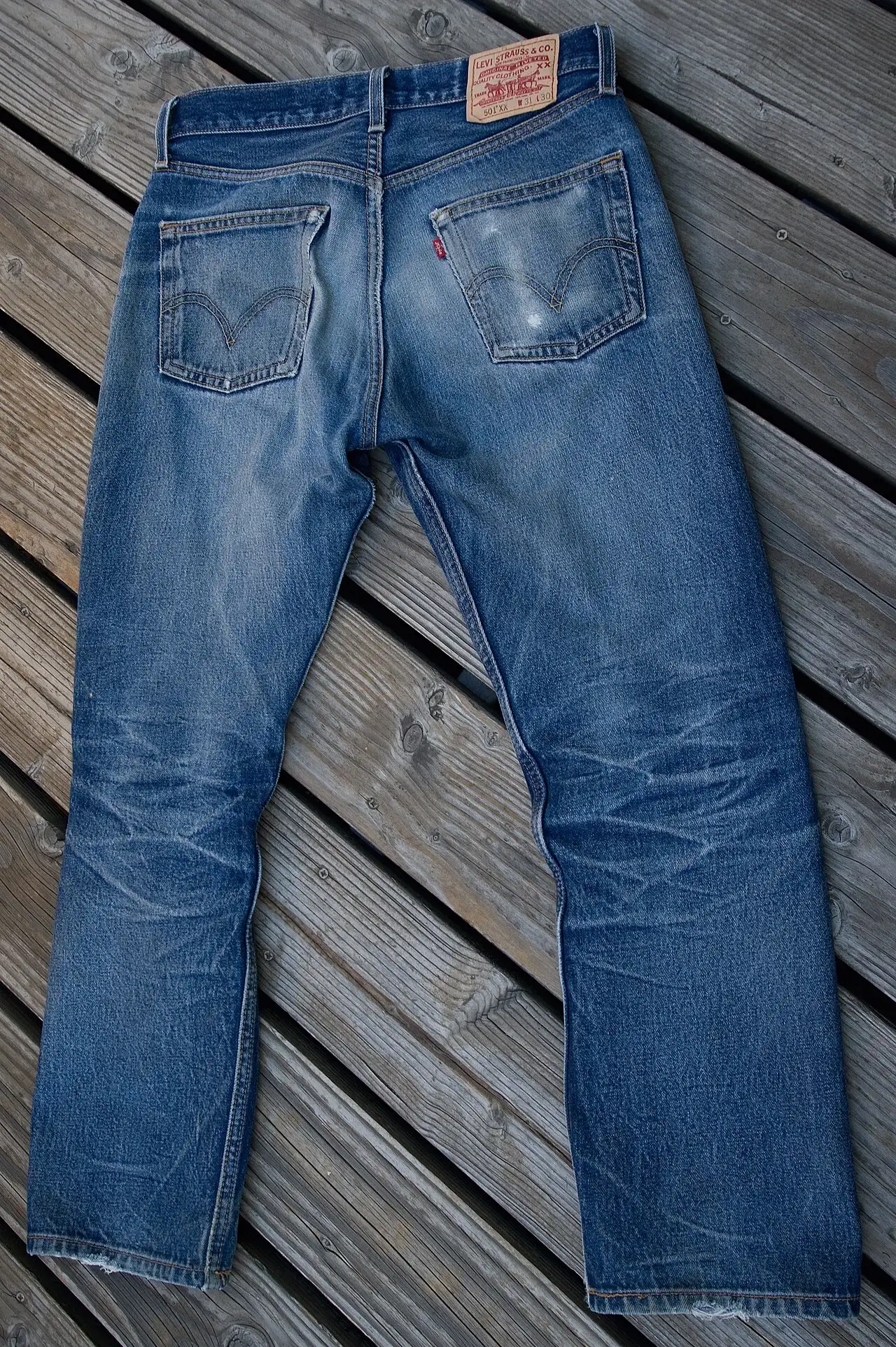
On May 20, 1873, the U.S. Patent Office granted them Patent No. 139,121 for an "Improvement in fastening pocket-openings," with Davis named as the inventor. That date is now celebrated as the official birthday of blue jeans — though nobody called them that yet. They were "waist overalls," sturdy work pants made from a tough twilled cotton originally woven in Nîmes, France — "serge de Nîmes," which became "denim."
Strauss brought Davis to San Francisco to oversee manufacturing, and the little copper rivet became the signature of an empire. The famous two-horse leather patch — two teams of horses failing to tear a pair apart — arrived in 1886; the lot number 501 was assigned in 1890, the year the original patent expired and competitors could finally copy the rivet; the little red tab appeared in 1936. And one beloved legend isn't true: despite the old advertising, Levi's didn't sell jeans to Gold Rush miners in 1849 — manufacturing began in the 1870s.
From workwear to cowboy gear to Hollywood rebels to high-fashion runways, jeans conquered the planet one rivet at a time. Presidents and movie stars, miners and musicians have all worn them; few garments have ever said so much about work, freedom, and rebellion at once. In May 2023, the world marked their 150th birthday. All because a Nevada tailor got tired of torn pockets — and a San Francisco merchant answered his letter.
Photo: Michael Carian, CC BY-SA 2.0 (via Wikimedia Commons).