Phobos: The Moon That Will Die
On August 18, 1877, astronomer Asaph Hall spotted Phobos, the larger of Mars's two tiny moons — a world slowly spiraling toward its doom.
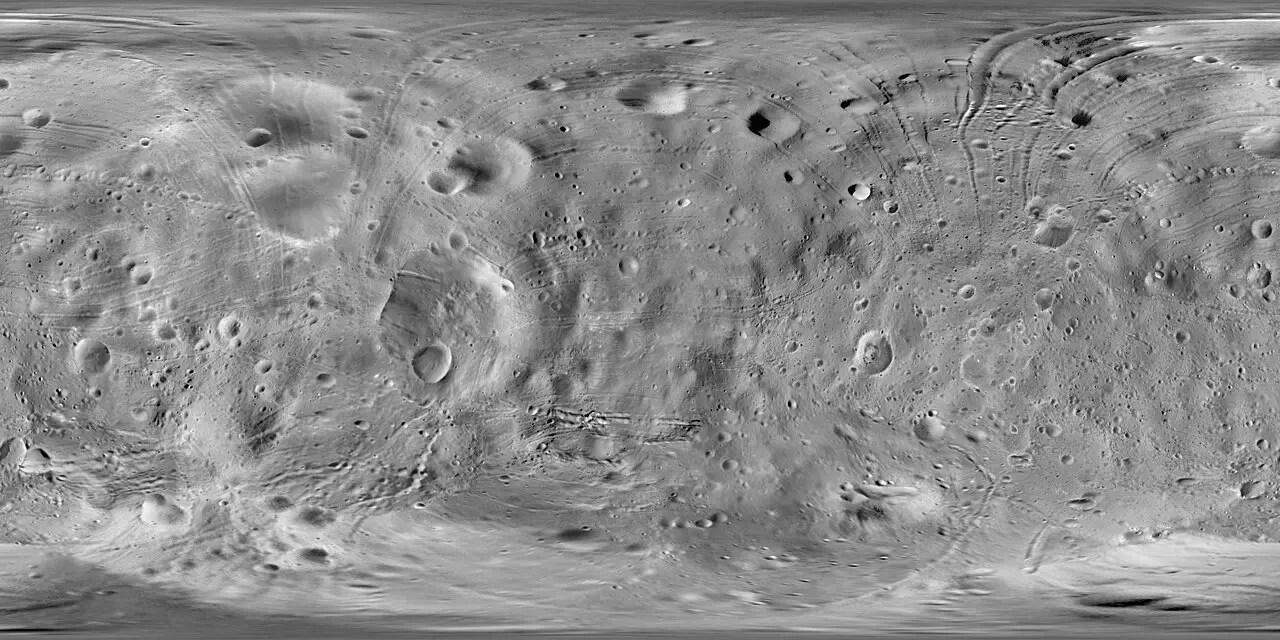
For a century and a half, Mars was supposed to have two moons — but nobody could find them. Jonathan Swift had even imagined a pair of Martian moons in Gulliver's Travels, back in 1726. Generations of astronomers swept their telescopes across the red planet and found nothing. The moons, if they existed at all, were hiding in the planet's blinding glare.
In the summer of 1877, Mars swung closer to Earth than it had in years, and Asaph Hall of the U.S. Naval Observatory in Washington, D.C., decided the time had come for a systematic hunt. Hall commanded the observatory's 26-inch refractor — the largest telescope in the world at the time — and night after night he searched the dazzling edge of Mars for anything that moved with it. Storms rolled through; fog off the Potomac ruined whole evenings; on August 10 he glimpsed something but lost it to weather. He nearly gave up. His wife, Angeline, urged him to keep looking.
On August 12 he found the first one: a tiny speck he would call Deimos. Then, in the early hours of August 18 — logged as the afternoon of August 17 by the astronomical convention of the day, which began its dates at noon — he found the second: a faint object just north of the planet. He had barely fixed its position before river fog ended the night's work.
Hall named them for the companions of Ares, the Greek god of war: Phobos (fear) and Deimos (panic), names suggested by Henry Madan, a science master at Eton. The largest crater on Phobos, Stickney, honors the maiden name of Hall's wife — the woman who talked him out of quitting.
The discovery made Hall famous. He received France's Lalande Prize in 1878 and the Gold Medal of the Royal Astronomical Society in 1879. And the moons themselves turned out to be stranger than anyone guessed: Phobos is a lumpy, cratered rock barely 17 miles across, orbiting just 3,700 miles above the Martian surface — closer to its planet than any other known moon. It circles Mars faster than the planet turns, so a Martian watching the sky would see Phobos rise and set twice a day.
It is also doomed. Phobos is spiraling slowly inward, and astronomers predict that tens of millions of years from now it will either crash into Mars or be torn apart into a glowing ring. Swift imagined two moons of Mars as a joke; Hall found them for real — and found that one of them is living on borrowed time.
Photo: NASA / Planetary Data System / Phil Stooke, public domain (via Wikimedia Commons).