Nine Days That Shook an Empire: The Pope Comes Home
On June 2, 1979, Pope John Paul II began his first pilgrimage to his native Poland, the first papal visit ever to a communist country.
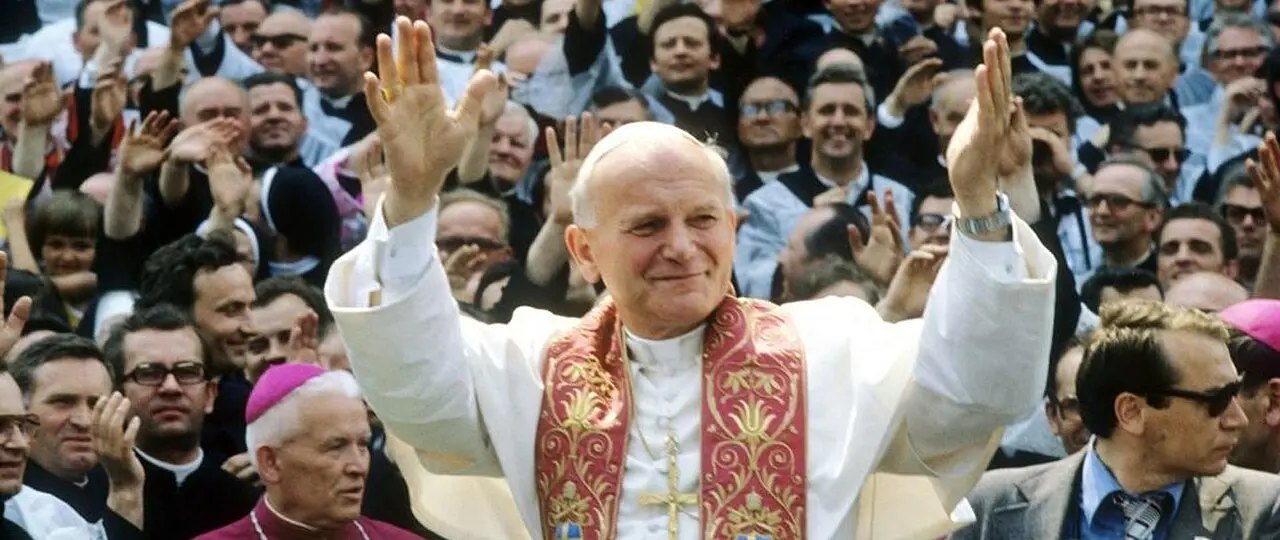
On June 2, 1979, a white-clad figure stepped off a plane in Warsaw, and the most powerful police state in Eastern Europe held its breath. Pope John Paul II was beginning his first pilgrimage to his native Poland — the first visit by any pope to a communist country, and nine days that historians say helped crack the Iron Curtain.
Less than eight months earlier, on October 16, 1978, the 58-year-old Cardinal Karol Wojtyla of Krakow had been elected pope — the first non-Italian to hold the office in centuries. The Kremlin and Poland's communist rulers were terrified: the leader of the world's Catholics would now be a man from behind the Iron Curtain. Poland's regime reluctantly agreed to let him come home, hoping to keep the visit small and quiet.
It was anything but. From June 2 to June 10, the pope traveled across the land of his birth — Warsaw, Gniezno, Czestochowa, his hometown of Wadowice, the former Nazi death camp at Auschwitz-Birkenau, and Krakow — under the motto "Gaude Mater Polonia," Rejoice, Mother Poland. Millions of Poles turned out, the largest peaceful gatherings in the country's postwar history. On that first day, in Warsaw's Victory Square, he declared, "There can be no just Europe without the independence of Poland marked on its map!" — and closed his homily with a prayer millions took up as their own: "Let your Spirit descend! Let your Spirit descend! And renew the face of the earth, the face of this land!"
The communists had expected a religious ceremony. What they got was a revolution of conscience. Poles who had been told for decades that they were alone looked around and saw millions of their countrymen standing together, unafraid. As University of Warsaw historian Pawel Skibinski later put it, "The pope's 1979 visit was the pebble that started the avalanche that changed the geopolitical situation of not only East and central Europe, but of the whole world." Within a year, the Solidarity trade-union movement was born in the Gdansk shipyards, and the long unraveling of Soviet domination had begun.
It matters because words, spoken to the right crowd at the right moment, can move history. John Paul II fired no shots and signed no treaties in those nine days; he simply showed a captive nation its own strength. A decade later, Poland was free, the Berlin Wall had fallen, and the map of Europe had been redrawn — with Poland's independence marked on it, just as he had said.
Photo: unknown author, CC BY 3.0 pl (via Wikimedia Commons). Pope John Paul II waves to crowds during his historic 1979 pilgrimage to Poland.