A Stroke of the Pen: Native Americans Win U.S. Citizenship
On June 2, 1924, President Calvin Coolidge signed the Indian Citizenship Act, granting U.S. citizenship to all Native Americans born in the country.
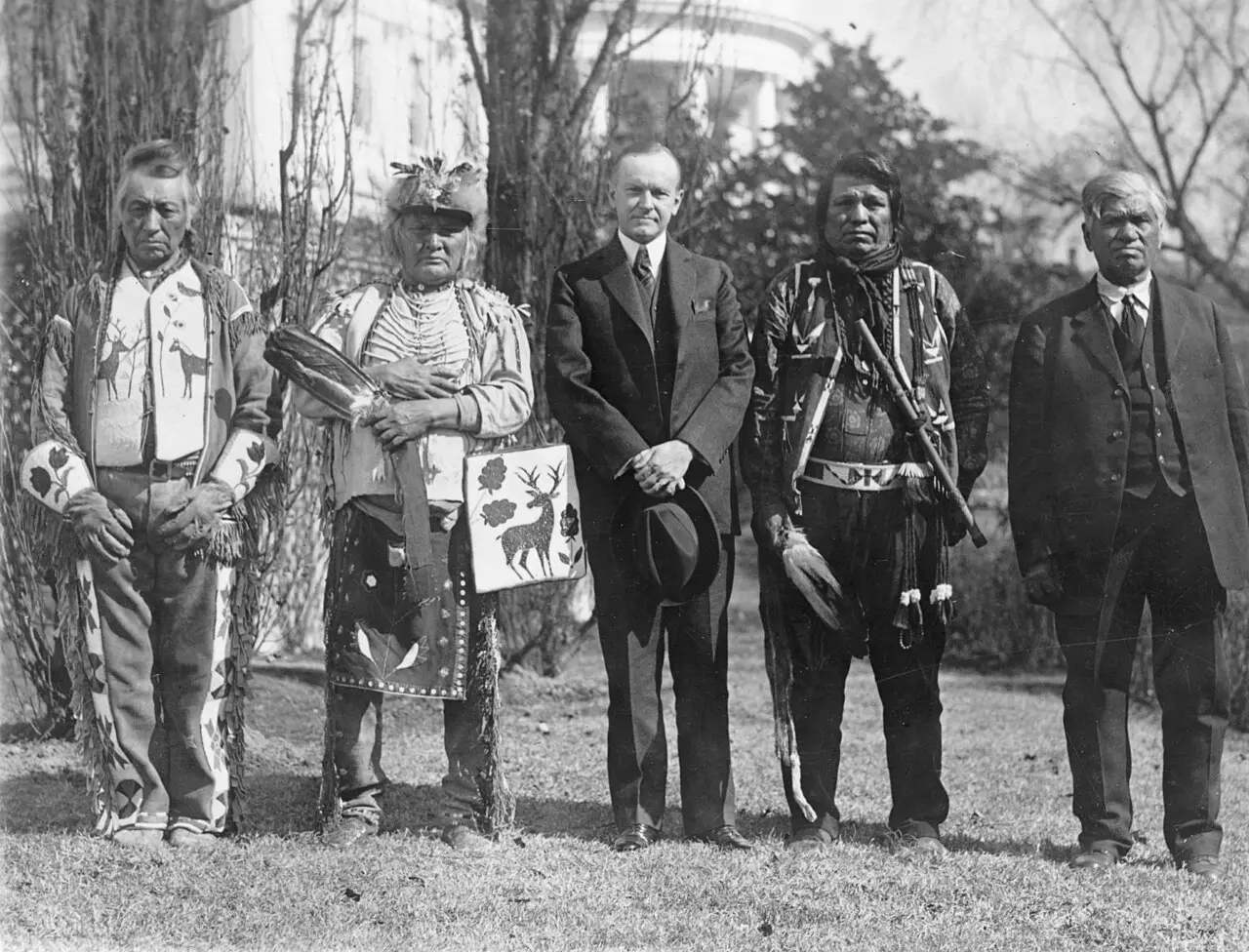
On June 2, 1924, President Calvin Coolidge signed a brief law that changed the legal status of more than a hundred thousand people with a stroke of a pen. The Indian Citizenship Act — also called the Snyder Act — declared that "all noncitizen Indians born within the territorial limits of the United States" were citizens of the United States. An estimated 125,000 Native Americans gained citizenship through it.
The law had traveled a deliberate path through Congress. Representative Homer P. Snyder, a New York Republican, introduced it as H.R. 6355 that February; the House passed it in March, the Senate in May, and both chambers agreed on the final version before it reached Coolidge's desk. The act also made clear that the new citizenship would not "in any manner impair" tribal property rights — a line meant to reassure those who feared federal citizenship was a back door to dissolving tribal lands.
Why was such a law needed at all? The Fourteenth Amendment had made "all persons born or naturalized in the United States" citizens — except those "not subject to the jurisdiction" of the federal government, a phrase long interpreted to exclude members of tribal nations, which were treated as separate sovereignties. Before 1924, a Native American could gain citizenship only through narrow individual routes, such as military service, marriage, or accepting an individual land allotment.
The strongest push for change came from the battlefields of World War I. Thousands of Native Americans served in the U.S. armed forces — at a higher per-capita rate than any other ethnic group — and many returned home to find they were still not citizens of the country they had fought for. Congress, moved in part by that service, decided the exclusion could not stand.
But the story has a sobering second chapter. Citizenship on paper did not mean a vote at the polls. Several states kept laws and barriers that blocked Native voters for decades, and full access to the ballot took court battles and civil-rights campaigns stretching into the mid-20th century. And not every Native leader celebrated the act itself — some saw citizenship imposed from Washington as another step toward erasing tribal sovereignty rather than honoring it.
It matters because it was a milestone on one of the longest roads in American civil-rights history. The act made Native Americans dual citizens — of the United States and of their tribal nations — and set the stage for the century of political organizing that followed, a century the nation marked with the act's centennial in 2024.
Photo: National Photo Company Collection, public domain (via Wikimedia Commons). President Calvin Coolidge with four Osage Indians at the White House after he signed the bill granting Native Americans full citizenship.