
Mata Hari: The Dancer Executed as a Spy
On October 15, 1917, the dancer Mata Hari faced a French firing squad at Vincennes, convicted of spying for Germany.
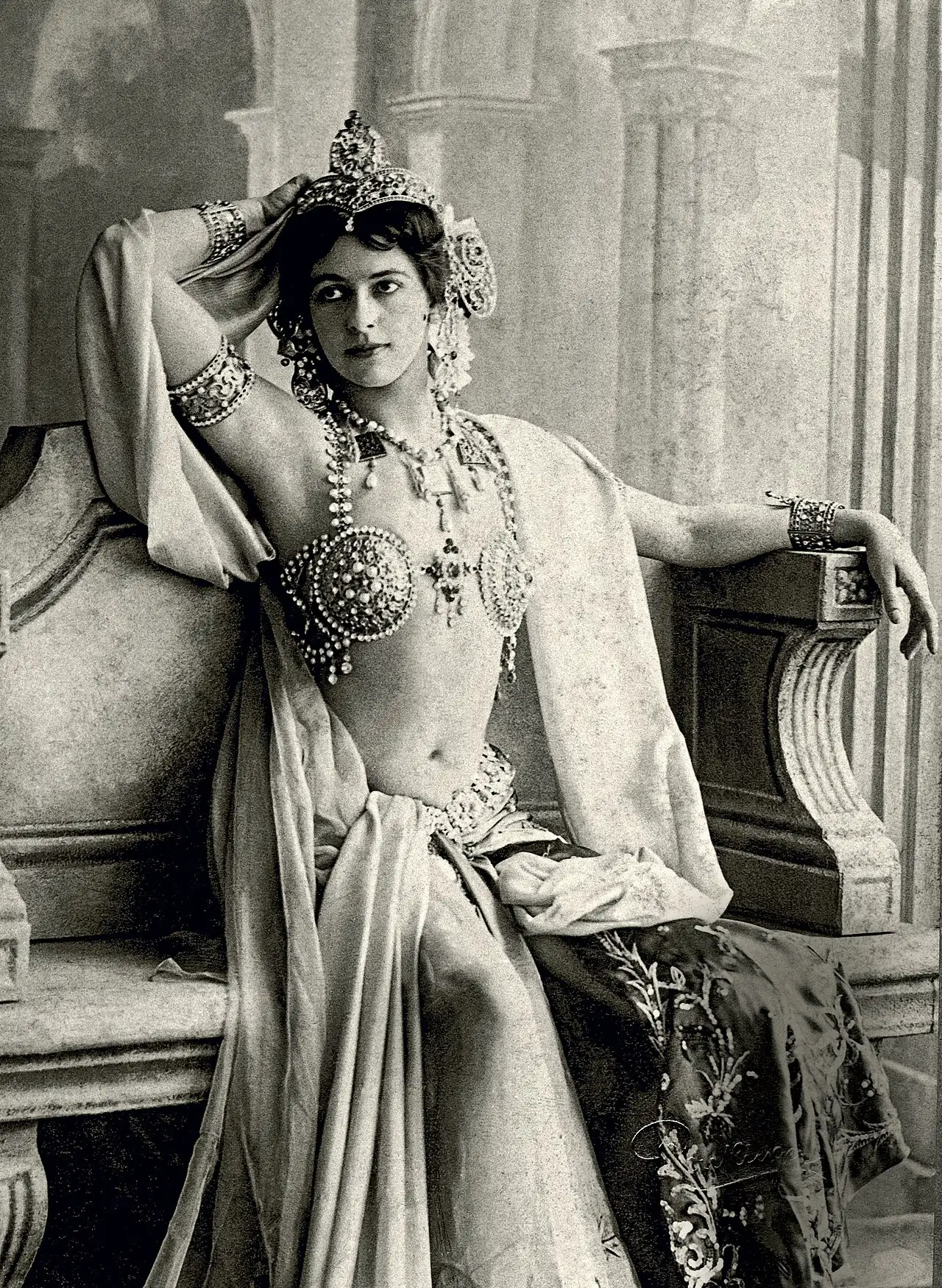
She was born Margaretha Geertruida Zelle in the Dutch town of Leeuwarden in 1876 — the daughter of a hatmaker, a schoolgirl, a young wife who followed her husband to the Dutch East Indies and came home again with little to show for it. Then, in Paris in 1905, she reinvented herself entirely. She took a new name from the Malay language — Mata Hari, "eye of the day," the sun — and a new past to go with it: a Javanese temple dancer, steeped in the sacred dances of the East.
It was almost entirely invention. But Paris didn't care. Mata Hari's performances — part theater, part striptease, wrapped in veils and jeweled breastplates — made her the sensation of pre-war Paris. She danced for packed houses, took wealthy lovers, and moved through the highest circles of European society. The photograph above, taken in 1906, shows her at the height of it: young, confident, famous.
Then came the war. When World War I broke out in 1914, Mata Hari's world of salons and lovers became a world of borders and secrets. As a Dutch citizen, she could travel freely between warring nations — and she did, moving between France, Spain, and the Netherlands, living off the generosity of powerful men on both sides. In 1916, French intelligence began to watch her. In February 1917, she was arrested in her Paris hotel room and charged with spying for Germany.
Her trial that summer was a sensation. The prosecution painted her as a lethal agent whose betrayals had cost the lives of tens of thousands of French soldiers. Mata Hari admitted taking money from a German handler — 20,000 francs — but insisted she had betrayed nothing of value, and that she had also offered her services to French intelligence. The military tribunal didn't believe her. She was convicted and sentenced to death.
Historians have argued ever since about whether the verdict was just. Much of the evidence rested on intercepted German radio messages whose meaning was ambiguous, and later biographers have suggested she was less a master spy than a convenient scapegoat — a notorious woman sacrificed to satisfy a French public furious at the army's failures in 1917.
None of that mattered on the morning of October 15, 1917. At dawn, at the Vincennes military grounds outside Paris, Mata Hari was executed by firing squad. She refused a blindfold. She was forty-one years old.
A century later, her name remains shorthand for the seductive female spy — the femme fatale of popular imagination. But the real Margaretha Zelle was something sadder and more ordinary: a woman who invented herself to survive, who played a dangerous game with powerful men, and who paid for it with her life on an October morning, for crimes historians still debate.
Photo: Mata Hari in 1906, soon after the Dutch-born dancer reinvented herself in Paris. Photographer unknown; public domain (published before 1929), via Wikimedia Commons.