Huckleberry Finn Sails Into American Bookstores
On February 18, 1885, Mark Twain's "Adventures of Huckleberry Finn" reached American bookstores — a plainspoken American voice and a searing portrait of slavery-era racism that reshaped literature.
The book that would define American literature almost didn't reach American readers on time. On February 18, 1885, Mark Twain's "Adventures of Huckleberry Finn" was finally published in the United States.
Twain — the pen name of Samuel Clemens, who had piloted steamboats on the Mississippi as a young man — had introduced Huck Finn nine years earlier as the ragged best friend in "The Adventures of Tom Sawyer." Huck's own story was a far more serious book. It follows Huck as he flees an abusive father and joins Jim, an enslaved man escaping to freedom, on a raft journey down the Mississippi River. Told in Huck's own plainspoken voice, it was among the first major American novels written entirely in American vernacular — the way people actually talked.
The book had already appeared in Britain and Canada in December 1884, but printing delays pushed the American release to February 18, 1885. Readers got a funny, thrilling adventure and, underneath it, a stinging portrait of the racism and hypocrisy of the pre-Civil War South. Through Huck's growing friendship with Jim — who is brave, wise, and generous while many of the white characters are foolish or cruel — Twain forced readers to question a society that preached freedom while practicing slavery.
Controversy arrived almost immediately. Within weeks, the public library in Concord, Massachusetts, banned the book, judging its language and subject matter too coarse for young readers. Other libraries followed. In the 20th century the challenges continued, this time over the novel's racial language and stereotypes — even as defenders argued the book's heart was firmly anti-racist. Ernest Hemingway would later declare that all modern American literature descended from it.
Part of the book's endurance is how alive it still feels: Huck's voice, Jim's dignity, and the river itself, rendered by a man who had piloted steamboats on it. Translated into dozens of languages and adapted for stage and screen countless times, the novel outgrew every controversy without ever escaping them.
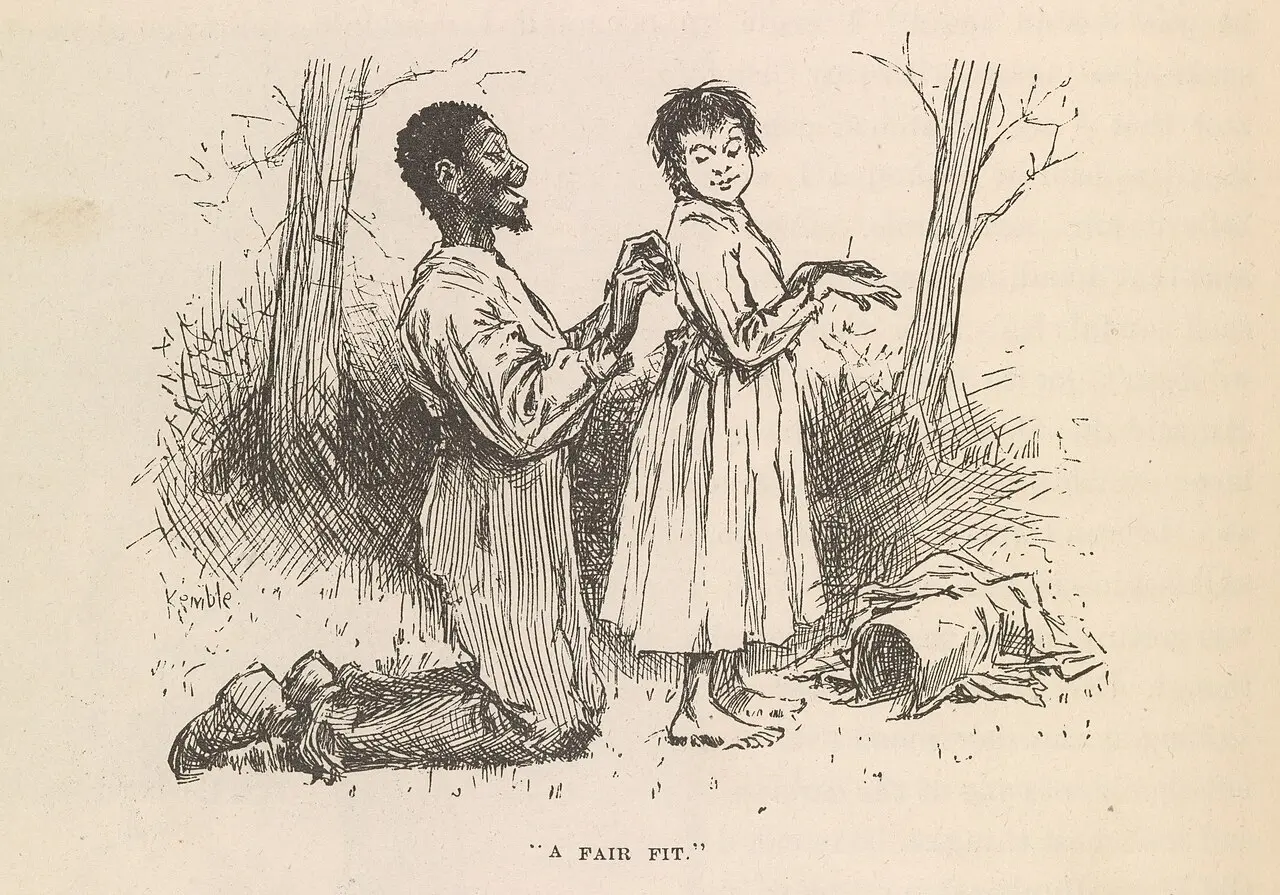
Today "Huckleberry Finn" remains one of the most taught, debated, and beloved novels in the English language, illustrated in its first edition by E. W. Kemble.
February 18, 1885 matters because it marks the arrival of a new American voice in literature: funny, plainspoken, and unafraid to hold a mirror up to the nation's deepest moral failure. Few books have been argued about longer — or mattered more.
Photo: E. W. Kemble's 1884 illustration "A Fair Fit," showing Jim and Huck, from the first edition of "Adventures of Huckleberry Finn." CC0 via the Metropolitan Museum of Art (via Wikimedia Commons).