Home at Last: The Corps of Discovery Returns
On September 23, 1806, Meriwether Lewis and William Clark sailed into St. Louis, completing the first recorded overland journey from the Mississippi River to the Pacific Ocean and back.
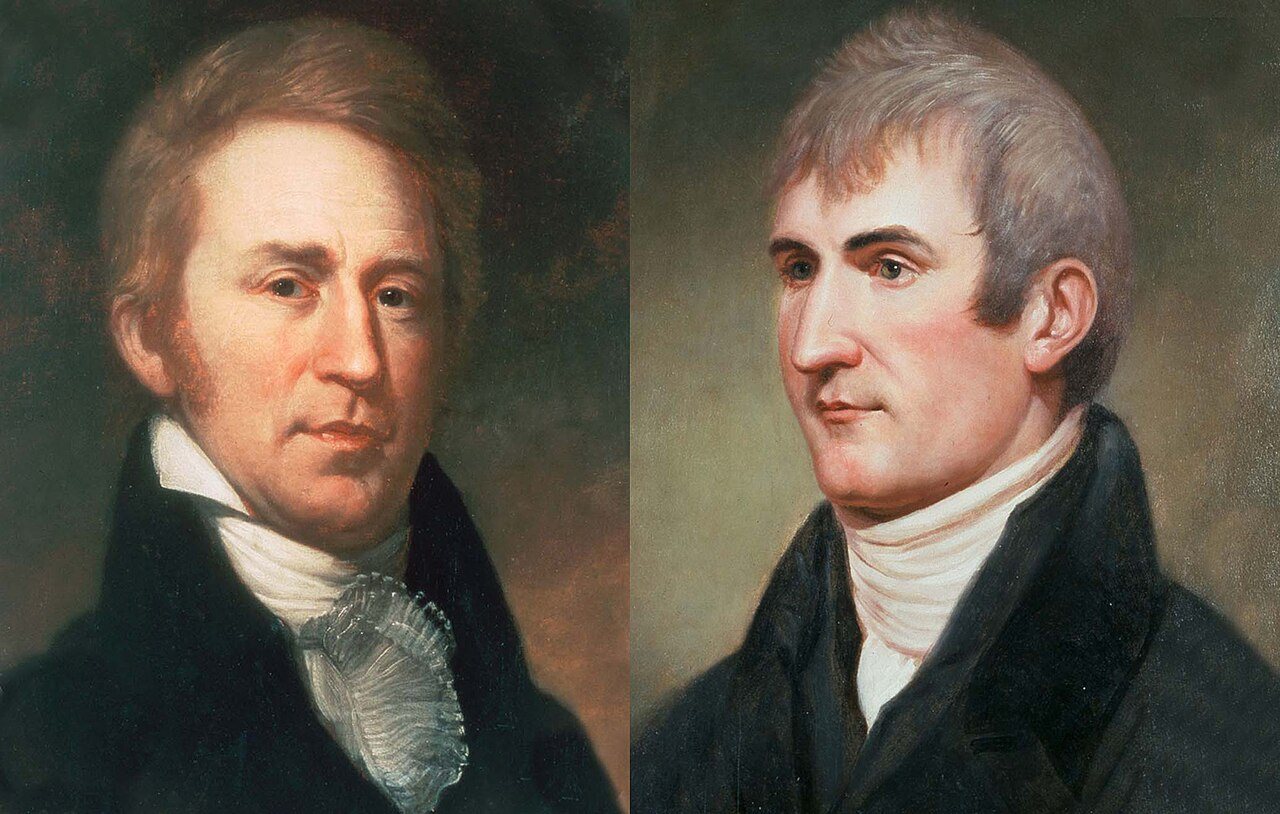
It was late September 1806, and word raced through St. Louis: canoes were coming down the Missouri. The men in them were gaunt, sunburned, and dressed in buckskin — and they were supposed to be dead. For weeks, travelers on the river had been telling the explorers the same startling news: back home, everyone had given them up for lost.
They were Meriwether Lewis and William Clark, and the journey ending that day had begun more than two years earlier. President Thomas Jefferson had commissioned the two army officers to explore the vast territory America had just acquired in the Louisiana Purchase — to find a practical route across the continent, map the unknown, and establish relations with the Native nations of the West. In May 1804, their party of some two dozen men, the Corps of Discovery, pushed up the Missouri River into country no American expedition had ever crossed.
What followed reads like the greatest adventure story ever written, except that it happened. They wintered with the Mandan people in present-day North Dakota, where a young Shoshone woman named Sacagawea — carrying her infant son — joined them as a guide and interpreter. They crossed the Rocky Mountains, descended the wild Clearwater, Snake, and Columbia rivers in dugout canoes, and in November 1805 reached the Pacific Ocean: the first Americans to get there by an overland route from the east. They built Fort Clatsop, endured a miserable rainy winter, and in the spring of 1806 turned for home.
The return was no victory lap. The party split in two to explore still more country — Lewis up the Marias River, Clark down the Yellowstone — and the two groups did not reunite until August. Then they raced the Missouri's current downstream, covering in weeks what had taken months going up. When they finally stepped ashore in St. Louis on September 23, 1806, they carried journals, maps, and specimens of plants and animals that science had never described.
The expedition's maps and reports opened the American West to the world — and gave the young United States a powerful claim to the Oregon country. Lewis was named governor of the upper Louisiana Territory, and both men became national heroes. It is also true that the westward expansion their journey helped unleash would come at a devastating cost to the Native nations whose lands they crossed — a legacy Americans are still reckoning with today. But on that September day in St. Louis, the story was simpler: the lost men had come home, and they had seen the Pacific.
Photo: Charles Willson Peale, public domain (via Wikimedia Commons).