Four Republics Walk Into a Theater — a Superpower Walks Out
On December 30, 1922, delegates at Moscow's Bolshoi Theatre proclaimed the Union of Soviet Socialist Republics, redrawing the map of the 20th century.
The ushers of history sometimes work in theaters. On December 30, 1922, some 2,215 delegates filed into Moscow's Bolshoi Theatre — and voted a new country into existence: the Union of Soviet Socialist Republics.
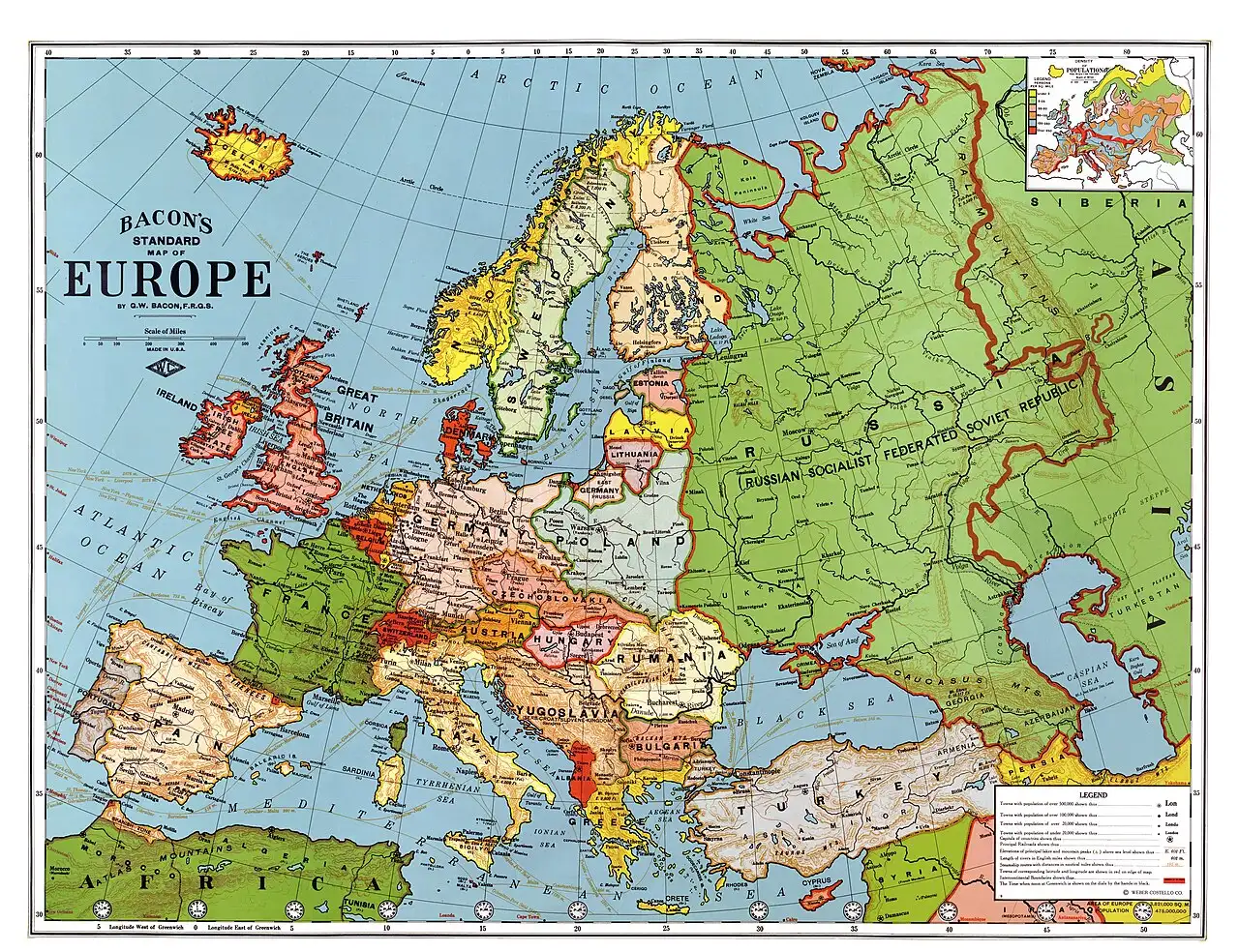
Russia had just survived five years of revolution and civil war. The Bolsheviks now controlled a vast patchwork: Russia itself, Ukraine, Belorussia, and the Transcaucasian republics of the Caucasus. The question was how to hold such different lands together — and the answer, approved that day in the form of a Declaration and a Treaty, was a new federal state with key powers centralized in Moscow.
Mikhail Kalinin chaired the First All-Union Congress of Soviets. Vladimir Lenin, the revolution's leader, was gravely ill and absent — the delegates elected him honorary chairman in his sickbed's honor. More than ninety percent of the delegates were Communists; the outcome was never in doubt, but the form mattered: the new union was presented as a voluntary association of peoples, each republic theoretically retaining the right to secede.
The state born that day was enormous — it would eventually span eleven time zones and grow to fifteen republics — and it shaped the century that followed: breakneck industrialization, the Eastern Front of the Second World War, the space race, and the long Cold War standoff with the United States. For most of the twentieth century, world politics was, in large part, the story of the country voted into being at the Bolshoi.
The new state wasted no time becoming a world power in waiting. A constitution followed in 1924, the economy was rebuilt under the New Economic Policy, and Joseph Stalin — who had become the Communist Party's General Secretary that April — steadily concentrated power. From four founding republics the union grew to fifteen, spanning eleven time zones from the Baltic to the Pacific. By mid-century, the state born in a theater would put the first satellite and the first human in space, and hold half of Europe in its orbit.
It lasted sixty-nine years. In December 1991, the union dissolved almost as swiftly as it had been proclaimed.
The vote in the theater created the defining rival of the American century — and left a quieter lesson underneath the grand one: that even the mightiest states are, at bottom, agreements made by people in a room, on a particular day, in December.
Photo: Map of Europe in 1923 by George Washington Bacon, public domain (via Wikimedia Commons).