Eli Whitney's Cotton Gin Patent — and Its Terrible Irony
On March 14, 1794, Eli Whitney received a patent for the cotton gin, an invention meant to ease labor that instead fueled the brutal expansion of slavery.
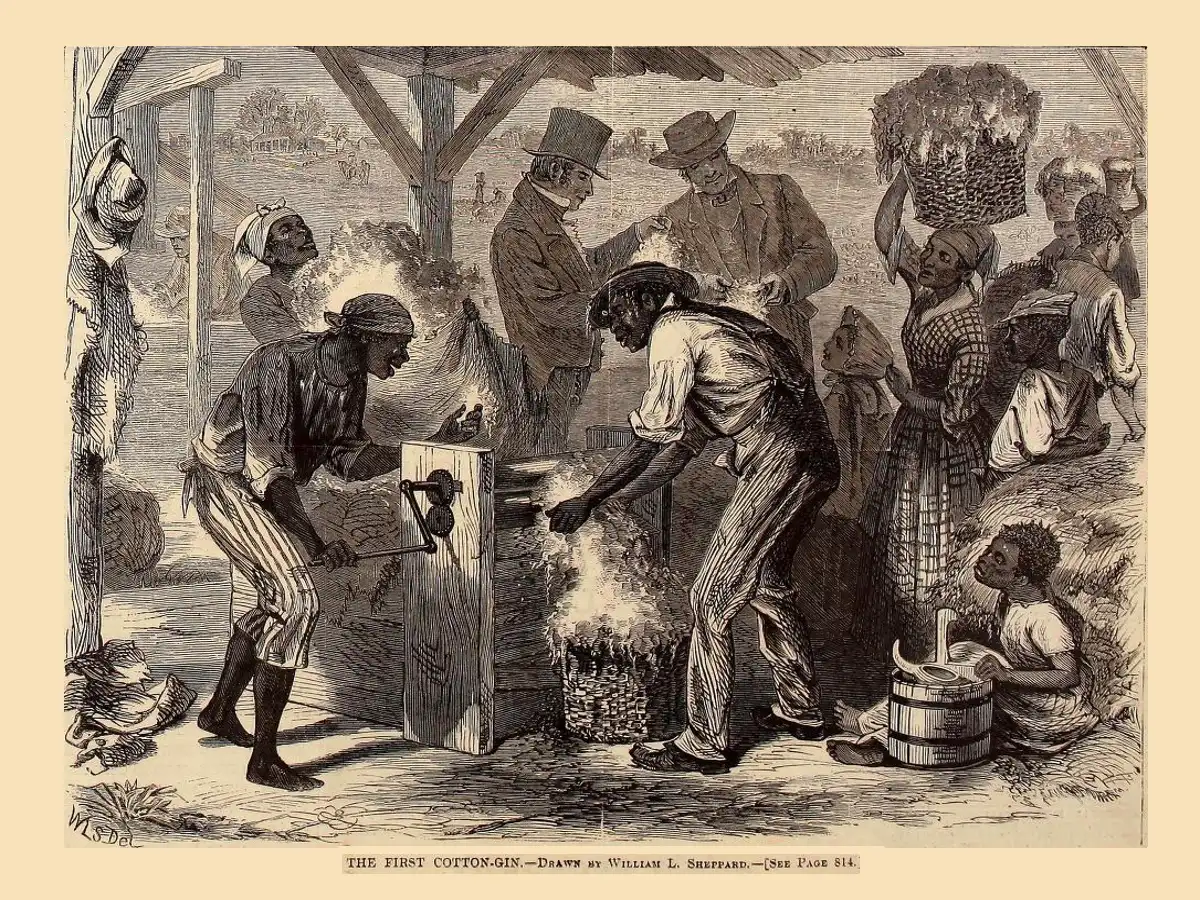
One machine could do the work of many hands. It was supposed to make slavery unnecessary. It did the opposite.
On Friday, March 14, 1794, the United States granted a patent to Eli Whitney, a 28-year-old Yale graduate, for what the patent called 'a new and useful improvement in the mode of ginning cotton.' The machine was the cotton gin, and it would change America — in ways Whitney never imagined.
A year earlier, Whitney had been staying at Mulberry Grove, a plantation near Savannah, Georgia, owned by Catherine Greene, the widow of Revolutionary War general Nathanael Greene. The planters there told him their problem: the South could grow enormous amounts of cotton, but pulling the seeds from the fiber by hand was so slow and laborious that cotton could barely turn a profit. Whitney — a New Englander who had never seen a cotton plant before arriving in Georgia — built a machine with revolving wire teeth that pulled the fiber through a slatted grate too narrow for the seeds to follow.
It worked brilliantly. A single gin could clean cotton far faster than a team of workers doing it by hand, turning a marginal crop into a money machine.
Whitney's business plan, though, was his undoing. Instead of selling his gins outright, he tried to charge planters two-fifths of their cotton for the privilege of using them. The farmers thought the toll was robbery — and simply built their own copies of the machine. Whitney spent years in expensive lawsuits defending his patent, and by most accounts he never grew rich from the invention that made his name.
But the gin's real impact had nothing to do with Whitney's fortunes. Suddenly cotton was wildly profitable, and planters rushed to grow it across Georgia, Alabama, and Mississippi. The demand for enslaved labor — the workforce that planted, tended, and picked the cotton — exploded with it. Cotton became the young nation's most valuable export, and the economy of the South reorganized itself around the crop and the brutal system of forced labor that produced it.
Historians still argue over exactly how much of this to lay at the cotton gin's door. Slavery was already deeply entrenched, and hungry British textile mills were driving demand too. But the direction of the story is not in dispute: an invention meant to save labor ended up multiplying the demand for enslaved workers, tightening slavery's grip on the South in the very decades when the rest of the Western world was beginning to turn against it.
Why does it matter? The cotton gin is history's classic warning about unintended consequences. Technology does not choose how it is used — people do. A clever machine, patented on a March day in 1794, helped make cotton king, and helped entrench slavery so deeply that only a civil war could finally end it.
Photo: 'The First Cotton-Gin,' an 1869 Harper's Weekly engraving by William L. Sheppard showing enslaved workers operating an early gin; public domain via Wikimedia Commons.