David Against Goliath in the Snow: The Winter War Begins
On November 30, 1939, the Soviet Union invaded Finland — and the tiny Nordic nation turned its frozen forests into a graveyard for one of the world's largest armies.
On the morning of November 30, 1939, Soviet bombers appeared over Helsinki and Red Army divisions poured across Finland's eastern border. Three months into World War II, Joseph Stalin had decided to settle accounts with his small northwestern neighbor. The Winter War had begun.
Stalin's demands had been building for months. Citing the security of Leningrad, just 20 miles from the Finnish border, Moscow demanded Finnish border territory, islands in the Gulf of Finland, and a naval base at Hanko — offering remote Soviet land in exchange. Finland refused. A disputed border shooting at Mainila gave Moscow its pretext, and the invasion followed without a declaration of war — an attack that, as Finnish statesman J.K. Paasikivi later noted, violated three separate non-aggression pacts.
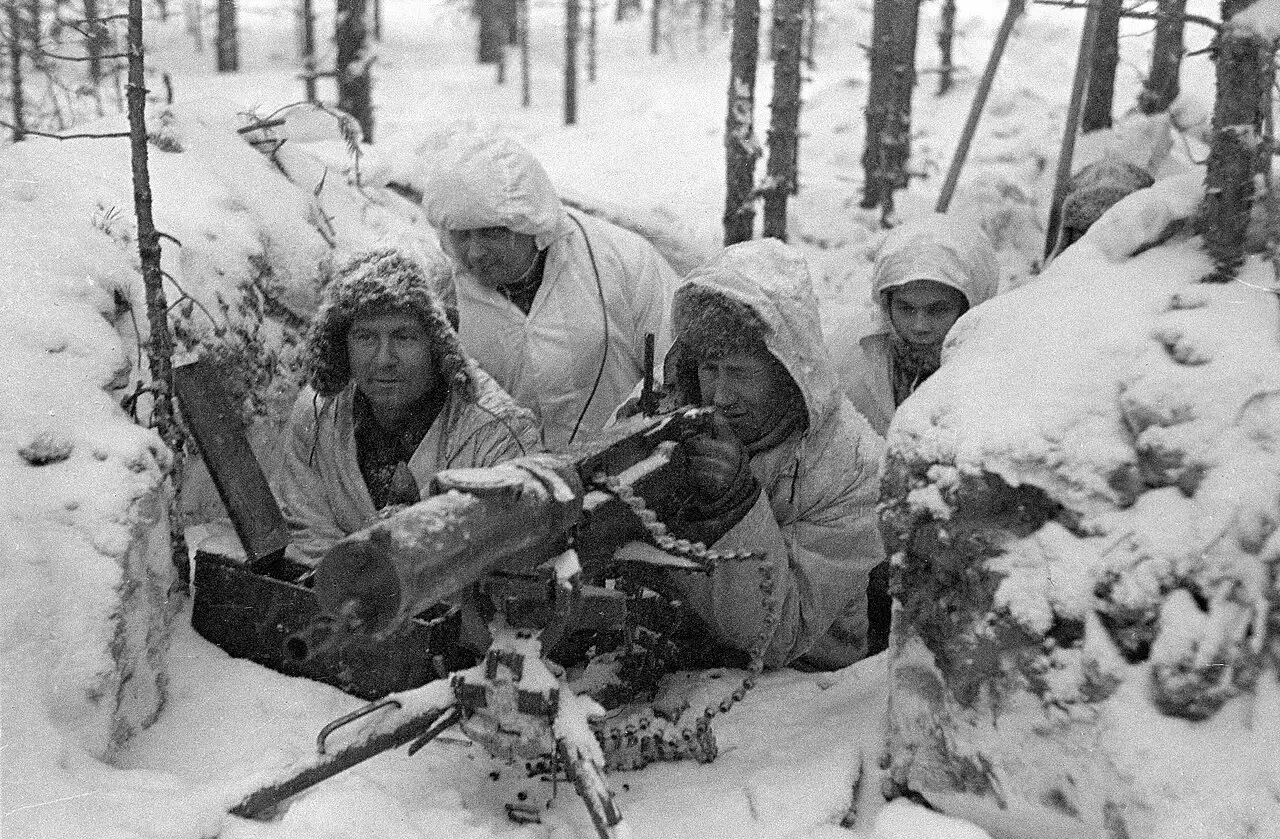
On paper it was no contest: Finland fielded roughly 300,000 soldiers, 32 tanks, and about 114 aircraft against a Soviet force many times larger in men, tanks, and planes. Stalin had expected the whole country to fall by the end of the year. But the Finns, led by Marshal Carl Gustaf Mannerheim, were fighting at home — in forests and cold they knew intimately. On the Karelian Isthmus they held the Mannerheim Line, a network of trenches, concrete bunkers, and field fortifications, and beat back repeated Soviet tank assaults at Taipale. In the north, Finnish ski troops in white camouflage cut isolated Soviet columns to pieces in hit-and-run attacks at Kollaa and along the Raate Road. Temperatures plunged to -43°C, freezing Soviet machinery and men alike. A farmer-turned-sniper named Simo Häyhä was credited with more than 500 kills. Moscow even installed a puppet "Finnish Democratic Republic" under Otto Kuusinen; almost no Finns supported it, and it was quietly discarded.
The world watched in disbelief and admiration. The League of Nations declared the invasion illegal and expelled the Soviet Union on December 14. Volunteers and aid flowed to Finland from around the globe.
The war ended on March 13, 1940, with the Moscow Peace Treaty. Finland ceded about a tenth of its territory — the Karelian Isthmus, Ladoga Karelia, and a naval-base lease at Hanko — but kept its independence and won considerable international goodwill, and the "spirit of the Winter War" became a founding legend of the nation. The Red Army, meanwhile, had suffered several hundred thousand casualties, exposing weaknesses that the whole world — including, fatefully, Adolf Hitler — took note of.
Photo: Finnish Defence Forces (SA-kuva), public domain (via Wikimedia Commons).