Booed in Paris: The Night Carmen Premiered
On March 3, 1875, Bizet's Carmen shocked Paris with a heroine who lived free and died onstage — the audience hated it, and the composer never knew it would conquer the world.
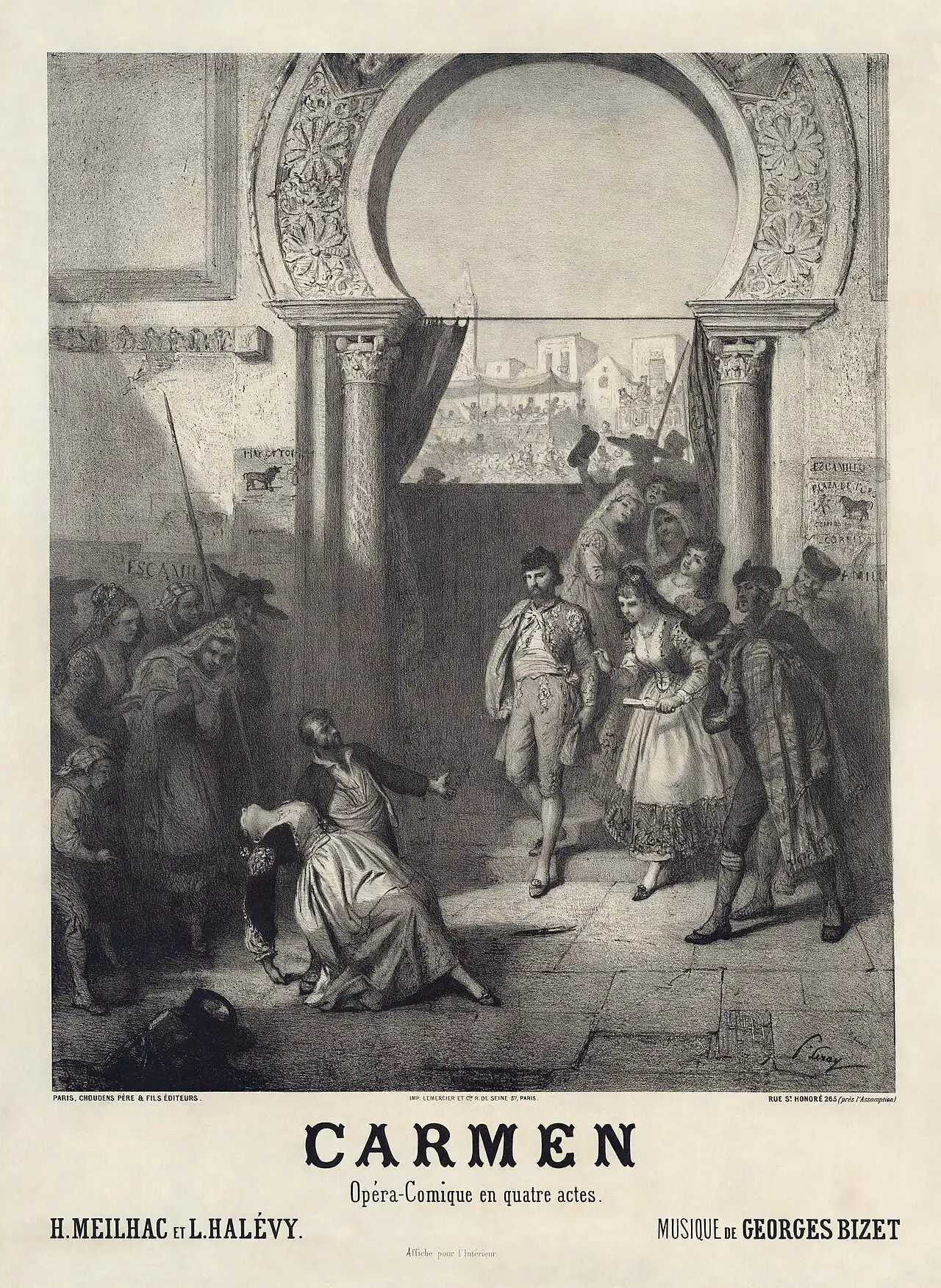
On the evening of March 3, 1875, the curtain rose at the Opéra-Comique in Paris — in the elegant Salle Favart — on something the audience had never seen. The heroine was not a noblewoman or a tragic queen but Carmen: a cigarette-factory worker, a smuggler's accomplice, a woman who loved whom she pleased and answered to no man. By the final act she lay dead on the stage, stabbed by her jealous lover. Respectable Paris was scandalized.
The opera was the work of Georges Bizet, then 36, with a libretto by Henri Meilhac and Ludovic Halévy drawn from Prosper Mérimée's novella. It was written in the opéra comique style, with spoken dialogue between the musical numbers — and the music was astonishing: the slinking "Habanera," the defiant "Seguidilla," the swaggering "Toreador Song" of the bullfighter Escamillo. Melodies the whole world would be humming within a generation.
But on that first night, almost nobody hummed. The breaking of conventions — the depiction of working-class life, the immorality, the lawlessness, the murder of the leading lady in full view — shocked the theater's bourgeois subscribers. Most reviews were critical, and the public was largely indifferent. The management had even warned patrons in advance about the story's nature; it did not help. Paris, which fancied itself the capital of art, had been offered a masterpiece and flinched.
Carmen ran for just 33 performances. Three months after the premiere, on June 3, 1875, Bizet died suddenly at 36 — convinced, by all accounts, that his boldest work had failed. He never knew what came next.
What came next was everything. Carmen found its first triumphs outside France, and when it was finally revived in Paris in 1883, audiences embraced what they had once rejected. Within a decade it was an international sensation, admired by composers including Brahms and Tchaikovsky. Today it stands as one of the most popular and frequently performed operas in the classical canon — the Habanera and the Toreador Song among the most recognized melodies ever written.
Critics now see Carmen as the bridge between the old opéra comique tradition and the gritty realism — verismo — that would define late 19th-century opera. But its real legacy is simpler and more human: it is the story of art outliving its first audience's judgment. The Parisians of March 1875 wanted Carmen punished for her freedom; the world, given time, chose to celebrate her for it.
Photo: poster for the 1875 premiere of Georges Bizet's Carmen by Prudent-Louis Leray, public domain via Wikimedia Commons.