
A Song Becomes the National Anthem at Last
On March 3, 1931, President Herbert Hoover signed the law that made "The Star-Spangled Banner" the official national anthem of the United States.
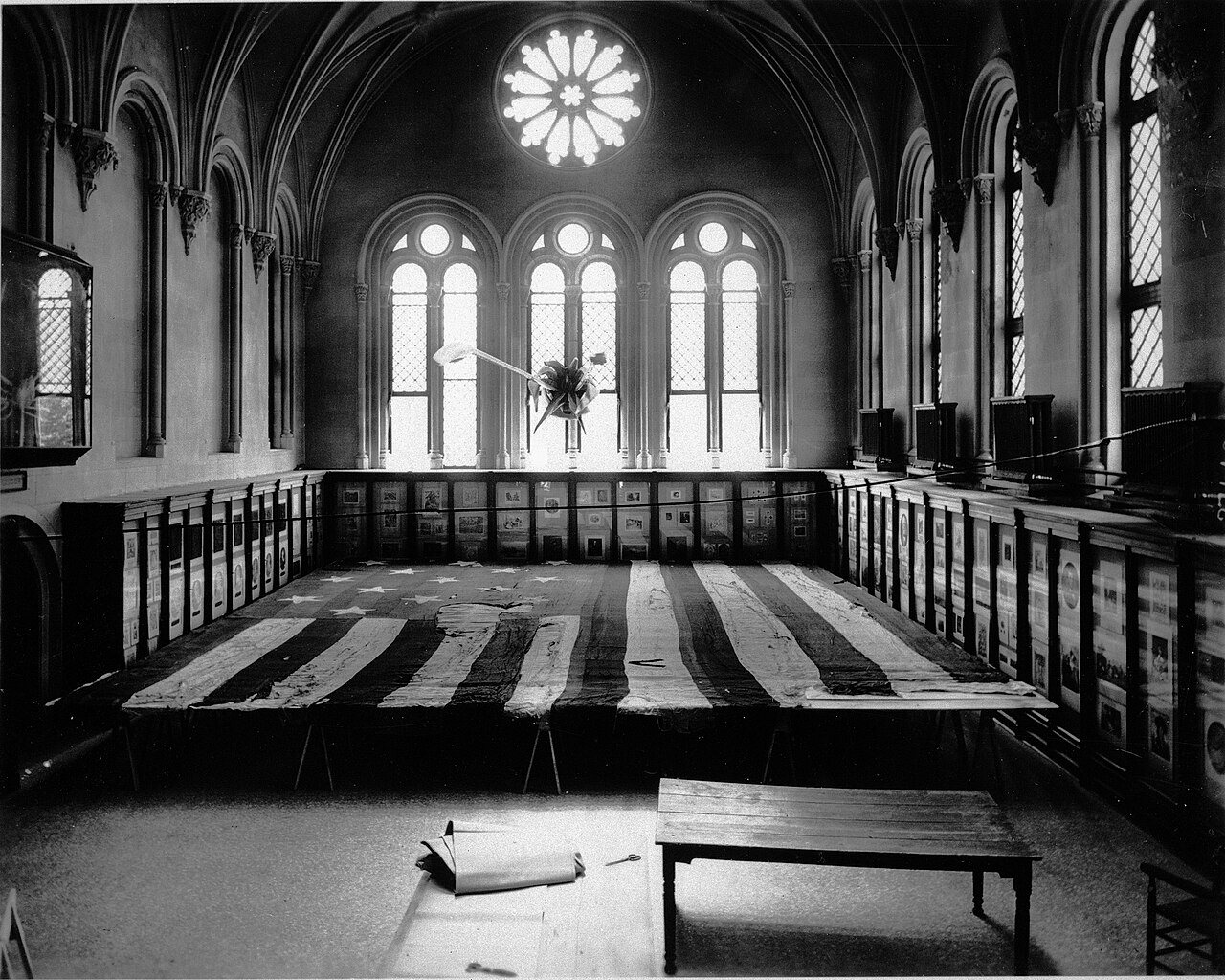
It took 117 years. Francis Scott Key wrote the words in 1814, generations of Americans sang them at ballgames and parades, the Navy and the Army adopted them — and still, as of 1930, the United States of America had no official national anthem. That changed on March 3, 1931, when President Herbert Hoover signed a congressional resolution formally designating "The Star-Spangled Banner" as the anthem of the United States.
The words were born in a battle. In September 1814, during the War of 1812, the British Royal Navy bombarded Fort McHenry in Baltimore Harbor. Key, an American lawyer detained aboard a British ship, watched through the night and saw at dawn that the fort's enormous flag — 42 feet wide and 30 feet tall, with 15 stars and 15 stripes — was still flying. He scribbled a poem he called "Defence of Fort M'Henry," published days later in a Baltimore newspaper. Set to the tune of an English drinking song, "To Anacreon in Heaven," it became "The Star-Spangled Banner," and by the Civil War it was one of America's most beloved patriotic songs.
Making it official was a long slog. The Navy adopted it for ceremonies in 1889, and President Woodrow Wilson ordered it played at military occasions in 1916. But Congress kept stalling: some lawmakers thought the lyrics were too anti-British, others complained the melody — with a range of 19 semitones — was nearly unsingable, and it remains one of the hardest songs in the American canon, a famous trial for soloists; New England holdouts favored "My Country, 'Tis of Thee." What finally broke the deadlock was, of all things, a popular comic strip, whose outreach campaign rallied enough grassroots support to push the bill through. Congress passed the resolution — 46 Stat. 1508, now codified at 36 U.S.C. § 301(a) — and Hoover signed it on March 3, 1931.
By then the song was already woven into American life. The tradition of playing it at sporting events dated to a spontaneous 1918 World Series performance, when a Navy band struck it up during the seventh-inning stretch and the crowd stood and sang. Today it opens ballgames, graduations, and inaugurations — usually just the first of Key's four stanzas, the only one most of us know by heart.
On March 3, 1931, the song Key wrote about a flag that refused to fall finally got the title it had earned a century earlier.
Photo: unknown author, public domain (via Wikimedia Commons).