
A Night of Shots on the Lugou Bridge — and the War That Followed
A missing soldier, a midnight standoff, and gunfire on an ancient stone bridge pulled China and Japan into eight years of devastating war.
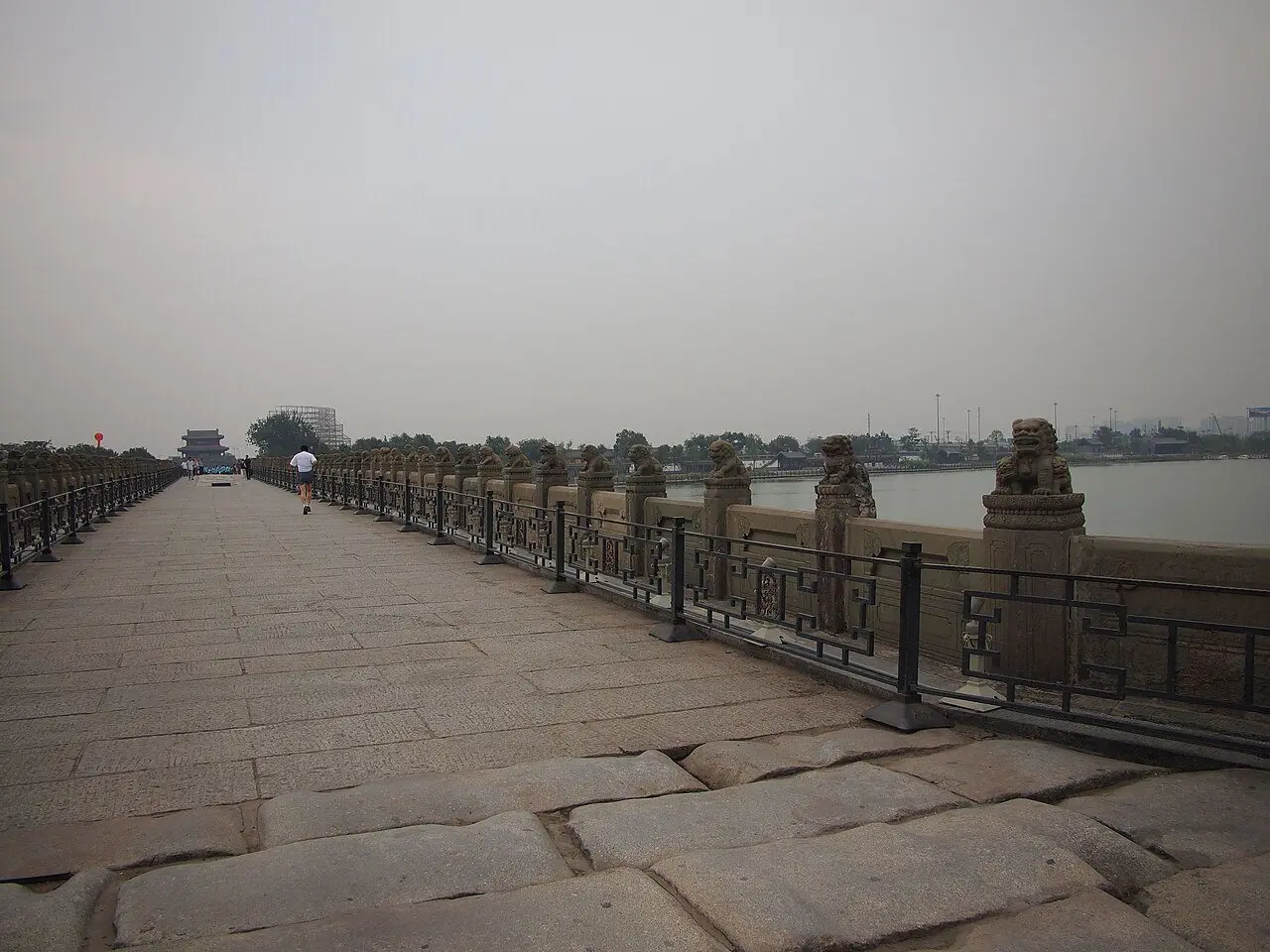
On the night of July 7, 1937, the sound of gunshots shattered the peace near an old stone bridge southwest of Beijing. The Lugou Bridge — an eleven-arch granite crossing the West knows as the Marco Polo Bridge, after its appearance in Marco Polo’s travel writings — had stood for centuries. That night, on its stones, a confused standoff between Chinese and Japanese troops ignited what would become the Second Sino-Japanese War.
Japanese garrison troops had been holding night maneuvers near the walled town of Wanping, this time without the usual advance notice. When the exercise ended, the Japanese claimed a soldier, Private Kikujiro Shimura, was missing — and demanded permission to enter Wanping to search for him. The Chinese commander, Colonel Ji Xingwen, refused; marching armed foreign soldiers into a sleeping town would have caused panic. Fighting broke out while the complaint was still being negotiated. By about 5:30 the next morning, Japanese artillery was shelling the bridge and the town, and an assault was underway. The irony: the missing soldier had already found his way back to his own lines.
What followed was a three-day battle between the 29th Army of China’s National Revolutionary Army and the Imperial Japanese Army. Earlier scuffles along the railway connecting Beijing to the port of Tianjin had always subsided. This one did not. Historians still debate whether the incident was an accident that spiraled out of control or a deliberately manufactured provocation; either way, by the end of July 1937 fighting had escalated into full-scale war.
The toll was staggering. The Japanese took Beijing and Tianjin within weeks, fought a grinding battle for Shanghai, and in December captured Nanjing, where six weeks of atrocities became known as the Nanjing Massacre. China’s government retreated to Chongqing and waged a brutal war of attrition until Japan’s surrender in 1945. The Library of Congress estimates some 20 million Chinese dead, military and civilian, and 480,000 Japanese soldiers killed on Chinese soil. Some historians describe the war that began that night as the true start of World War II.
The Lugou Bridge still stands, its carved stone lions weathered by the centuries — silent witnesses to the night a missing-soldier claim turned a local skirmish into a continental catastrophe.
The bridge itself was far older than the armies that fought over it. The Lugou Bridge — its name comes from a former name of the Yongding River — was first erected under the Jin dynasty and restored in 1698 during the reign of the Qing dynasty’s Kangxi Emperor. Its parapets are famously lined with hundreds of carved stone lions, each one different. Marco Polo admired it enough to include it in Il Milione, his account of his travels, which is how the West came to know it as the Marco Polo Bridge.
The clash was also the product of years of mounting pressure. Since Japan’s invasion of Manchuria in 1931, small incidents had flared repeatedly along the rail line connecting Beijing to the port of Tianjin — but every earlier flare-up had subsided. Chiang Kai-shek had even formed a United Front with the Communists in 1936 to face the looming threat. This time, appeasement failed. Japanese heavy bombers began raiding Chinese factories, airfields, and civilian targets — some of the first major air attacks on cities in the history of warfare.
Today the bridge still stands outside Beijing, and nearby a memorial hall honors the war that began on its stones. It is a reminder of how thin the line can be between a night of confused gunfire and a catastrophe that consumes tens of millions of lives.
Photo: rheins, CC BY 3.0 (via Wikimedia Commons).