Washington to Moscow, Please: The Hotline Born June 20, 1963
On June 20, 1963, the U.S. and Soviet Union signed the Hot Line Agreement in Geneva, creating a direct crisis link between the nuclear superpowers.
It is the most famous telephone in history, and it was never a telephone at all.
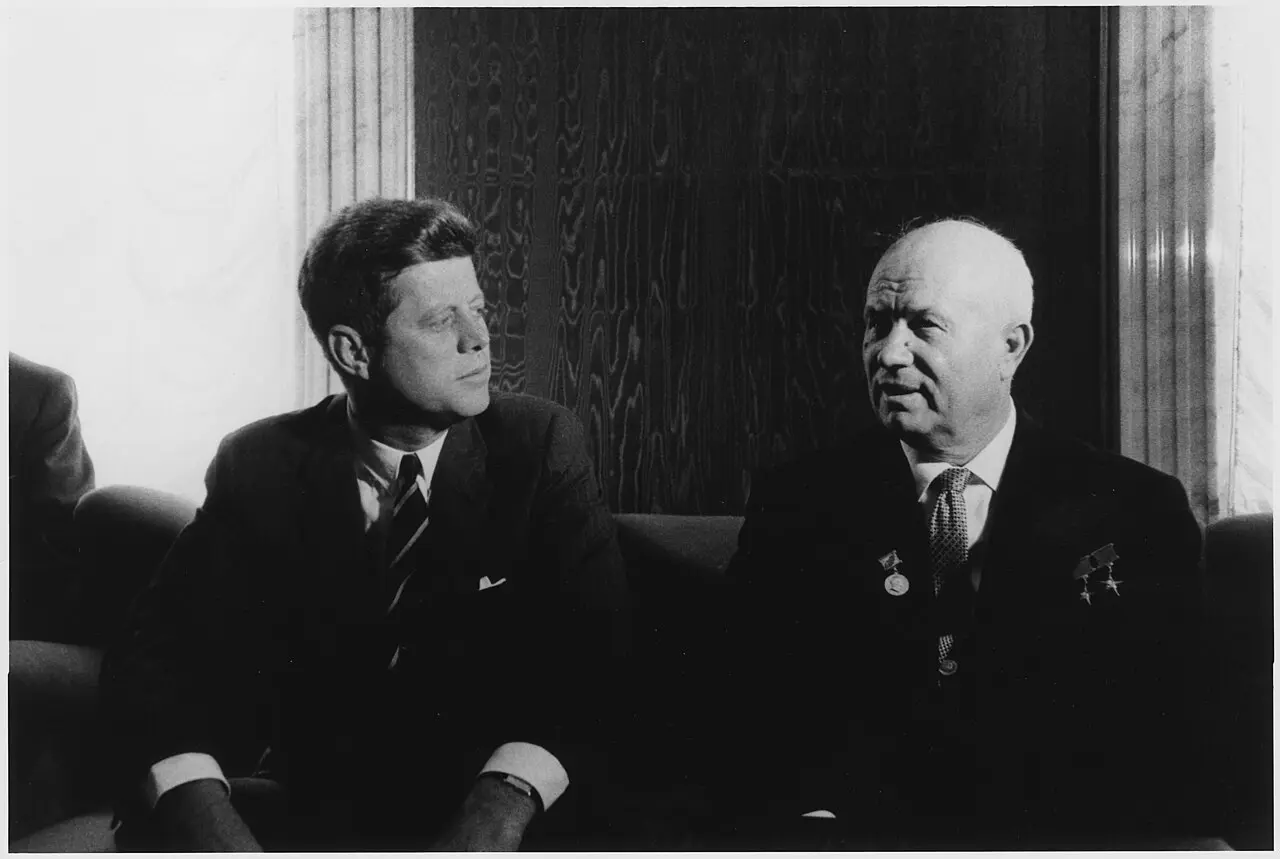
In October 1962, the Cuban Missile Crisis brought the United States and the Soviet Union to the edge of nuclear war. For thirteen terrifying days, President John F. Kennedy and Soviet leader Nikita Khrushchev had no direct way to talk to each other. Messages crawled through embassies and telegrams, taking hours to deliver and translate, while the world held its breath. Both sides came away convinced that the two nuclear superpowers needed a direct line — before a misunderstanding ended civilization.
On June 20, 1963, in Geneva, Switzerland, American and Soviet representatives signed the "Memorandum of Understanding Regarding the Establishment of a Direct Communications Link." The U.S. State Department later called it the first bilateral agreement between the two countries that gave concrete recognition to the perils of modern nuclear weapons — a practical step to bring those perils under rational control.
The memorandum was signed by Charles C. Stelle for the United States and Semyon K. Tsarapkin for the Soviet Union, the two countries' acting representatives to the disarmament talks. The idea itself was older than the crisis: the Soviets had first floated a direct line publicly in 1954, and in 1958 the Americans proposed discussing it at a Geneva conference on surprise attack. But Cold War diplomacy moved slowly, and four years brought almost no progress — until thirteen days in October 1962 made delay unthinkable.
Contrary to every movie, the hotline was text-only from the start. Voice calls were considered too easy to misinterpret, so the leaders would write messages in their own language and have them translated at the receiving end. The link ran on teletype machines, carried over a full-time wire circuit routed through London, Copenhagen, Stockholm, and Helsinki to Moscow, with a backup radiotelegraph circuit via Tangier. It was installed on August 30, 1963.
The line proved its worth quickly. President Lyndon B. Johnson first used it during the Six-Day War in 1967 to prevent misunderstandings about American fleet movements in the Mediterranean, and it was used again during the 1973 Arab-Israeli war. The two countries modernized the link in 1971, 1984, and 1988, upgrading it from teletype to satellite and beyond.
The hotline never rang with dramatic midnight calls the way Hollywood imagined. Its power was quieter: in a crisis, the two most heavily armed leaders on Earth could reach each other in minutes instead of hours. More than sixty years after that June day in Geneva, the direct communications link still exists — a reminder that even rivals can agree on one thing: the importance of being heard correctly.
Photo: Stanley Tretick, public domain via the U.S. National Archives (via Wikimedia Commons).