Two Weeks to Two Minutes
On July 27, 1866, a working telegraph cable finally came ashore in Newfoundland — and the world got its first taste of instant communication.
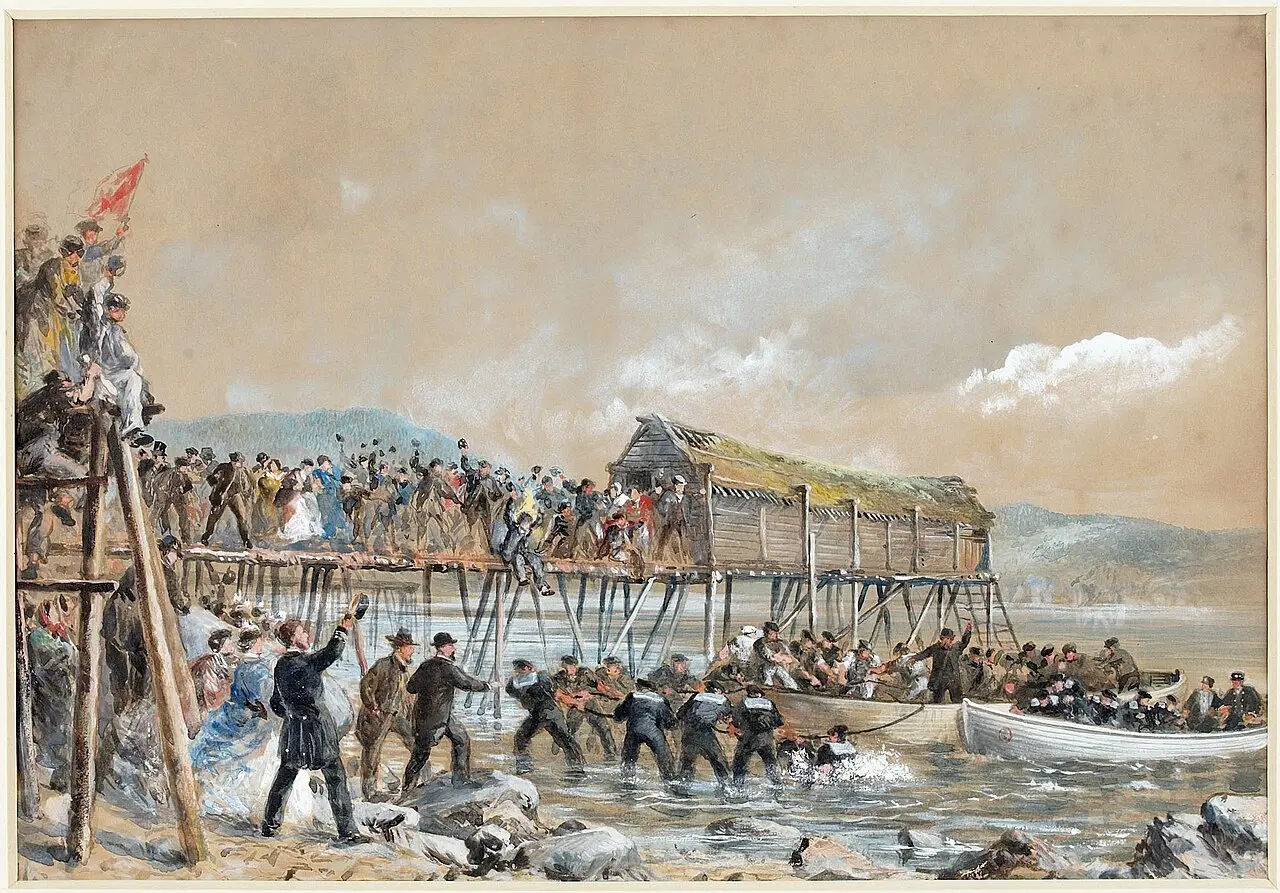
On July 27, 1866, the world shrank.
That day, the giant steamship SS Great Eastern finished laying a copper cable some 1,686 nautical miles long, from Valentia Island off the coast of Ireland to a tiny fishing village called Heart's Content, Newfoundland. For the first time in history, a permanent, working telegraph wire connected Europe and North America.
The road to that beach was littered with failure. The dream belonged to Cyrus West Field, a New York businessman who had been chasing it since the 1850s with a circle of wealthy backers — including Samuel Morse — that called itself the Cable Cabinet. An 1858 cable had crackled to life, then died after three weeks, killed in part by engineers who pumped too much voltage through it trying to speed it up. A second attempt in 1865 went well until, 600 miles from Newfoundland, the cable snapped and sank into the ocean; after dozens of tries with grappling hooks, the crew gave up and marked the spot with a buoy.
Field refused to quit. In July 1866 the Great Eastern — a leviathan co-designed by Isambard Kingdom Brunel, the only ship big enough to carry the entire cable in one hold — steamed west from Ireland on July 13. This time the insulation held. On the 27th, the cable came ashore to cheering crowds. Then Field turned the ship around, sailed back to the buoy, and after more than two weeks of trying, fished the lost 1865 cable off the ocean floor and spliced it. Within weeks there were two working cables where there had been none.
The first messages carried the news of the day: a treaty of peace between Austria and Prussia. Then Queen Victoria sent word to President Andrew Johnson: "The Queen congratulates the President on the successful completion of an undertaking which she hopes may serve as an additional bond of Union between the United States and England."
The slogan of the age was "Two weeks to two minutes." News that had crossed the Atlantic by ship in ten days or more now arrived in minutes. At first only the rich could afford it — a dollar a letter, payable in gold, at a time when a month's wages might be twenty dollars.
The satellites wouldn't arrive for a century. But instant global communication was born on that Newfoundland beach — the Victorian internet, wired across an ocean.
Photo: 'Landing of the Atlantic Cable of 1866, Heart's Content, Newfoundland,' by Robert Charles Dudley (public domain), via Wikimedia Commons.