
The Summer Two Young Canadians Cracked Diabetes in a Dog Lab
On July 27, 1921, Frederick Banting and Charles Best isolated insulin at the University of Toronto, turning diabetes from a fatal diagnosis into a manageable condition.
In the summer of 1921, a diagnosis of diabetes was a death sentence handed down in slow motion. Children with the disease wasted away no matter how much they ate, and the only treatment — near-starvation diets — bought them about a year. In a small laboratory at the University of Toronto, two young Canadians were about to change that forever.
Frederick Banting was a 29-year-old surgeon with a hunch. Reading a medical article the previous fall, he had scribbled an idea in his notebook: tie off the pancreatic ducts of dogs, let the digestive tissue wither, and extract the mysterious secretion of the pancreas's islet cells — the substance researchers believed controlled blood sugar, but which digestive enzymes kept destroying before anyone could isolate it.
Physiology professor J.J.R. Macleod gave Banting a cramped lab, a handful of dogs, and an assistant: Charles Best, a 22-year-old medical student. That summer they made dogs diabetic by removing their pancreases, then injected them with extracts from the islet tissue. The animals' blood sugar fell. On July 27, 1921, the two had successfully isolated the hormone — insulin — for the first time.
The work was only beginning. Biochemist James Collip joined the team and purified the extract for human use. On January 11, 1922, 14-year-old Leonard Thompson became the first person to receive an insulin injection; the first dose caused an allergic reaction, but a refined dose twelve days later worked — and the boy's condition improved dramatically.
Word spread fast. At Toronto's Hospital for Sick Children, children lying in diabetic comas were given the new extract and revived — wards that had been places to die became places to recover. Within the year the team was extracting insulin from cattle pancreases at slaughterhouses, and drug companies were scaling up production.
In 1923, Banting and Macleod were awarded the Nobel Prize in Medicine. Banting, furious that his young partner had been left out, shared half his prize money with Best. And the team sold the insulin patents to the University of Toronto for a dollar each, so the discovery would belong to everyone.
Insulin turned diabetes from a fatal illness into a manageable condition, and it has saved countless lives in the century since — a century of pumps, monitors, and refined formulations, all built on that July morning in a Toronto dog lab. Every November 14, World Diabetes Day marks the birthday of Frederick Banting, the surgeon who refused to let a good idea stay in a notebook.
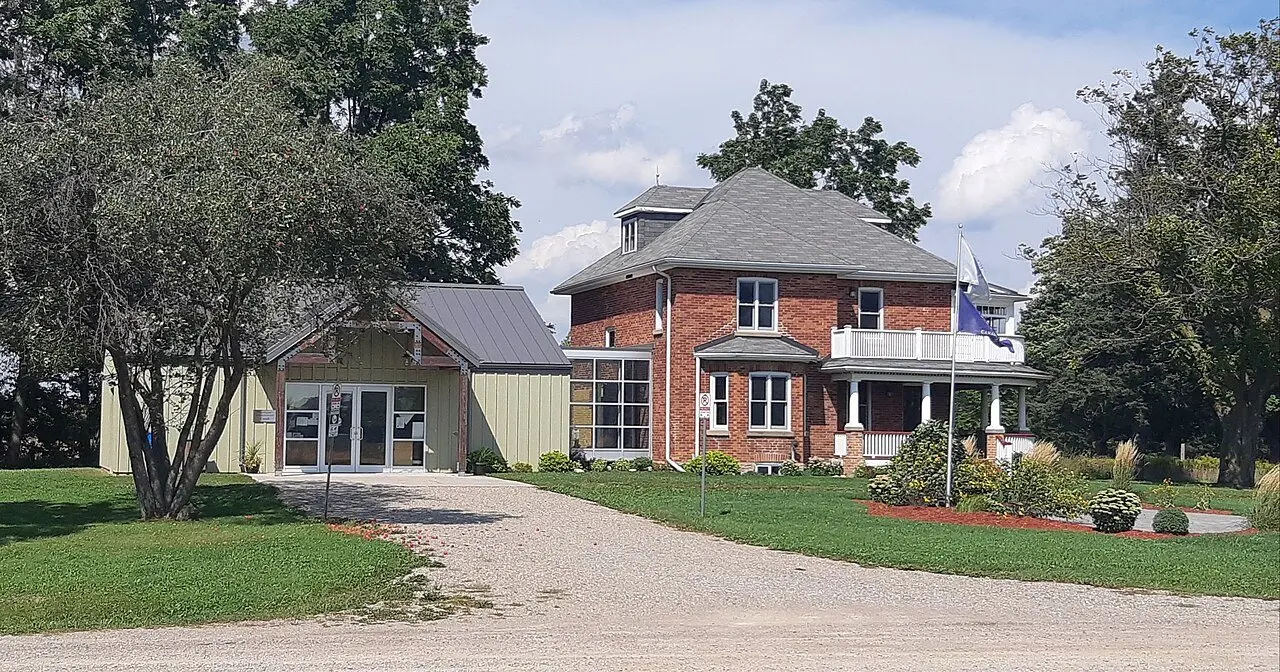
Photo: Peter Glyn, CC0 (via Wikimedia Commons). This modern photograph shows the Banting family homestead near Alliston, Ontario, where Frederick Banting grew up; it is illustrative, not from 1921.