Thomas Paine's 'Common Sense' Ignites a Revolution
On January 10, 1776, Thomas Paine's 47-page pamphlet Common Sense was published anonymously in Philadelphia, making the case for American independence in language ordinary colonists could not ignore.
It was only 47 pages long, printed anonymously, and it talked a continent into revolution.
On January 10, 1776, Philadelphia printer Robert Bell ran off the first 1,000 copies of a pamphlet called Common Sense. The title page named no author — it was signed only "Written by an Englishman." The Englishman was Thomas Paine, a 38-year-old recent immigrant who had arrived in America just over a year earlier carrying a letter of introduction from Benjamin Franklin.
Paine wrote the way ordinary people talked, and he aimed straight at the question most colonists were still afraid to ask: why should Americans obey a king an ocean away? "For all men being originally equals," he argued, "no one by birth could have a right to set up his own family in perpetual preference to all others for ever." Kings were not divinely ordained, he insisted; monarchy itself was an absurdity. And Britain was not America's "mother country" at all: "Europe, and not England, is the parent country of America." His conclusion was plain: "A government of our own is our natural right."
The pamphlet was organized like a sermon in four parts — on the origin and design of government, on monarchy and hereditary succession, on the present state of American affairs, and on America's ability to stand alone. What made it explosive was not just the argument but the audience. At the time, most colonists still thought of themselves as aggrieved Britons who wanted their rights restored, not as future citizens of a new nation. Paine gave independence a moral vocabulary that farmers, artisans, and soldiers could grasp. Copies were read aloud in taverns and meeting houses, passed hand to hand, and argued over in the streets.
The numbers were staggering for a colonial backwater of 2.5 million people: some 120,000 copies sold in the first three months, with 25 editions printed in the first year. Historian Gordon Wood later called it "the most incendiary and popular pamphlet of the entire revolutionary era," and it has been described as America's first viral media event.
Six months after Common Sense appeared, the Continental Congress declared the colonies free and independent on July 4, 1776. Paine kept writing — his Crisis papers, opening with "These are the times that try men's souls," were read to Washington's freezing troops that winter. But it was the little pamphlet of January 10 that first made independence thinkable to ordinary Americans, turning a colonial quarrel with the crown into a revolution.
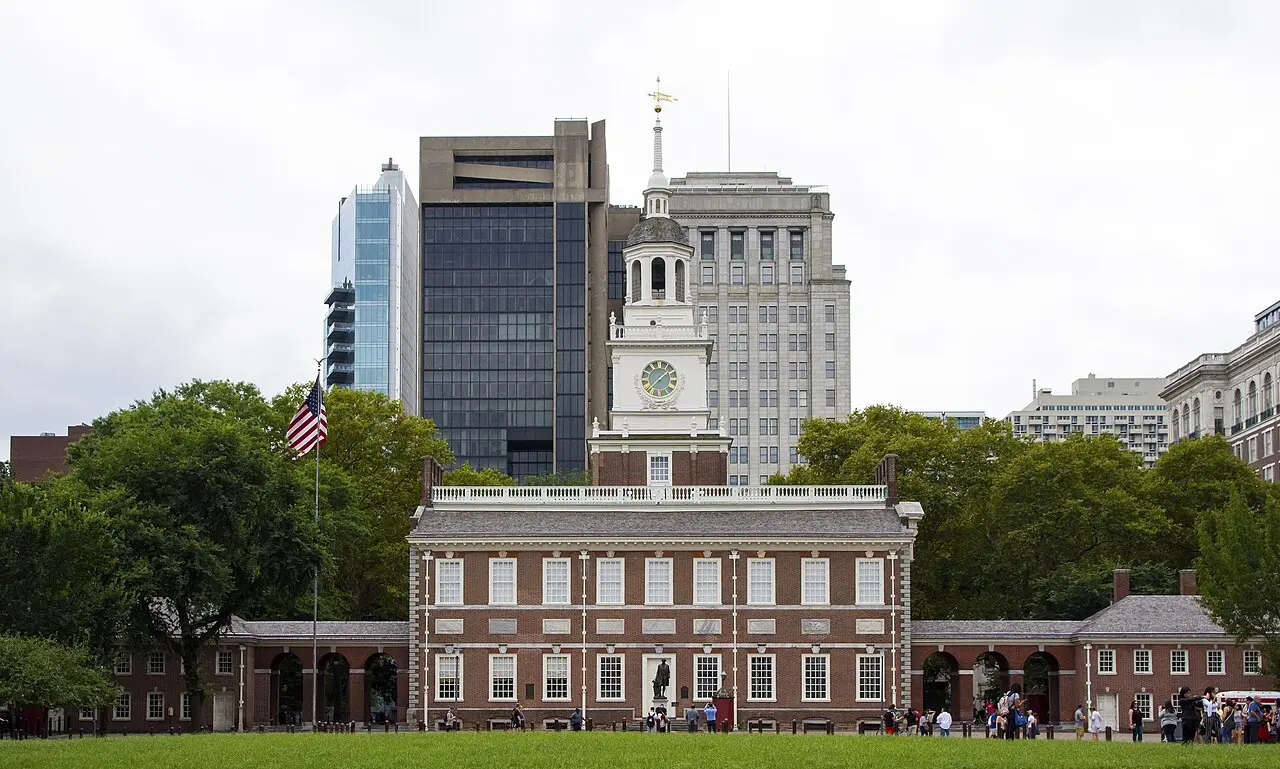
Photo: Independence Hall in Philadelphia, by Bruce Emmerling (CC BY-SA 4.0), via Wikimedia Commons.