Thirteen Days: The Morning the Photos Landed on Kennedy's Desk
On October 16, 1962, President Kennedy was shown spy-plane photos of Soviet nuclear missiles in Cuba — and the thirteen most dangerous days in history began.
On the morning of October 16, 1962, National Security Adviser McGeorge Bundy walked into the White House carrying photographs that would bring the world closer to nuclear war than it has ever been.
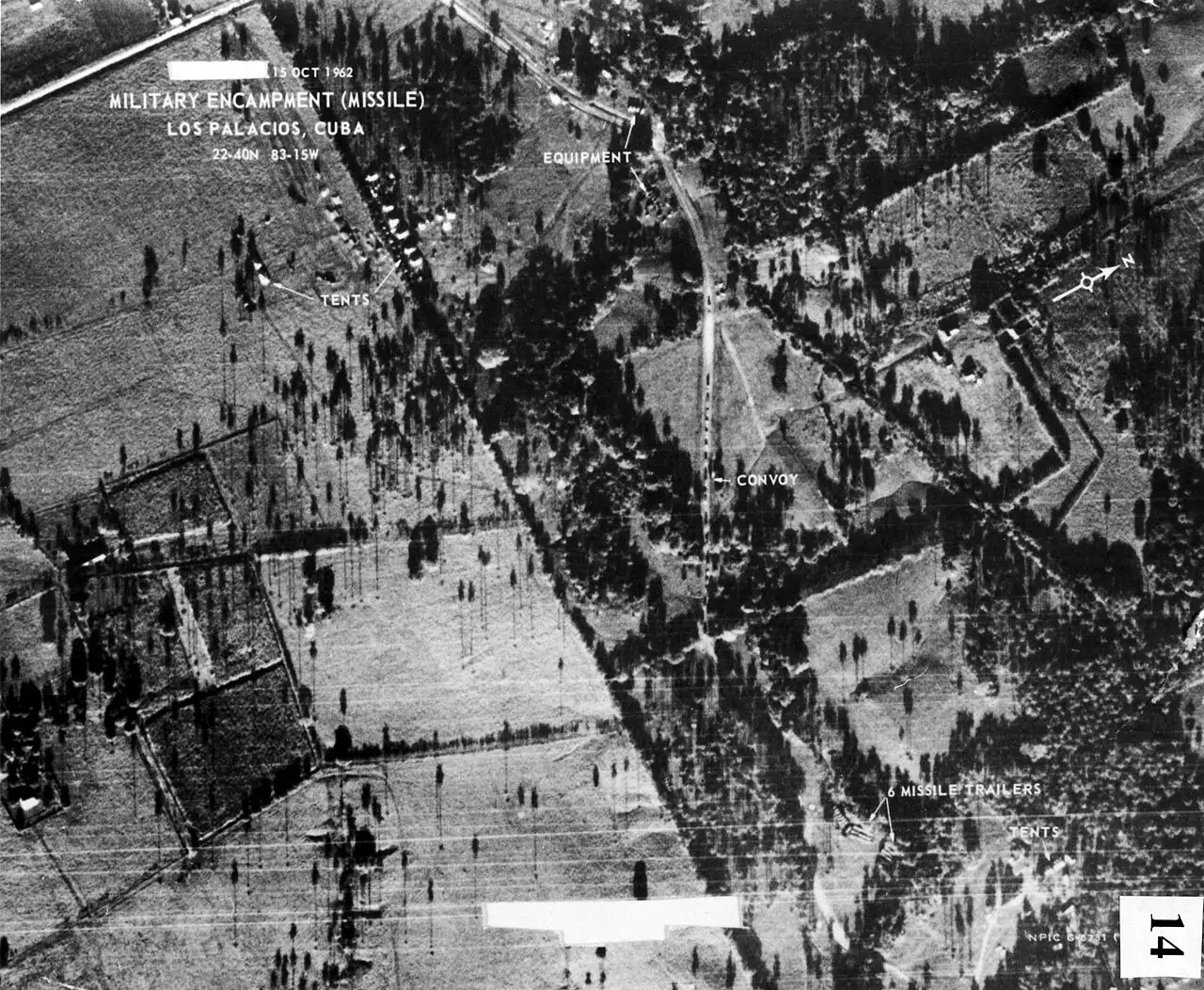
Two days earlier, a U-2 spy plane piloted by Major Richard Heyser had flown high over western Cuba, its cameras clicking off 928 frames. When CIA photo analysts at the National Photographic Interpretation Center studied them on October 15, the grainy shapes resolved into something unmistakable: Soviet medium-range ballistic missiles, under construction at a site near San Cristóbal. With help from intelligence supplied by the Soviet double agent Oleg Penkovsky, the analysts were certain. Nuclear missiles, 90 miles from Florida, capable of striking cities up and down the American East Coast.
The CIA alerted the State Department that evening, but Bundy made a fateful call: at 8:30 that night, he decided to wait until morning to tell the president, wanting the analysis to be airtight. Defense Secretary Robert McNamara was briefed at midnight. Then, on the morning of the 16th, Bundy laid the photographs in front of John F. Kennedy — and briefed him on what they meant.
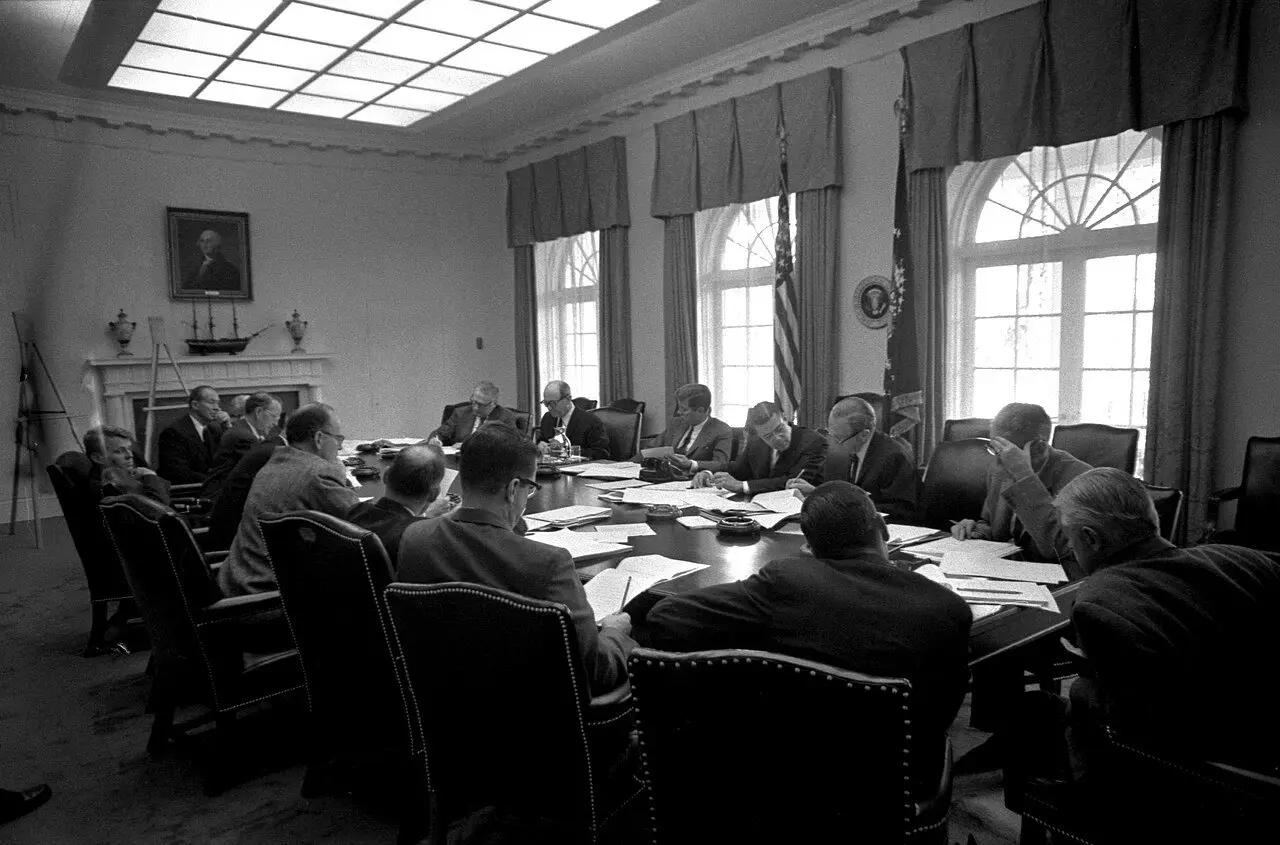
Kennedy's reaction was fury at the deception. The Soviets had spent weeks assuring Washington they were sending only defensive weapons to Cuba. He immediately summoned his brother, Attorney General Robert Kennedy, then did something extraordinary: that evening he convened nine members of the National Security Council and five other top advisers into a secret crisis group. It would later be named the Executive Committee of the National Security Council — ExComm. Without telling them, Kennedy tape-recorded every one of their meetings.
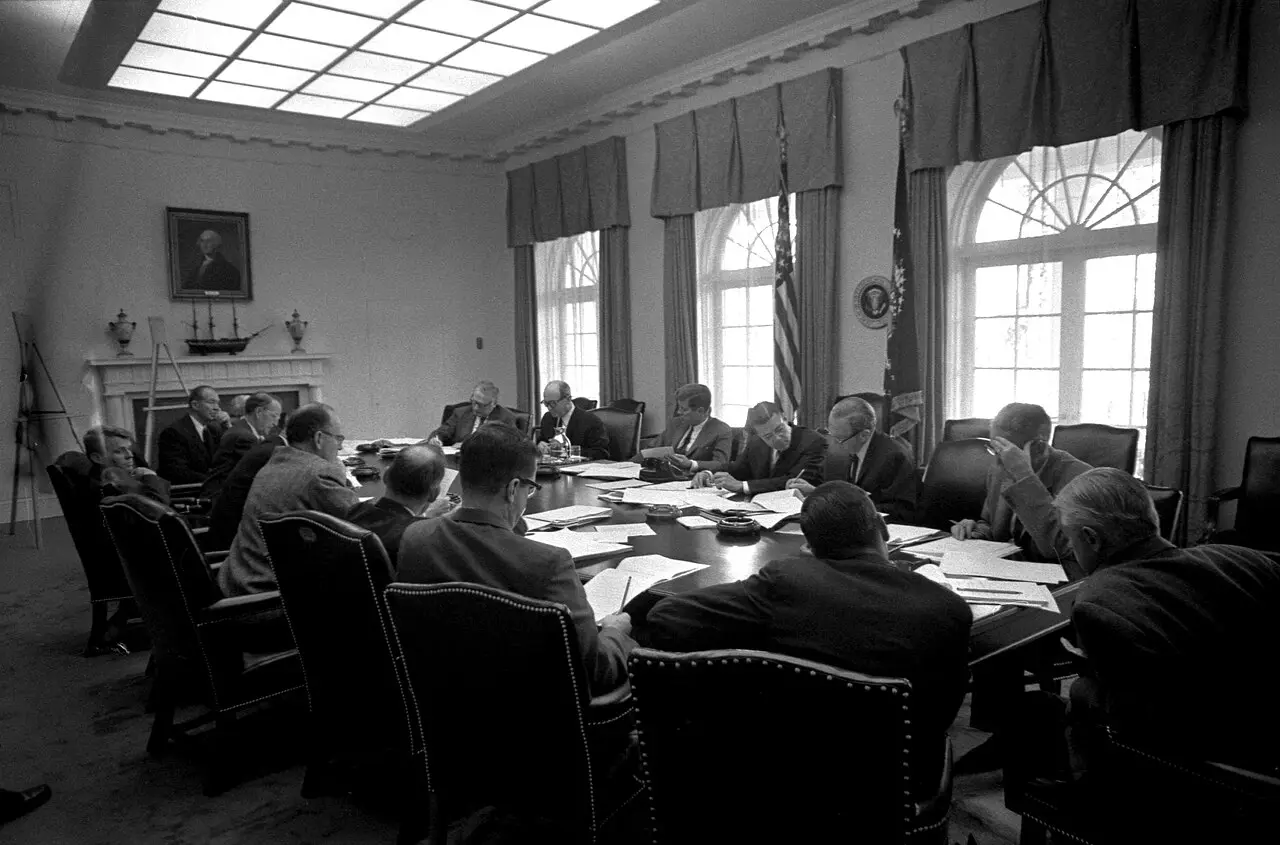
For thirteen days, those men — and the Soviet leadership across the ocean — wrestled with the hardest question in human history: what do you do when the other side has nuclear missiles pointed at you and time is running out? Some urged airstrikes and invasion. Kennedy chose a naval "quarantine" of Cuba instead, buying time for back-channel diplomacy. On October 28, Soviet leader Nikita Khrushchev agreed to remove the missiles in exchange for an American pledge not to invade Cuba — plus a secret promise to pull U.S. missiles out of Turkey.
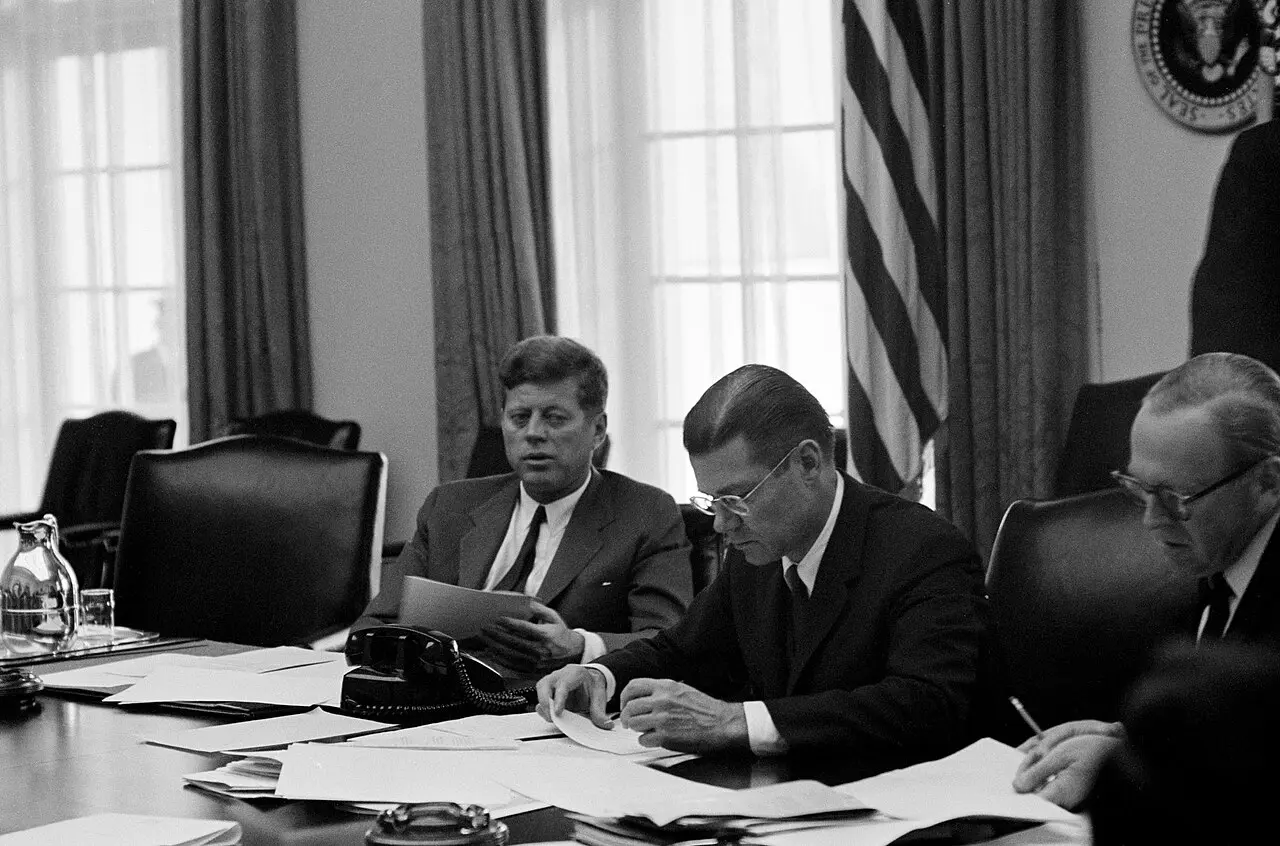
The crisis changed the world. Shaken by how close they had come, Washington and Moscow installed a direct hotline between their leaders and, the following year, signed the Partial Test Ban Treaty, the first real curb on nuclear testing. The photographs Bundy carried into the White House that October morning remain the most important pictures ever taken from an airplane — proof that in a crisis, seeing clearly and thinking calmly can be the difference between the end of the world and the beginning of wisdom.
Photo: Cecil Stoughton, White House, public domain (via Wikimedia Commons).
More images (via Wikimedia Commons, public domain): a U-2 reconnaissance photograph over Cuba (U.S. Air Force); the ExComm meeting during the crisis, and President Kennedy with Secretary of Defense Robert McNamara (Cecil Stoughton, White House).