The Tower Paris Tried to Stop: The Eiffel Tower Opens, 1889
On May 6, 1889, the Eiffel Tower opened to the public at the Paris World's Fair — a 300-meter iron giant its critics had called a monstrous eyesore.
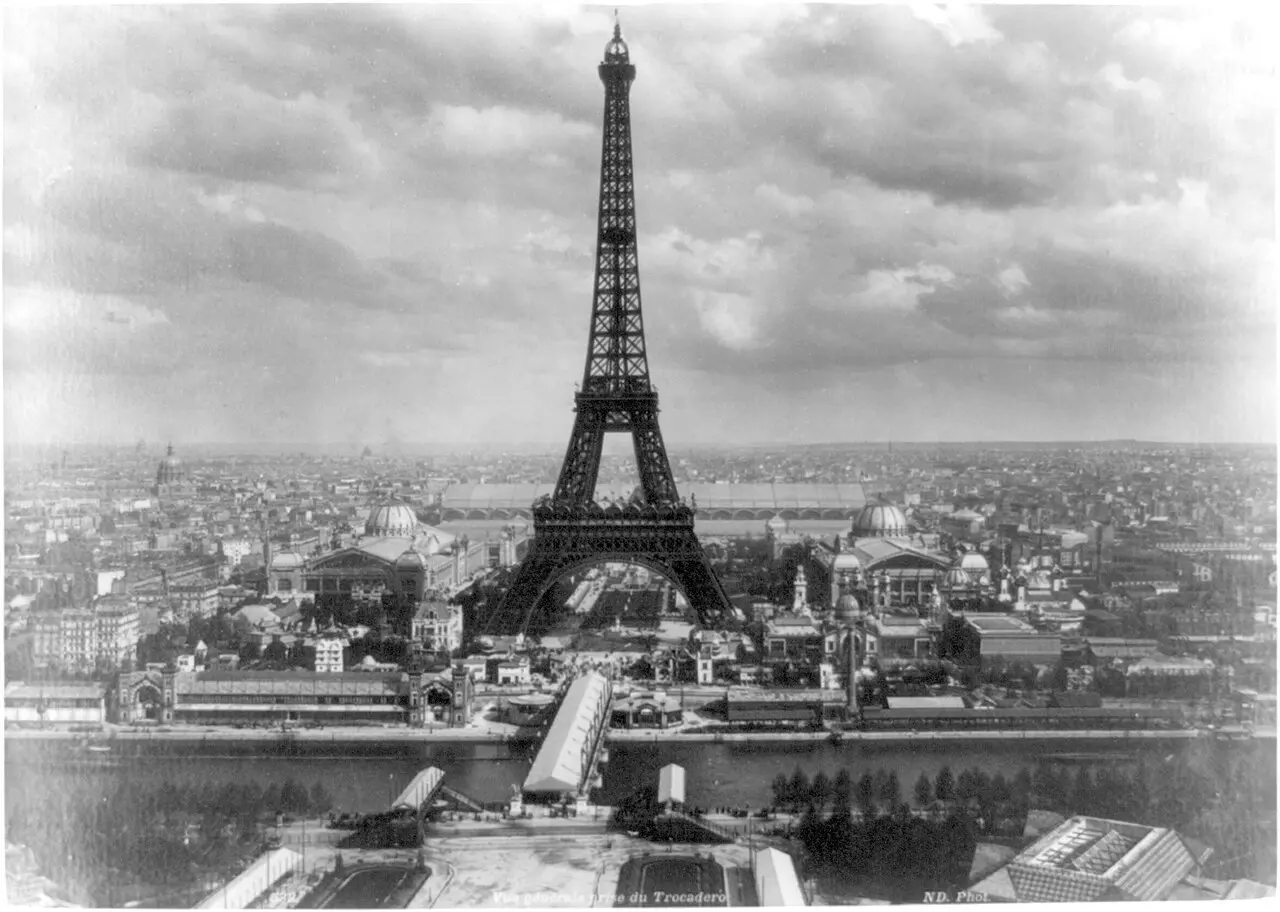
In 1887, some of France's most celebrated artists and writers signed a furious petition against it, calling it "useless and monstrous" — a giant skeleton of bolted iron that would disgrace the Paris skyline. Two years later, on May 6, 1889, it opened to the public. By the end of the year, nearly two million people had climbed it.
The tower was the centerpiece of the 1889 Exposition Universelle, the World's Fair Paris threw to mark the hundredth anniversary of the French Revolution — France's chance to show the world its industrial might. The job went to the bridge-builder Gustave Eiffel, whose engineers Maurice Koechlin and Émile Nouguier had dreamed up a 300-meter tower, refined by the architect Stephen Sauvestre into something almost elegant. Construction began on January 28, 1887: 18,038 pieces of wrought iron, more than two and a half million rivets, some 300 workers — and just over two years later, the tallest structure on Earth stood complete on the Champ de Mars.
The critics never stopped. But Gustave Eiffel had the last laugh first: on March 31, 1889, he led a party of officials up the tower on foot — the elevators weren't working yet — and at the very top, 300 meters above Paris, raised the French tricolor as a 25-gun salute boomed from below. When the fair opened on May 6, the tower opened with it, and Parisians discovered they loved the thing they'd been told to hate. There was just one catch: the lifts still weren't finished. So nearly 30,000 visitors climbed all 1,710 steps to the summit on foot before the elevators finally opened on May 26. (Tickets ran 2 francs for the first level, 3 for the second, 5 for the top — half price on Sundays.)
By the time the fair closed in October, 1,896,987 visitors had ascended the tower. At night it glowed with hundreds of gas lamps, a beacon threw red, white, and blue beams across the sky, and the newspaper Le Figaro printed a special souvenir edition from an office on the second level. It was the undisputed wonder of the age — and it was supposed to be temporary. The tower had been licensed to stand for only twenty years. What saved it was the future: it turned out to be a perfect radio antenna, invaluable for military communications and then broadcasting. It stayed.
It remained the tallest structure in the world until New York's Chrysler Building surpassed it in 1930, and today it is the most visited paid monument on Earth, drawing millions of visitors every year. The artists who called it a monstrosity are footnotes; the "monstrosity" is the symbol of Paris.
Why it matters: the Eiffel Tower is a monument to a useful truth — the future almost always looks like an eyesore at first. The things we're certain will ruin everything have a habit of becoming the things we can't imagine living without.
Photo: Neurdein, public domain (via Wikimedia Commons). (An 1889 photograph of the Eiffel Tower over the Exposition Universelle fairgrounds.)