The Stove, the Sulfur, and the Patent That Gave the World Rubber
On June 15, 1844, Charles Goodyear received U.S. Patent No. 3,633 for vulcanized rubber, turning a sticky curiosity into a material of the modern world.
Before 1844, rubber was nearly useless: it melted into goo in summer and cracked like glass in winter. Then a stubborn Connecticut inventor dropped a piece of rubber on a hot stove — and changed the world.
Charles Goodyear, born in New Haven, Connecticut, in 1800, had become obsessed with taming "India rubber." He had stumbled into the material by chance: in 1830, after his family's hardware business went bankrupt, he wandered into a New York store selling goods made of India rubber — then a novelty in America — and decided to make it useful. Natural rubber had one maddening flaw: heat made it soft and sticky, cold made it brittle. Goodyear bought up another inventor's patent for mixing sulfur into rubber, then spent the better part of a decade experimenting — much of it in poverty, at one point working from a jail cell where his debts had landed him — searching for the right formula.
The breakthrough came by accident around 1839. A piece of rubber mixed with sulfur fell onto a hot stove. Instead of melting, it merely charred — and stayed firm and flexible. Heat plus sulfur transformed rubber's chemistry, cross-linking its molecules into something tough, waterproof, and elastic in almost any weather.
It took five more years of refining before Goodyear was confident enough to file. On June 15, 1844, the U.S. Patent Office granted him Patent No. 3,633 for vulcanized rubber — a process named, fittingly, for Vulcan, the Roman god of fire.
The triumph was bitter. Goodyear spent some $50,000 on experiments he could barely afford and fought patent battles on two continents — in England, Thomas Hancock had filed for a similar process just weeks earlier. Ironically, Goodyear may have handed his rival the key: in 1842, seeking British investors, he had sent rubber samples to England without revealing his method. At the firm of Charles Macintosh & Company, Hancock examined them, spotted traces of sulfur, and worked out his own version. Goodyear died in 1860 deeply in debt, never growing rich from his discovery. The Goodyear Tire & Rubber Company, founded nearly four decades after his death, took his name but not his fortune.
Vulcanized rubber made the modern world possible: tires, of course, but also hoses, belts, seals, and footwear — Goodyear himself claimed more than 500 uses for it. (People in ancient Mesoamerica had made rubber balls centuries earlier, but Goodyear's process made rubber an industrial material.) Every car on every road rides on the chemistry of one man's stubborn, accidental discovery.
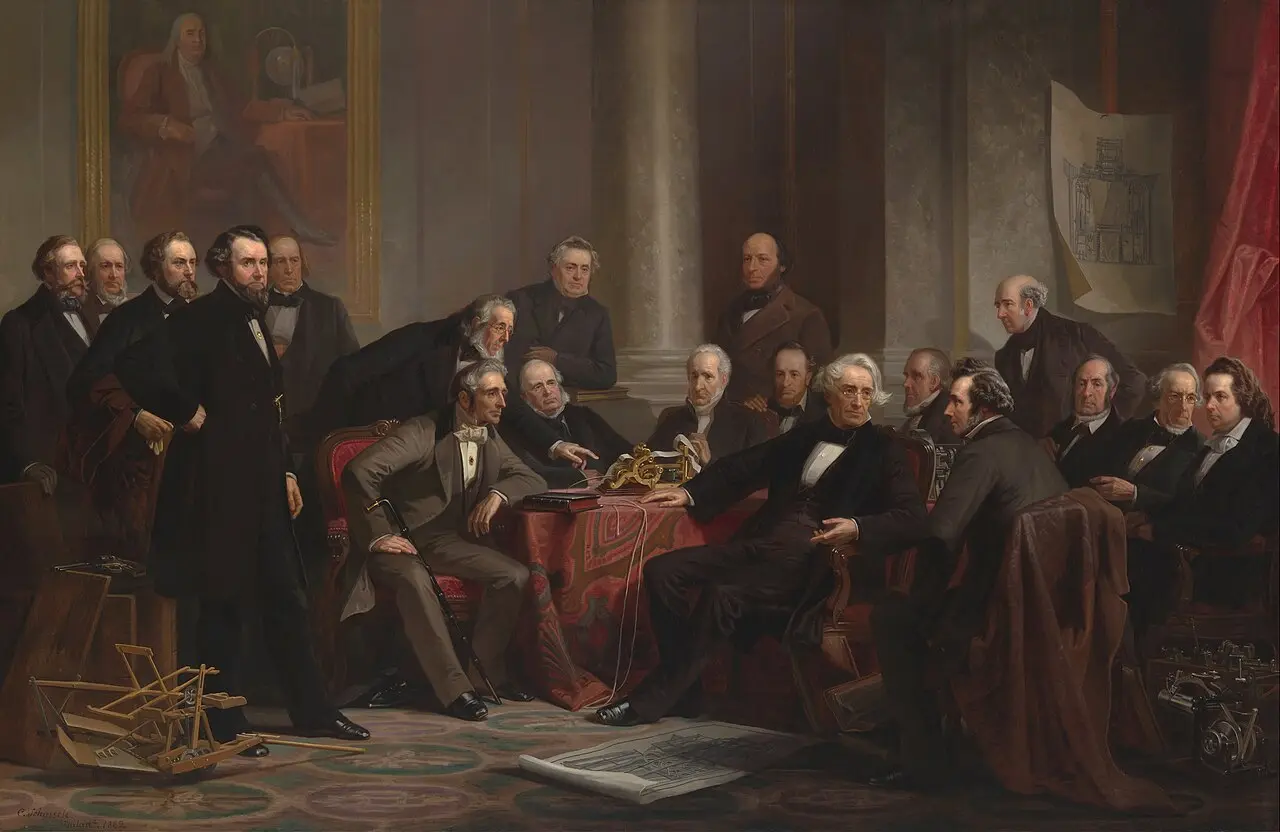
Image: Christian Schussele, public domain (via Wikimedia Commons).