
The Charter That Told a King: No One Is Above the Law
On June 15, 1215, King John of England was forced to seal Magna Carta at Runnymede, the first great written limit on a ruler's power.
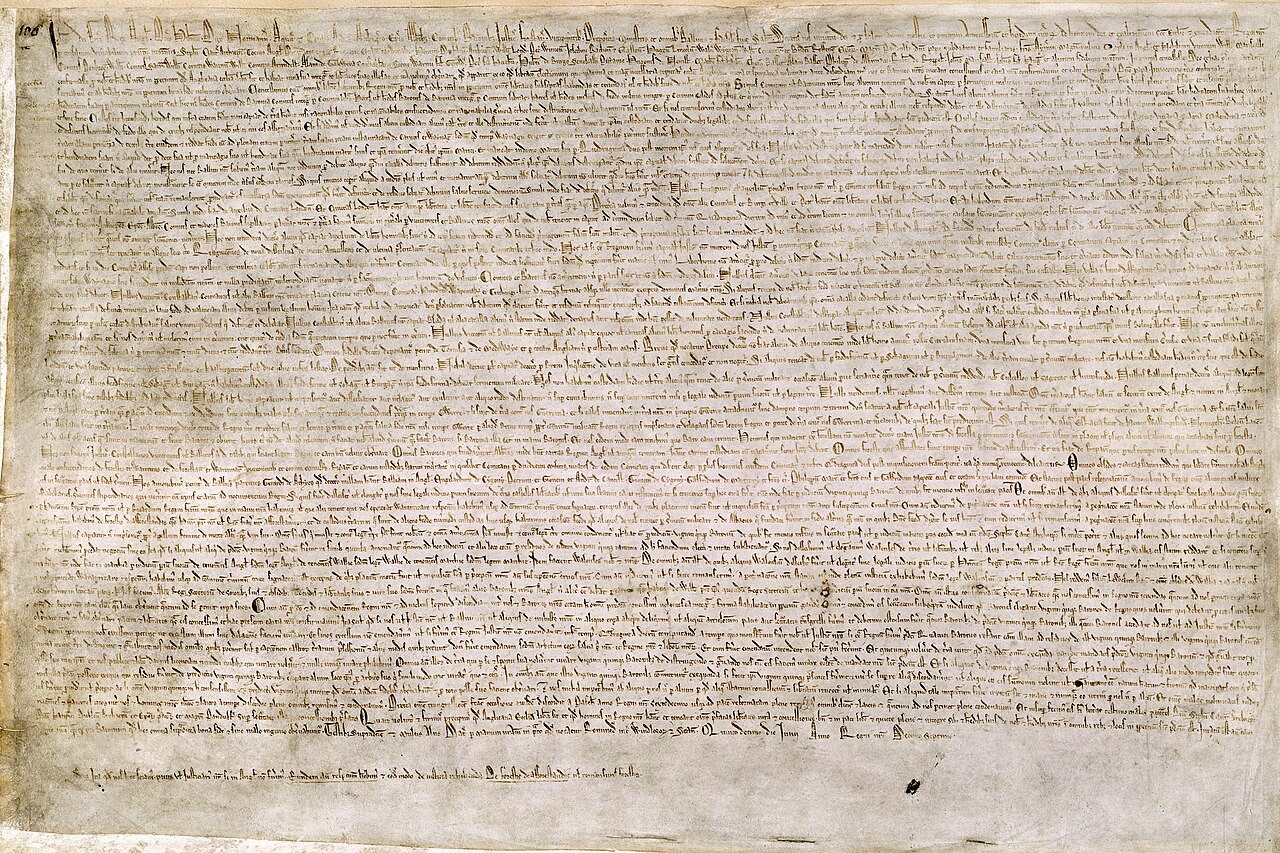
On a summer meadow beside the Thames, the most powerful man in England was cornered — not by an invading army, but by his own barons, who had a document and a quill and would not take no for an answer.
King John had earned their fury. He had lost the duchy of Normandy to the king of France. He taxed the English nobility relentlessly to pay for foreign wars, including a failed 1214 campaign to win Normandy back. He quarreled bitterly with Pope Innocent III and sold church offices to refill his empty treasury. By the spring of 1215, the barons — led by men such as Robert Fitzwalter and Eustace de Vesci — renounced their allegiance and rose in open rebellion, demanding that the king confirm their liberties in writing.
The peacemaker was Stephen Langton, the Archbishop of Canterbury, who drafted what was essentially a peace treaty between the crown and its subjects. On June 15, 1215, John met the barons at Runnymede, near Windsor, and set his royal seal to the Articles of the Barons — which, after minor revision, was formally issued as Magna Carta, the “Great Charter.”
The charter promised what no English king had ever put in writing: the freedom of the church, protection from illegal imprisonment, access to swift and impartial justice, and limits on the feudal payments the king could demand. A council of twenty-five barons was appointed to make sure he kept his word.
Here is the honest part of the story: almost nobody kept their word. John appealed to the Pope, who annulled the charter, and England plunged into the First Barons’ War. The peace treaty failed as a peace treaty.
But the idea refused to die. After John’s death, his young son’s government reissued the charter in 1216, and again in 1217 as part of the peace treaty at Lambeth — where it first acquired the name “Magna Carta,” to distinguish it from the smaller Charter of the Forest issued alongside it. Henry III reissued it in 1225 in exchange for new taxes, and Edward I confirmed it as English statute law in 1297. Its most famous clause still rings across eight centuries: “We will sell to no man, we will not deny or defer to any man either Justice or Right.”
Why it matters: Magna Carta was the first great written statement that even a king is subject to the law. Its principles — no punishment without lawful judgment, no denial of justice — became the ancestors of due process, habeas corpus, and the bills of rights that followed, including America’s. Four original copies of the 1215 charter survive, two in the British Library and one each at Lincoln Castle and Salisbury Cathedral — eight hundred years of proof that a few paragraphs can outlast a kingdom.
Photo: The surviving 1215 Magna Carta manuscript held by the British Library (Cotton MS Augustus II.106), sealed by King John at Runnymede. Public domain via Wikimedia Commons.