The Sky Girls: The First Flight Attendants
On May 15, 1930, nurse and pilot Ellen Church flew the first stewardess trip, inventing the flight-attendant profession on a 13-stop mail plane.
In 1930, a 26-year-old registered nurse from Iowa walked into an airline office and asked for a job as a pilot. The manager turned her down — commercial pilots were men, full stop. So Ellen Church changed the question, and invented a profession.
Church held two qualifications almost no woman had in 1930: a nursing degree and a pilot's license. When Boeing Air Transport — the forerunner of United Airlines — refused to hire her to fly its planes, she made a bold pitch: put trained nurses aboard passenger flights. In those early days, flying terrified most people, and a nurse could ease the fear, handle airsickness, and respond to medical emergencies. The airline's San Francisco office agreed to a three-month trial, and Church recruited and trained seven other nurses. They became the 'original eight' — and the press dubbed them the 'Sky Girls.'
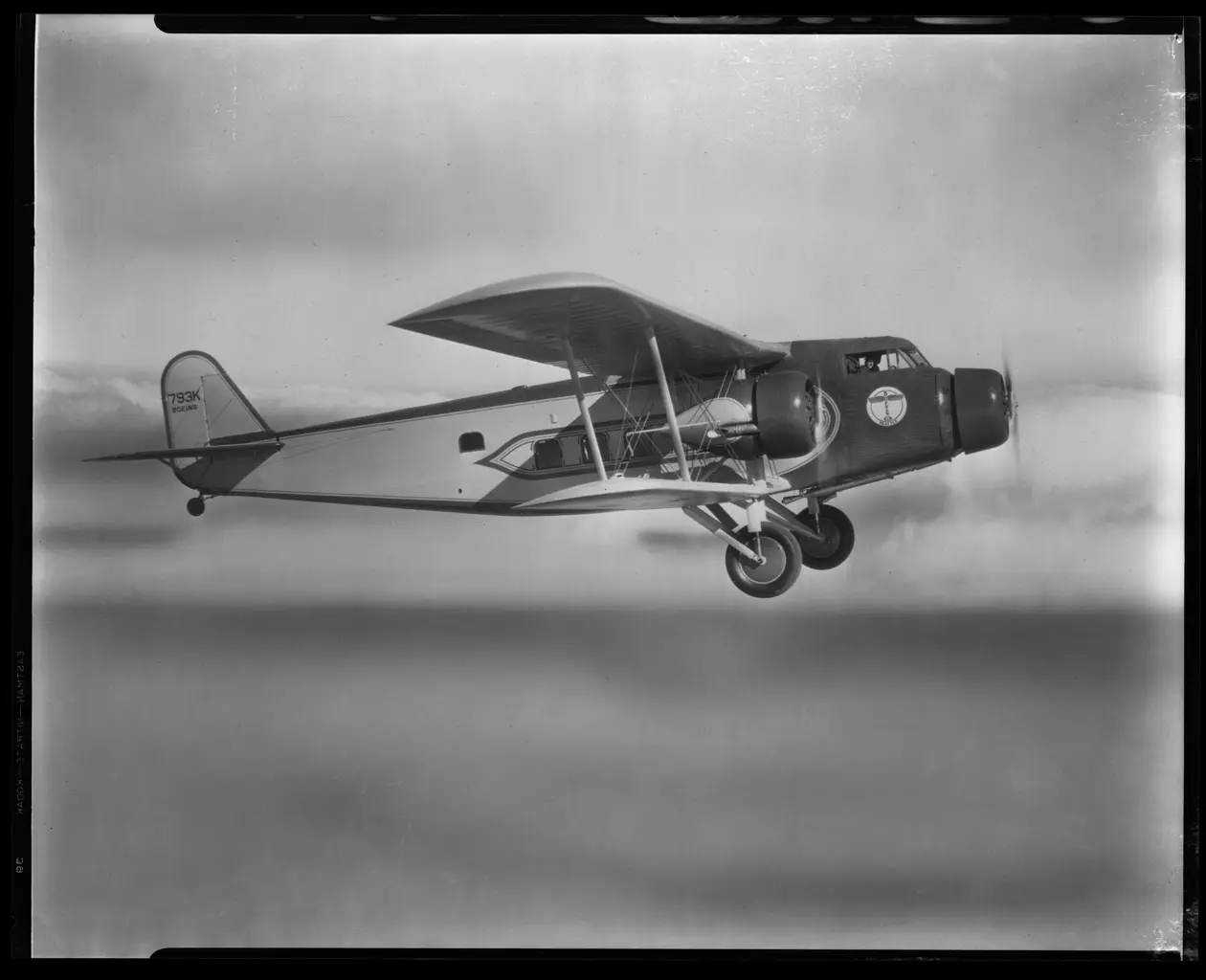
On May 15, 1930, Church made her first trip: a Boeing 80A tri-motor biplane from San Francisco to Chicago, carrying 14 passengers with 13 stops along the way. She welcomed passengers in a crisp, nursing-inspired uniform, served fruit on silver trays, and secured the cabin for takeoff. But the job was far more than smiles. The Sky Girls sold tickets, loaded luggage, helped fuel the aircraft, pushed planes into hangars, tightened loose seat bolts, cleaned the cabin — and held the hands of terrified first-time fliers through turbulence. They were, in every sense, a one-woman ground crew and cabin crew combined.
To be precise about the record: the very first cabin attendant was a man — Heinrich Kubis, who tended passengers aboard German Zeppelins starting in 1912. Ellen Church was the first female flight attendant, and she created the modern profession: the era's strict rules (registered nurses only, under 25, under 115 pounds, no taller than five-foot-four, and single) show how novel — and how narrowly defined — the role was at its birth.
Church's flying career lasted only 18 months, cut short by a car accident in 1932. But her second act was remarkable too: during World War II she served as a flight nurse in the U.S. Army Nurse Corps, evacuating wounded soldiers from combat areas in Africa and Europe, and earned the Air Medal. She later became a hospital administrator in Terre Haute, Indiana, where she worked until 1964. An airfield in her hometown of Cresco, Iowa — Ellen Church Field — still bears her name.
Today's flight attendants are trained safety professionals, the people who get you out alive in an emergency. That profession — one of the most visible jobs in the world — traces back to a rejected job application, eight nurses, and a 20-hour, 13-stop flight on May 15, 1930.
Photo: San Diego Air & Space Museum Archives, public domain (via Wikimedia Commons).