The Secret of Life, in 900 Words
On April 25, 1953, James Watson and Francis Crick published the one-page Nature paper revealing DNA's double-helix structure.
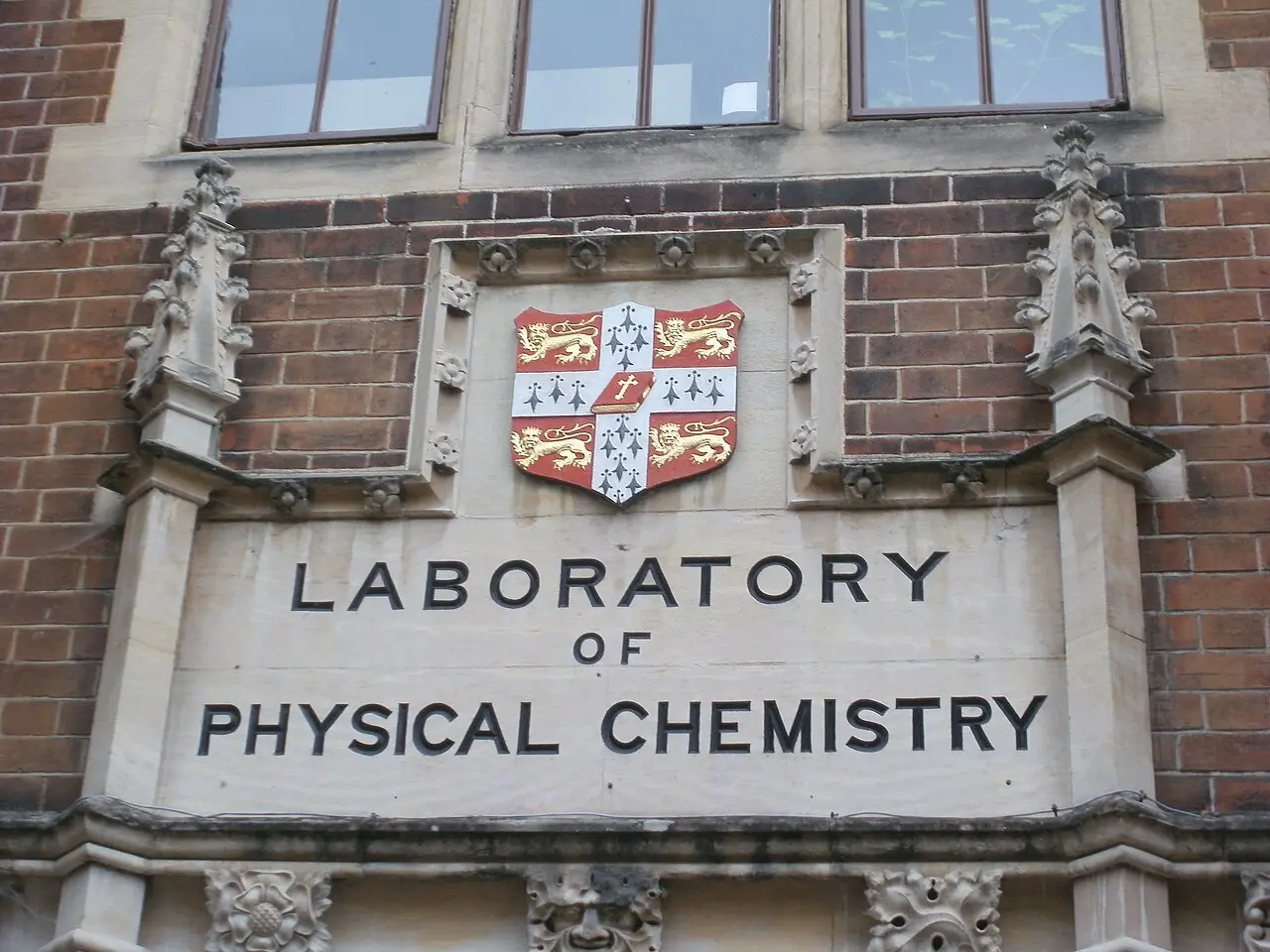
The most important biology paper ever published was barely 900 words long and took up a single page.
At Cambridge's Cavendish Laboratory in early 1953, the young American James Watson and the Englishman Francis Crick were racing to solve the greatest puzzle in biology: what did DNA — the molecule everyone suspected carried heredity — actually look like? They built their answer out of metal plates and rods, testing shapes against the known chemistry. By late February they had it: two strands wound around each other in a double helix, with the four chemical bases pairing in a fixed code — adenine with thymine, guanine with cytosine.
On April 25, 1953, their solution appeared in the scientific journal Nature, volume 171, number 4356, pages 737 and 738. "We wish to suggest a structure for the salt of deoxyribose nucleic acid (D.N.A.)," it began. "This structure has novel features which are of considerable biological interest." The paper ended with what may be the most famous understatement in science: "It has not escaped our notice that the specific pairing we have postulated immediately suggests a possible copying mechanism for the genetic material." In other words, the structure itself explained how DNA could be copied — how traits pass from parent to child.
The same issue of Nature carried two companion papers that backed up the model: one by Maurice Wilkins and colleagues, and one by Rosalind Franklin and Raymond Gosling. Franklin's X-ray diffraction images of DNA, taken at King's College London, had supplied crucial evidence for the helix — and history now recognizes that the Watson–Crick model rested heavily on her data. In 1962 the Nobel Prize went to Watson, Crick, and Wilkins; Franklin, who had died in 1958, was ineligible, since the prize is not awarded posthumously.
The paper's modesty hid its power. Once the structure was known, biology could ask entirely new questions: what is the genetic code, how can we read it, how can we edit it? The answers led to gene sequencing, DNA fingerprinting, genetic medicine, and eventually tools like CRISPR. Every genetic test, every ancestry kit, every cancer therapy designed around a mutation traces back to that single page.
Watson and Crick reportedly celebrated at Cambridge's Eagle pub, where the tale goes that Crick announced they had found "the secret of life." For once, the boast was about right.
Photo: Anna L Martin, CC BY 2.0 (via Wikimedia Commons).