The Poem Written in the Mud: 'In Flanders Fields,' 1915
On May 3, 1915, Canadian doctor John McCrae wrote 'In Flanders Fields' beside a battlefield grave — and gave the world the remembrance poppy.
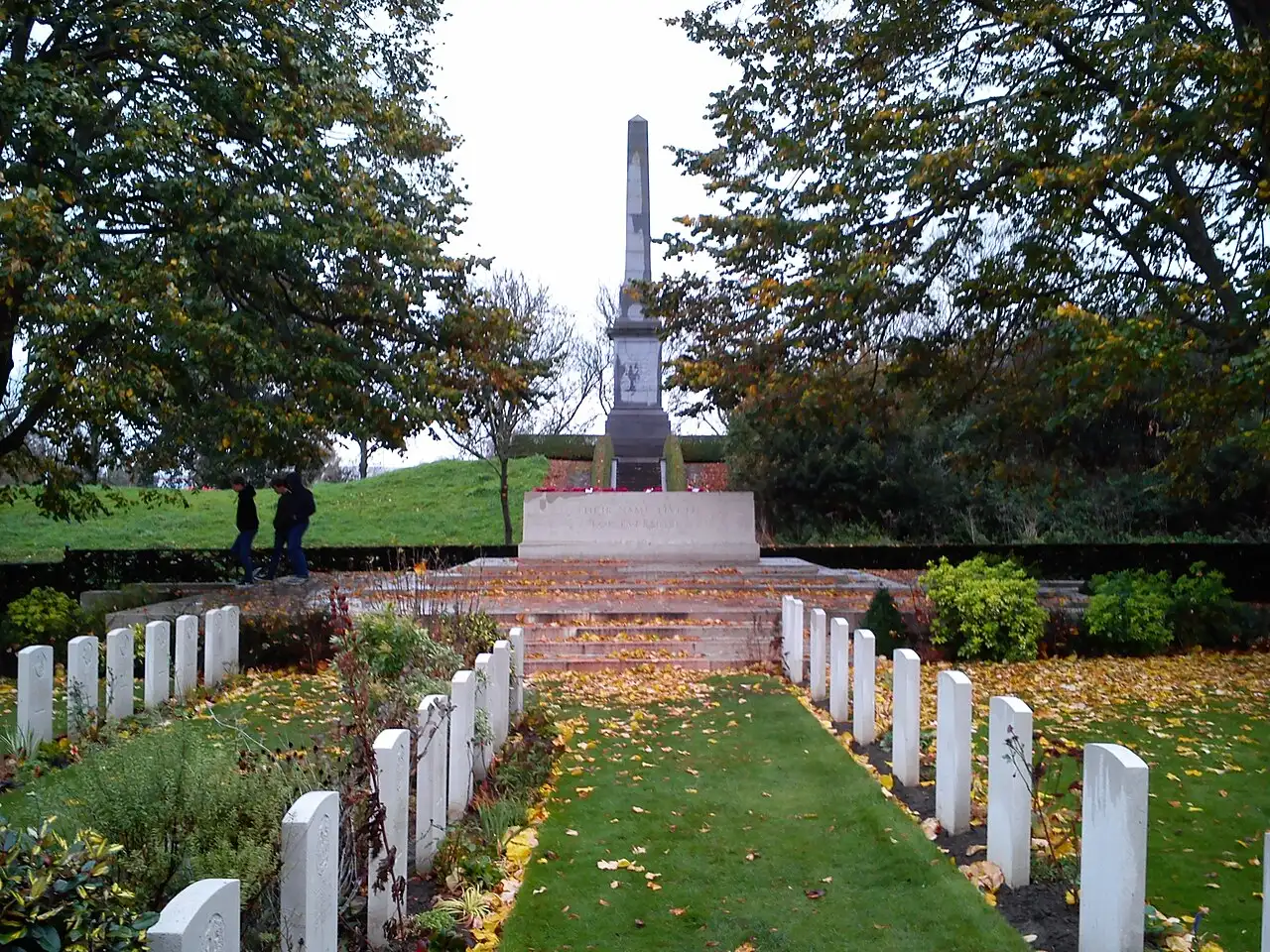
On the evening of May 2, 1915, a Canadian army doctor stood in a makeshift cemetery near Ypres, Belgium, and buried his friend. Lieutenant Alexis Helmer had been killed that morning in the Second Battle of Ypres — a battle already infamous as the first large-scale German gas attack of the war. The doctor, Lieutenant-Colonel John McCrae, a brigade surgeon, presided over the simple funeral as shells fell nearby.
The next day — May 3, 1915 — McCrae sat at the back of a field ambulance near the dressing station at Essex Farm, looking out at the fresh graves. Between the wooden crosses, red poppies were already pushing through the churned earth. According to legend, he wrote the poem in a single sitting, then crumpled it up and threw it away — and a fellow officer fished it out and sent it to England.
The poem was In Flanders Fields:
In Flanders fields the poppies blow
Between the crosses, row on row,
That mark our place; and in the sky
The larks, still bravely singing, fly
Scarce heard amid the guns below.
We are the Dead. Short days ago
We lived, felt dawn, saw sunset glow,
Loved and were loved, and now we lie
In Flanders fields.
Take up our quarrel with the foe:
To you from failing hands we throw
The torch; be yours to hold it high.
If ye break faith with us who die
We shall not sleep, though poppies grow
In Flanders fields.
Published anonymously in the London magazine Punch on December 8, 1915 (McCrae was named as the author in that year's index), the rondeau became one of the most famous poems of the war. It was printed on recruiting posters, quoted in campaigns to sell war bonds, and — most enduringly — it gave the world the remembrance poppy. Moved by the poem, an American teacher named Moina Michael wrote a reply, "We Shall Keep the Faith," and began the tradition of wearing poppies to honor the fallen — a custom now observed across the Commonwealth every November, and in the United States on Veterans Day and Memorial Day.
McCrae himself did not live to see it. He died of pneumonia in January 1918, with the war still raging.
Why it matters: fifteen lines, written in a single sitting between burials, gave grief a shape the whole world could share. Every poppy worn in November is a descendant of the ones McCrae saw that May morning — a reminder that remembrance is not about war, but about the people it takes.
Photo: ViennaUK, CC BY-SA 4.0 (via Wikimedia Commons). (The John McCrae memorial site at Essex Farm, near Ypres, Belgium.)