The Patent That Made LEGO Click
On January 28, 1958, Godtfred Kirk Christiansen filed the patent for the stud-and-tube LEGO brick — the tiny design that turned a Danish toy into a global icon.
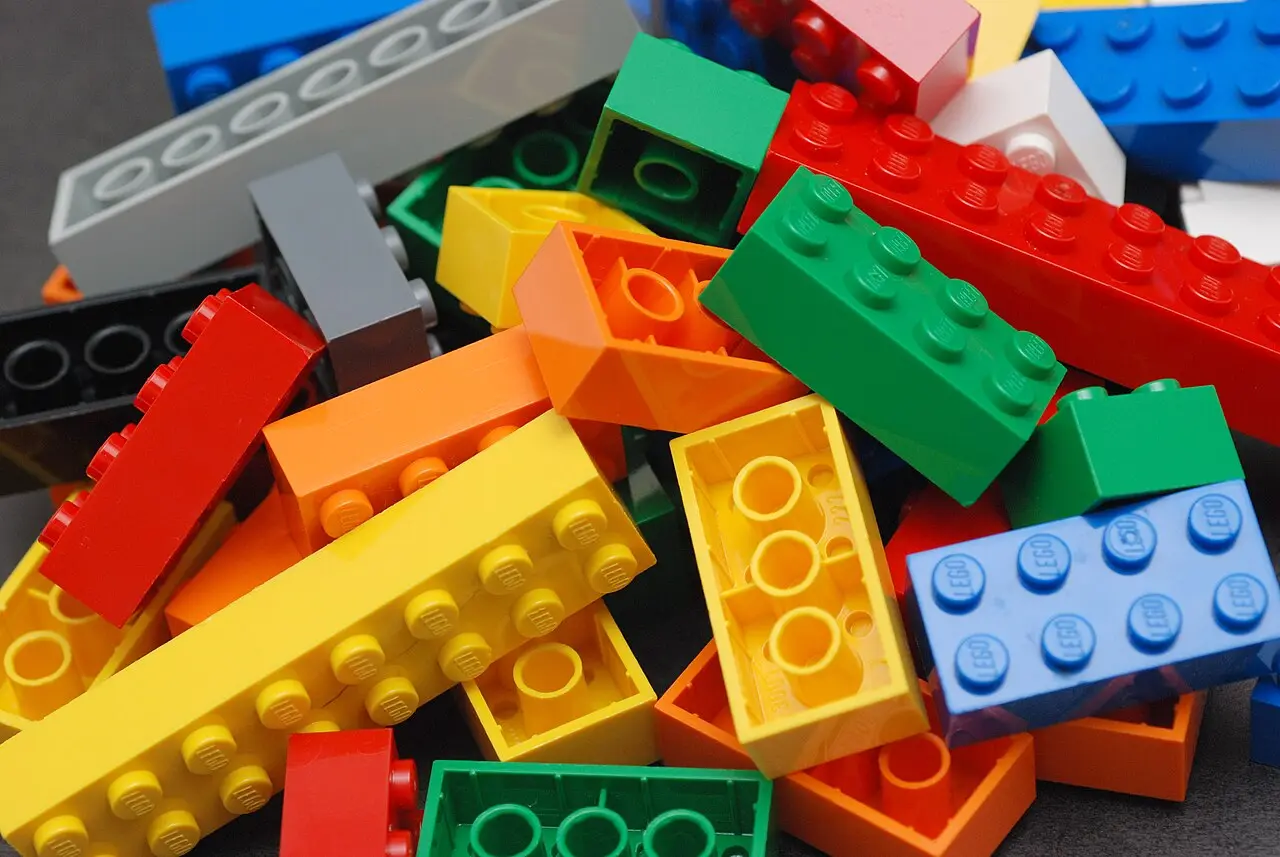
In the small Danish town of Billund, on January 28, 1958, a toymaker filed a patent application that would quietly become one of the most successful product designs in history. Godtfred Kirk Christiansen's application to the Danish patent office covered a hollow plastic brick with a deceptively simple idea hidden inside it: small tubes under the brick that grip the studs of the brick below. That grip — what builders call “clutch power” — is the reason a brick made in 1958 still clicks perfectly onto a brick made yesterday.
The problem Christiansen was solving was real. LEGO had moved from wooden toys into plastic bricks, but the early versions were frustrating: they stacked, but they did not hold. A child could build a tower and watch it wobble apart at the slightest touch. For a toy company betting its future on a system of interlocking bricks, that was an existential flaw. Christiansen, who had taken the reins of the family company, needed bricks that stayed together through actual play — not just careful stacking on a table.
His answer was the inner tube. Each brick already had studs on top; Christiansen added hollow cylindrical tubes to the underside, positioned so they wedge precisely against the studs of the brick beneath. The friction between tube and stud creates a clutch that is firm enough to hold a model together, yet loose enough for a child to pull apart and rebuild. It was a tiny geometric insight — a few millimeters of plastic shaped just so — and the patent application of January 28, 1958, locked in the coupling system that defines the LEGO brick to this day.
The stakes could hardly have been higher for the little Billund company. That one design decision turned LEGO from a regional toymaker into a global phenomenon. Billions of bricks have been produced since, and the system's genius is its compatibility: because the geometry was fixed by that 1958 patent, bricks from any era fit together. The same click connects a 1960s farmhouse set to a modern robotics kit.
That is why the patent matters far beyond toy history. Innovation is often imagined as a dramatic breakthrough, but sometimes it is a hollow tube — an invisible refinement that turns a wobbly novelty into a precision system. Christiansen did not invent the plastic brick that day; he invented the reason plastic bricks work. Every tower that survived a toddler, every spaceship that made it to the living-room floor intact, owes something to a patent filed on a January day in Denmark.
Photo: Alan Chia, CC BY-SA 2.0 (via Wikimedia Commons).