The Paper That Grew Up With Los Angeles
On December 4, 1881, the first edition of the Los Angeles Daily Times rolled off the presses in a dusty frontier town — the beginning of one of America's great newspapers.
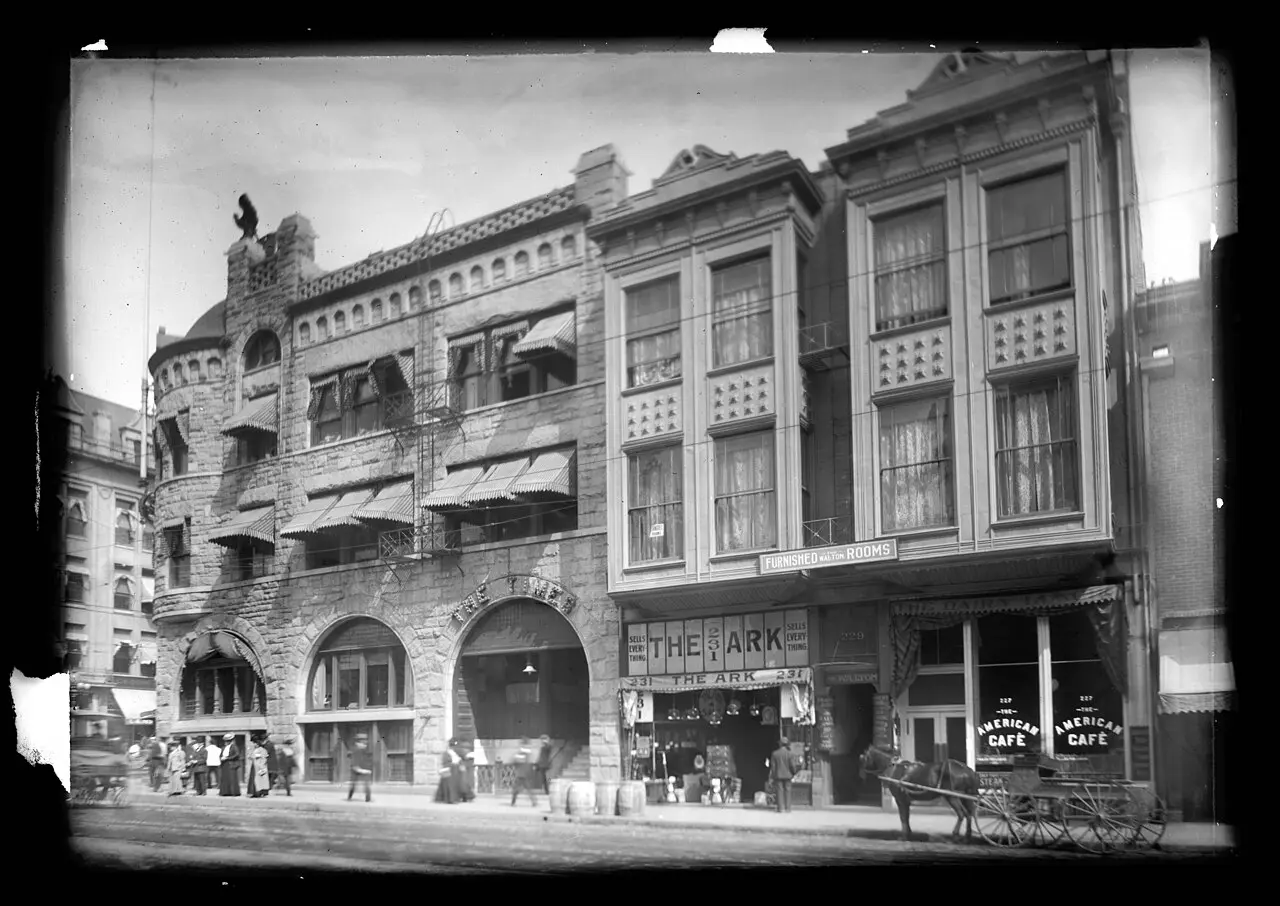
In 1881, Los Angeles was barely a city at all — about 11,000 people, more dust than pavement, a frontier town at the far edge of the American map. It was not the sort of place you would expect to produce a great metropolitan newspaper. But on December 4, 1881, two men launched one anyway.
The first edition of the Los Angeles Daily Times came off the presses that day under the direction of Nathan Cole Jr. and Thomas Gardiner, printed at the Mirror printing plant. The new paper had ambition. What it did not have was money. Unable to pay the printing bill, Cole and Gardiner soon turned the paper over to the Mirror Company — and the Times might have died in its infancy if S. J. Mathes had not joined the firm and insisted, against the odds, that it keep publishing.
Salvation arrived in July 1882 in the person of Harrison Gray Otis, a Civil War veteran and newspaperman who came down from Santa Barbara to become editor, buying a quarter stake for $6,000 — most of it borrowed. Otis was a force of nature: combative, visionary, and utterly convinced that a newspaper's job was to build its city. Under Otis, the Times became the engine of Los Angeles boosterism, trumpeting the region's sunshine and opportunity, promoting the harbor, and campaigning for the water supply — the Owens Valley battles that would later inspire the film Chinatown. When Otis died in 1917, he left behind a financial success and a political force: a newspaper that had become inseparable from the city it covered.
The paper's rise was not without darkness. Its bitter war with organized labor culminated in the bombing of its headquarters on October 1, 1910, which killed 21 people. But the Times kept growing with the city it championed, taking the name Los Angeles Times in its masthead in 1886 and eventually becoming the largest metropolitan newspaper in the American West.
Today the Times has won more than 40 Pulitzer Prizes and chronicled everything from the Watts riots to the Space Shuttle. It began as a shoestring startup that could not pay its printer, in a town most Americans could not find on a map.
The story of the Times is the story of Los Angeles itself: improbable, boosterish, sometimes ruthless, and relentlessly growing. A city does not just get the newspaper it deserves — sometimes, as Los Angeles learned in 1881, a newspaper helps invent the city.
Photo: Unknown author, Public domain via the USC Digital Library (Wikimedia Commons).