
The Night the White House Burned
On August 24, 1814, British troops marched into Washington, D.C., and set fire to the Capitol and the White House — and Dolley Madison raced to save a priceless portrait.
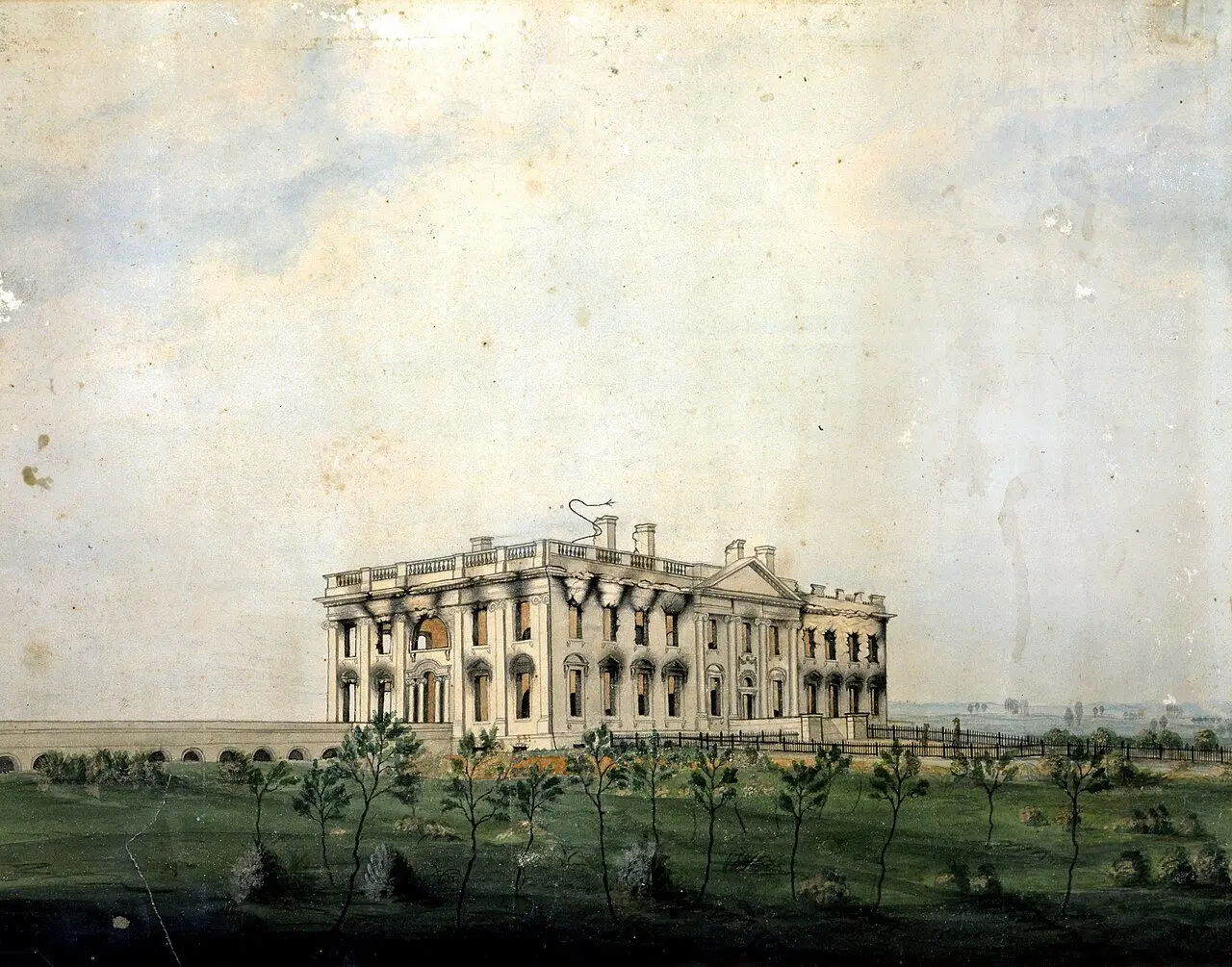
The war had not been going well for America. Britain and the United States had been fighting the War of 1812 for two years, and that August, after defeating the Americans at the Battle of Bladensburg in Maryland, a British force under Major General Robert Ross and Admiral George Cockburn marched on the American capital. Washington's defenses crumbled so fast the rout became known as the "Bladensburg Races." The city lay exposed.
On August 24, 1814, the British entered Washington. Their orders were to burn the public buildings — part retaliation, since American troops had torched the Canadian capital of York the year before. First the Capitol went up, its Library of Congress consumed along with thousands of books. Then the redcoats turned up Pennsylvania Avenue to the Executive Residence — the building we now call the White House. They found the dining table still set for the president's dinner. They sat down, ate the abandoned meal, drank the president's wine, and then set the house ablaze. The inferno consumed everything, glowing like a beacon in the humid August night.
Nature, it turned out, had the last word. On the afternoon of August 25, a savage storm — witnesses described a tornado tearing through the center of the city — struck the British occupation head-on. The twister ripped buildings from their foundations, uprooted trees, and tossed British cannons through the air, killing several soldiers with flying debris. Two hours of torrential rain then doused the remaining fires. Shaken, the British regrouped and marched out that evening; their occupation of the American capital had lasted barely 26 hours. A British admiral, watching the sky, reportedly exclaimed, "Great God, Madam! Is this the kind of storm to which you are accustomed in this infernal country?" A Washington lady answered: "No, Sir, this is a special interposition of Providence to drive our enemies from our city."
But one person had stayed behind long enough to make history. First Lady Dolley Madison refused to leave until the nation's treasures were safe. She insisted that a treasured full-length portrait of George Washington be saved — the frame was broken so the canvas could be taken down and carried off on a wagon with other valuables. According to the later account of Paul Jennings, the young White House staffer who was there that night, the actual work was done by staff acting on her orders. And Dolley always insisted she had risked everything to see it done: "I insist on waiting until the large picture of Gen. Washington is secured," she wrote to her sister before fleeing.
That portrait — now back in the White House — survived because of her. The Madisons lived out the rest of his presidency in the Octagon House, and it was not until 1817 that a new president, James Monroe, moved into the rebuilt mansion.
Not every public building burned: the Patent Office was spared because its superintendent, William Thornton — the architect of the Capitol itself — persuaded the British of the value of its contents. And the humiliation briefly threatened the capital's future: some in Congress proposed moving the seat of government to Philadelphia or New York. Madison refused. The capital would stay where it was, and the burned shell of the President's House would rise again.
The night Washington burned remains the only time a foreign power has captured and occupied the American capital — and a reminder that the nation's symbols sometimes survive because one person refused to leave them behind.
Photo: George Munger, public domain (via Wikimedia Commons).