
The Night Tanks Crushed the Prague Spring
On the night of August 20, 1968, Warsaw Pact troops invaded Czechoslovakia to crush the Prague Spring's liberal reforms.
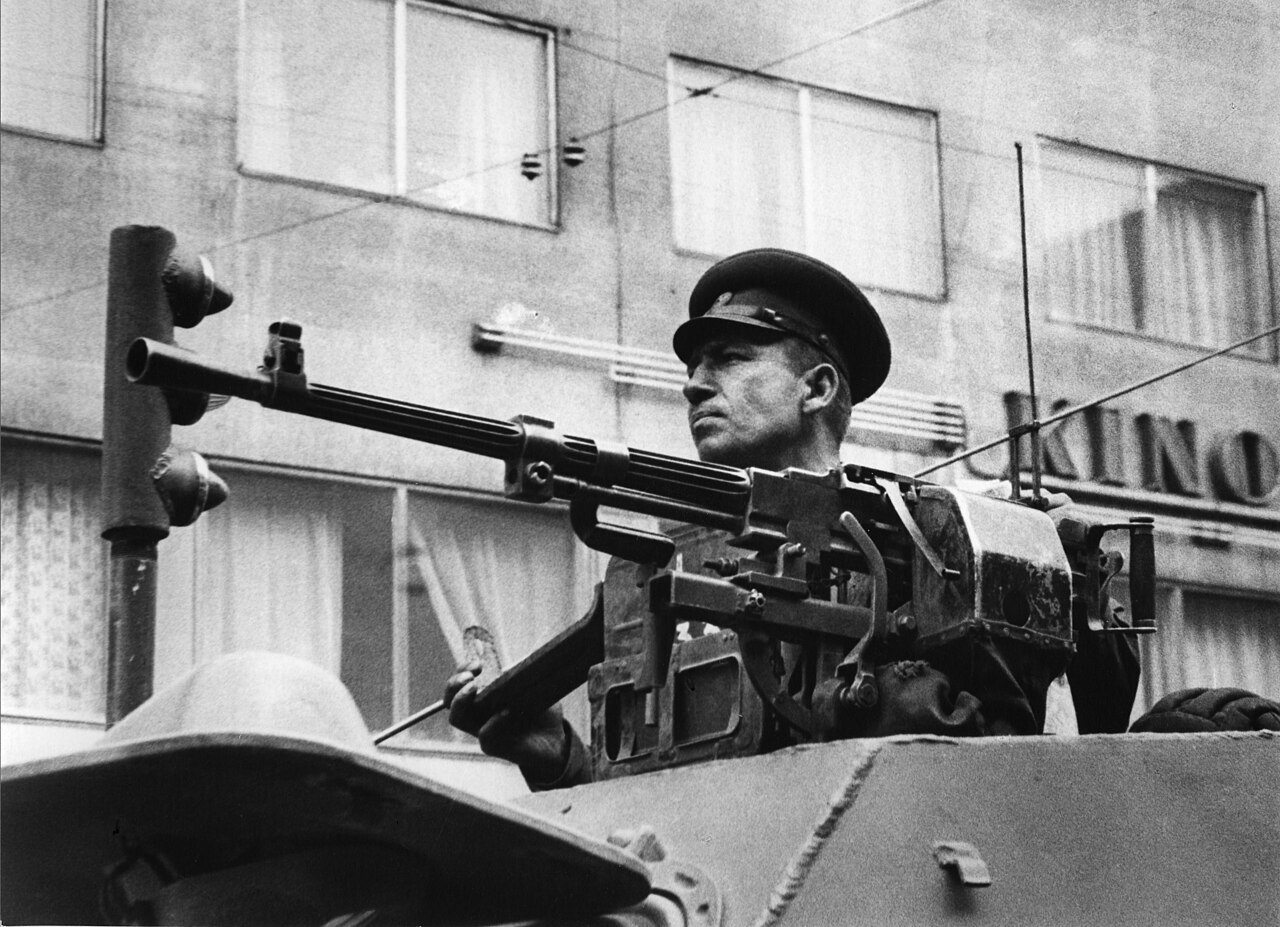
It began after midnight, in the dark. On the night of August 20, 1968, hundreds of thousands of Warsaw Pact troops and thousands of tanks rolled across the borders of Czechoslovakia — sent to crush a revolution that had used no weapons at all.
The Prague Spring had begun that January, when Alexander Dubček became the new Communist leader of Czechoslovakia. His program promised "socialism with a human face": an end to censorship, and new guarantees of freedom of speech, assembly, religion, and travel. After twenty years of Stalinist rule, Czechs and Slovaks blossomed — newspapers debated freely, citizens crowded into meetings, and Dubček became a beloved national figure.
Moscow watched with alarm. For Soviet leader Leonid Brezhnev, a free-thinking Czechoslovakia threatened the entire Eastern Bloc. Late on August 20, the invasion began under the code name Operation Danube: troops from the Soviet Union, Poland, Hungary, and Bulgaria poured in from all sides. Romania and Albania refused to take part. Notably, East German forces were held back at the last minute — Moscow feared the sight of German tanks would revive memories of the Nazi occupation.
The Czechoslovak army was confined to its barracks, and Dubček — who had urged his people not to resist — was arrested and flown to Moscow. But Czechoslovaks found other ways to fight: they ripped down road signs or painted them over so the invaders got lost, leaving only signs that pointed to Moscow. Students and citizens argued with the soldiers in the streets. More than 70 Czechoslovaks were killed in the occupation.
The airwaves fought back, too. When the Soviets seized Radio Prague's transmitters, the station's technicians rerouted broadcasts over telephone lines and kept the station on air almost without interruption, urging calm while reporting the occupation. Announcers broadcast even as troops fired on the station — one archived voice declared, "We want socialism, but humane socialism" — and underground studios stayed on the air for days before their locations were found. It was a new kind of resistance: a revolution defending itself with microphones.
In Moscow, Dubček was forced to sign the Moscow Protocol — agreeing to restore censorship, purge officials, and crush the opposition groups his spring had allowed. He was flown home on August 27, nominally still in charge but stripped of real power; by April 1969 he had been replaced by Husák.
Within months the reforms were reversed and a grim "normalization" set in under Dubček's successor, Gustáv Husák. The invasion also gave the world the Brezhnev Doctrine — the claim that socialist states had only "limited sovereignty" and the Soviet Union had the right to intervene in them by force.
The defeat's most searing image came months later. On January 16, 1969, a 20-year-old Charles University student named Jan Palach walked into Wenceslas Square, doused himself in petrol, and set himself alight — a protest not so much against the occupation itself as against the "demoralization" creeping over his countrymen, as his burns surgeon later explained. He died three days later, and his funeral turned into a mass protest. Another student, Jan Zajíc, followed him in February. Twenty years later, the "Palach Week" demonstrations of January 1989 helped ignite the Velvet Revolution that finally ended Communist rule.
The Prague Spring's defeat echoed for decades: it showed that reform from within the system would not be tolerated, and it hardened the Cold War freeze that would only crack, two decades later, with the fall of the Berlin Wall.
Photo: František Dostál, CC BY-SA 4.0 (via Wikimedia Commons).