Cannons and Chimes: The 1812 Overture's Debut
On August 20, 1882, Tchaikovsky's 1812 Overture premiered under a tent in Moscow — with real cannons, church bells, and a composer who called it loud and noisy.
Tchaikovsky hated it. The crowd loved it.
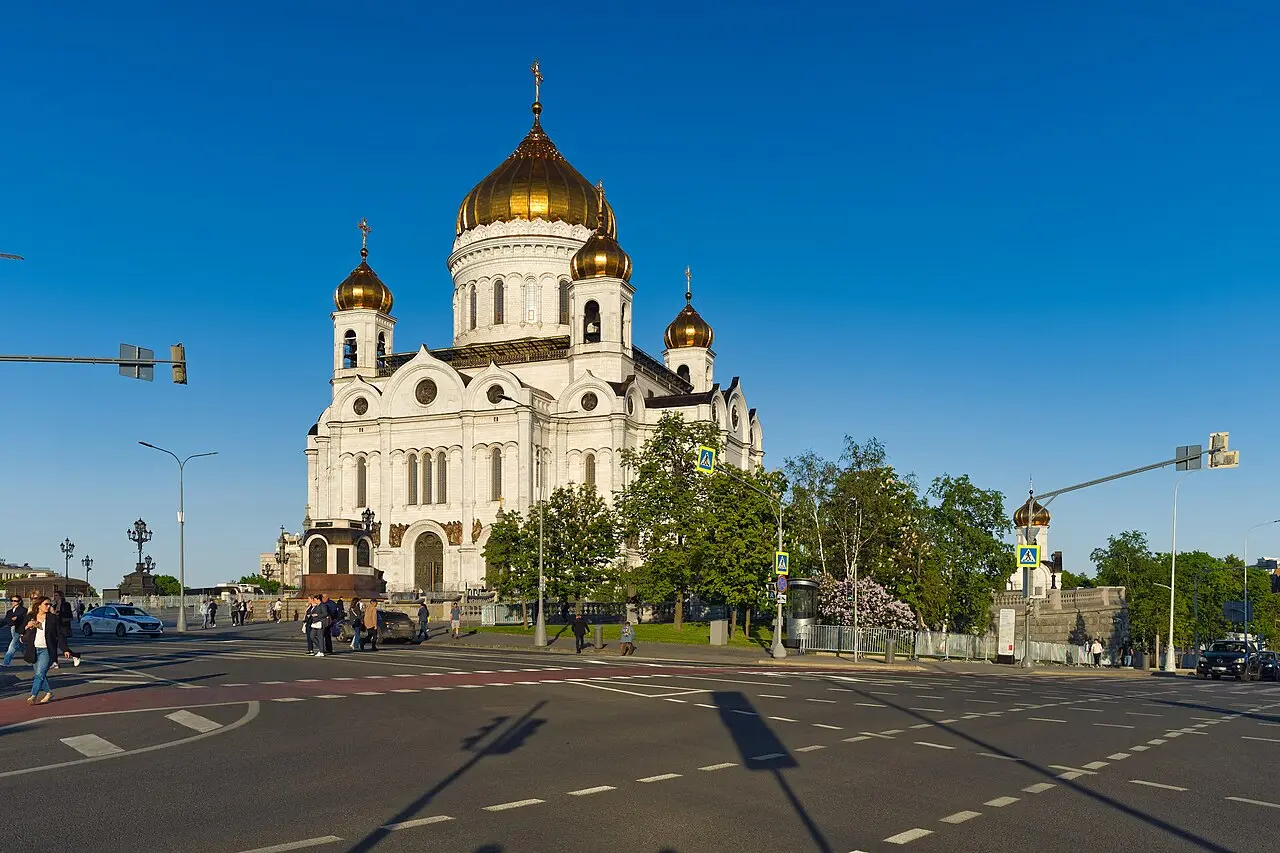
In the autumn of 1880, Pyotr Ilyich Tchaikovsky accepted a commission he had little enthusiasm for: a ceremonial overture marking the 70th anniversary of Russia's victory over Napoleon in 1812, to be performed at the 1882 Moscow Exhibition alongside the consecration of the Cathedral of Christ the Saviour — itself a monument to the 1812 defense. He dashed the piece off in about six weeks that October and November, and in his own words found it, predictably, "very loud and noisy."
On August 20, 1882 (August 8 by the Russian calendar then in use), the 1812 Overture — Opus 49, in E-flat major — received its first public performance in Moscow, conducted by Ippolit Al'tani under a tent near the still-unfinished cathedral. The fifteen-minute work tells the story of the French invasion in music: Russian folk themes giving way to the French anthem "La Marseillaise" as Napoleon's Grande Armée advances, then the two melodies colliding in a battle sequence that ends with thundering cannon fire, ringing chimes, and a brass fanfare proclaiming Russia's triumph.
It was an immediate success, and it never stopped succeeding. Audiences under that Moscow tent heard something no one had quite heard before: a battle scored for a full orchestra, with church bells and artillery as instruments. The overture joined Swan Lake, The Nutcracker, and The Sleeping Beauty among Tchaikovsky's most beloved works — which is remarkable, given that he considered it a noisy piece of commissioned hackwork written for a paycheck. Yet he came around: in 1893, the last year of his life, Tchaikovsky conducted the overture himself, and the response was raucous.
Then came the strangest twist of all. In 1974, Boston businessman David Mugar and Boston Pops conductor Arthur Fiedler decided to liven up the Pops' Fourth of July concert on the Charles River with the 1812 Overture — cannons, bells, sing-alongs, and fireworks finale included. The crowd went wild, the concert became an annual tradition, and suddenly a Russian victory anthem was America's Independence Day soundtrack. Countless cities have copied the formula since.
Tchaikovsky wrote a piece about 1812 to please a committee in 1880. He could not have imagined it would one day be blasted from barges on the Charles River every July 4th — proof that music, once loosed on the world, belongs to everyone.
Photo: Alexxx1979, CC BY-SA 4.0 (via Wikimedia Commons).