The Night Chicago Burned
On the night of October 8, 1871, a small barn fire turned into an inferno that killed about 300 people, left 100,000 homeless — and gave America its most famous cow.
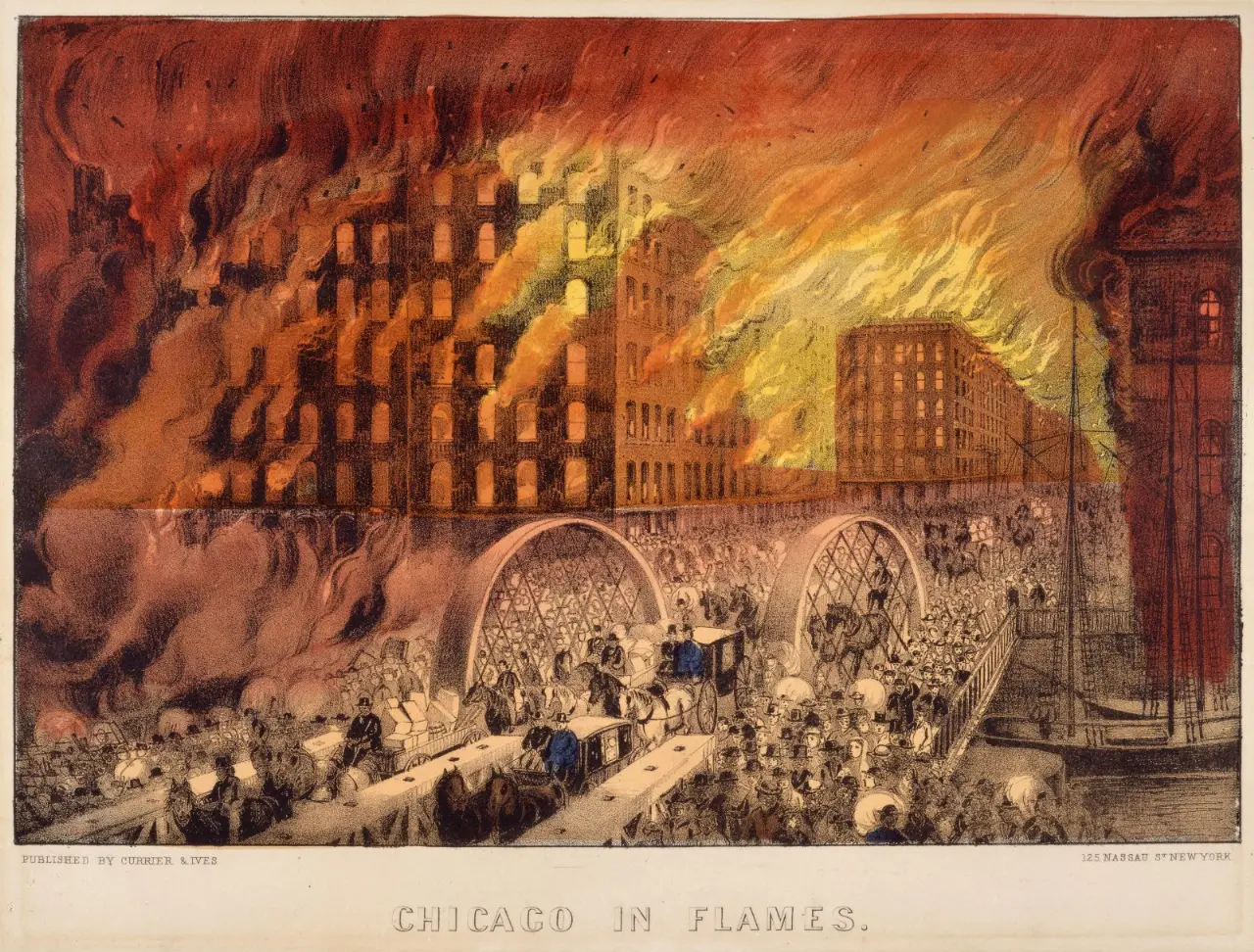
It started in a barn, on a Sunday night, in a city made of kindling.
Around 9 p.m. on October 8, 1871, flames took hold in or near a barn on the property of Patrick and Catherine O'Leary at 137 DeKoven Street, on Chicago's southwest side. What happened next would burn for nearly two days, kill an estimated 300 people, destroy more than 17,000 buildings, and leave 100,000 residents — nearly a third of the city — homeless.
Chicago was a disaster waiting for a spark. The summer had been brutally hot and dry. The city itself was built almost entirely of wood: wooden houses, wooden churches, wooden sidewalks, even wooden streets. The city averaged two fires a day in 1870, and there had been 20 fires in the week before the big one. All it took was wind — and on that October night, the wind came.
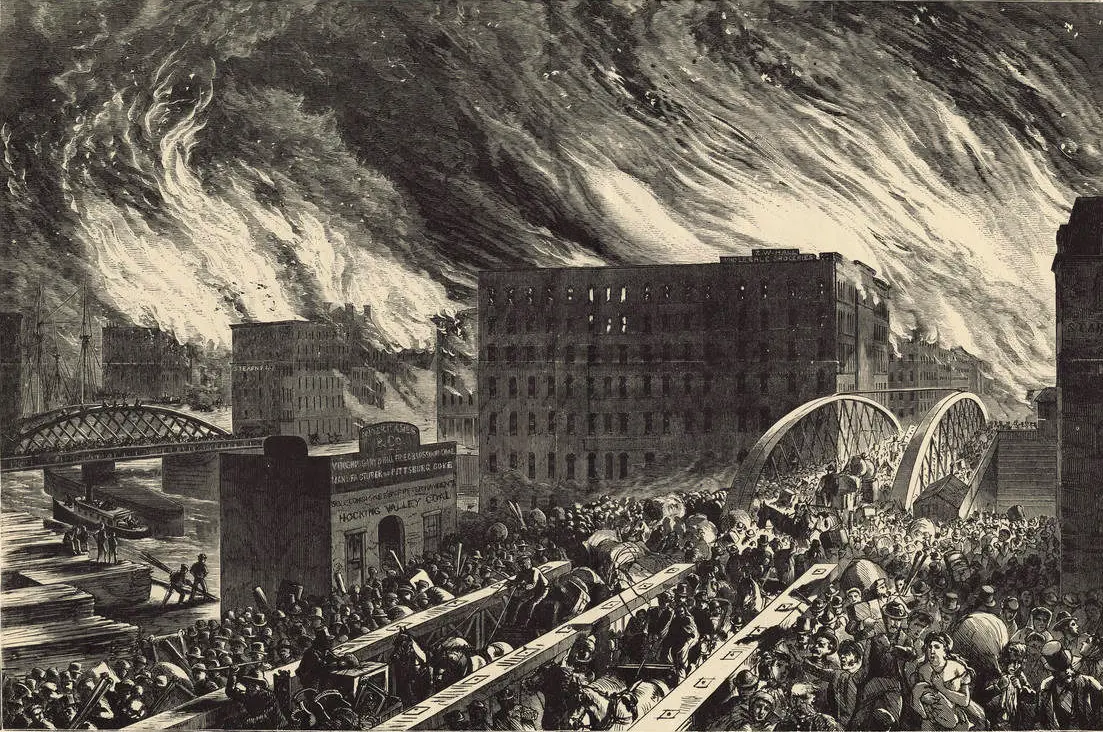
The fire moved north and east toward the city center with terrifying speed. It leapt the south branch of the Chicago River, then the river's main stem, carrying embers across open water as if it weren't there. Firefighters fought with everything they had until the city's waterworks itself caught fire and burned, cutting off the hydrants' water supply. From that point, there was little anyone could do but run.
John R. Chapin, an illustrator for Harper's Weekly, was asleep in his room at the Sheridan House when the commotion woke him. He went to the window and watched a wall of flame consume the city below while thousands fled across the bridges carrying whatever they could grab, the fire at their heels.
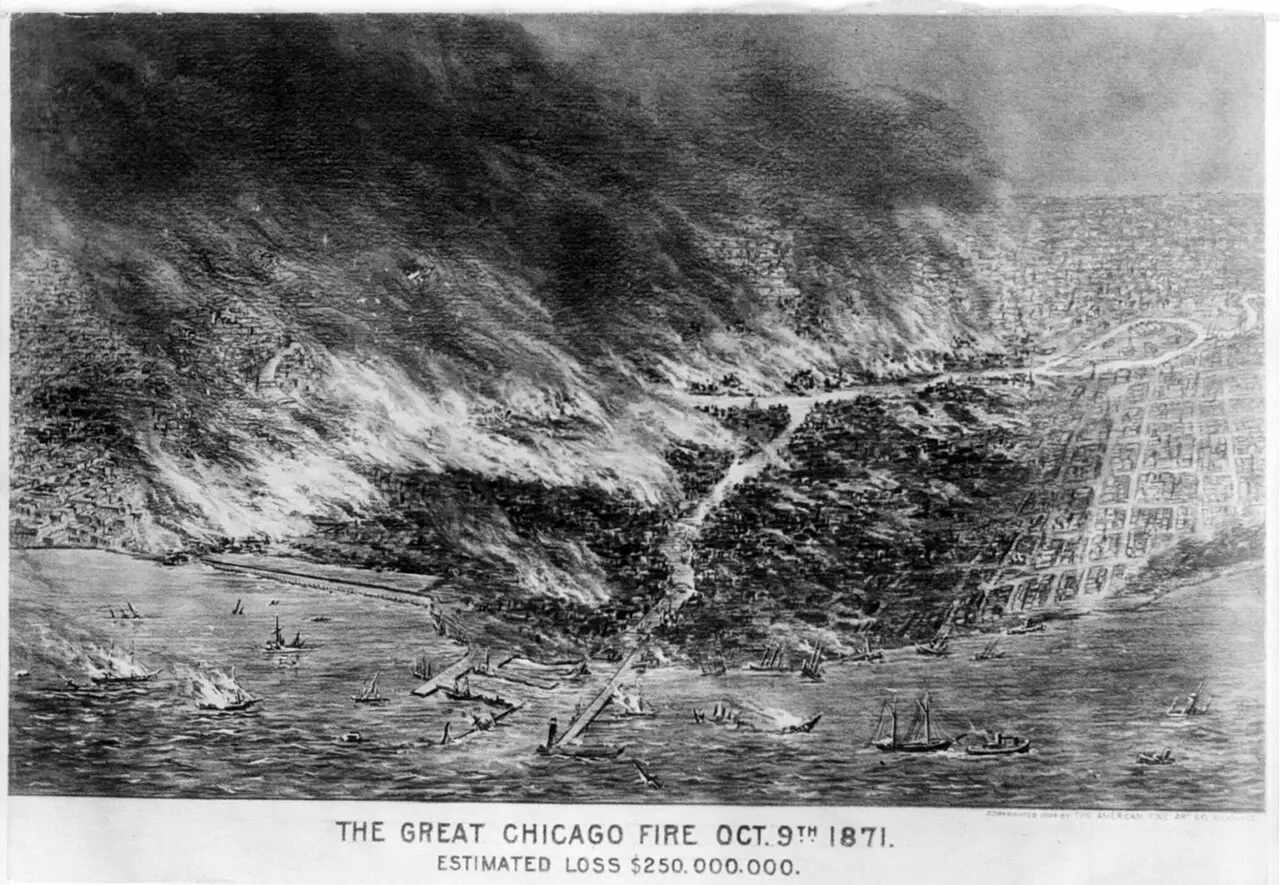
For roughly 30 hours the flames raged, consuming homes, hotels, department stores, newspapers, and government offices alike. Only rain — arriving on the night of October 9 into October 10 — finally helped bring the inferno under control. When it was over, a scar about four miles long and nearly a mile wide cut through the heart of Chicago. Damages were estimated at $200 million in 1871 dollars. Looting broke out in the ruins, and martial law was declared on October 11.
And then there was the cow. Legend holds that Catherine O'Leary was milking her cow when the animal kicked over a lantern, setting the barn ablaze. The story made irresistible copy, and newspapers ran with it — but Catherine O'Leary always denied it, the official investigation never determined the fire's true cause, and in 1997, more than a century later, the Chicago City Council formally exonerated Mrs. O'Leary and her cow.
In a cruel twist, Chicago wasn't even the deadliest fire that night. On the very same evening of October 8, a firestorm swept through Peshtigo, Wisconsin, killing more than 1,000 people — the deadliest wildfire in American history. It was almost entirely overshadowed by the Chicago blaze.
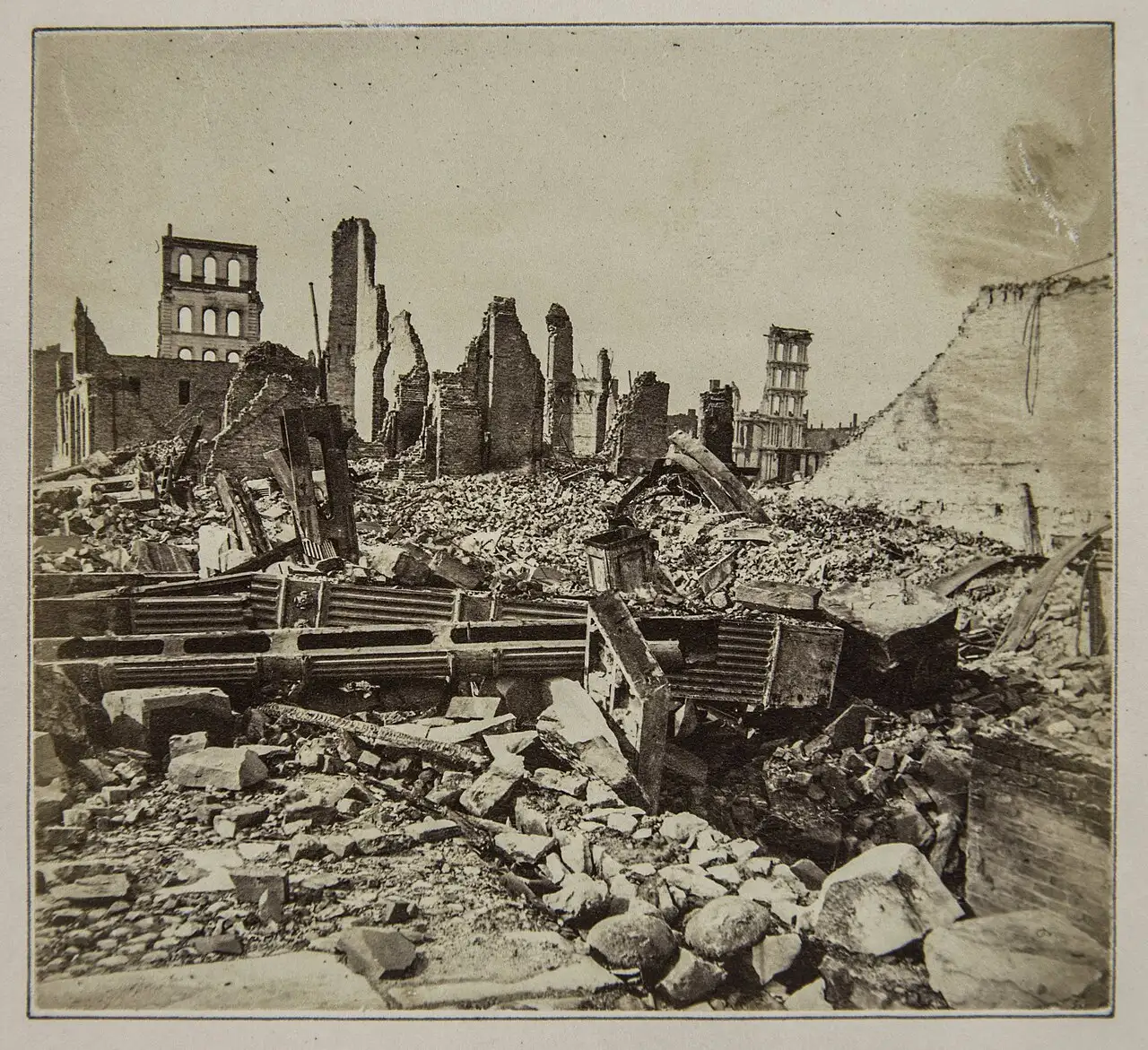
But Chicago's story didn't end in ashes. The city rebuilt with astonishing speed — this time under stricter building codes designed to stop another conflagration. Architects flocked to the blank slate, and within a generation Chicago gave the world its first skyscrapers. A city of 324,000 at the time of the fire held half a million people within nine years. A donation of books from the United Kingdom helped establish the Chicago Public Library.
The Great Chicago Fire endures not just as a disaster, but as a parable: about how fragile a city can be, how fast rumor becomes history, and how a community can rise from literal ashes to build something taller than what came before.
Photo: Currier & Ives lithograph of the fire, 1871, public domain (via Wikimedia Commons).
More images (all public domain, via Wikimedia Commons): the fire sweeping the city (John R. Chapin); "The Great Chicago Fire" print (The American Fine Art Co., 1871); the ruins of the Palmer House (C. R. Clark).