The Man Who Did Nothing — and Saved the World
On September 26, 1983, Soviet officer Stanislav Petrov trusted his judgment over a screaming computer and kept a false nuclear alarm from sparking a real war.
Just past midnight on September 26, 1983, the air inside the Soviet Union's secret missile-warning bunker at Serpukhov-15 was the usual mix of stale coffee and humming machinery. Lieutenant Colonel Stanislav Petrov was halfway through a night shift that was supposed to stay boring.
Then the screens stopped being boring. A siren shrieked, and a flashing red panel delivered the message no officer ever wanted to see: LAUNCH. The Soviet early-warning satellites reported that the United States had fired an intercontinental ballistic missile. Then the computer added four more behind it. Five nuclear missiles, the machine insisted, were streaking toward the Soviet Union.
The timing could hardly have been worse. Three weeks earlier, Soviet jets had shot down Korean Air Lines Flight 007, killing all 269 people aboard, and U.S.–Soviet relations were near their Cold War worst. Washington was talking about missile defense; Moscow genuinely feared a surprise American first strike. Petrov's standing orders were simple: report an attack warning up the chain of command, and the men above him — with only minutes to decide — would determine whether to launch everything back.
Petrov did something remarkable instead: he hesitated. A real American attack, he reasoned, would never begin with five lonely missiles; it would be hundreds, an all-out strike. The Oko satellite system was brand new, and in his judgment not yet trustworthy. The launch alert had screamed through thirty layers of computer verification far too fast to be believable. And crucially, the Soviet ground radars — the second set of eyes — saw nothing at all. Minutes ticked by. No corroboration came.
So instead of passing an attack warning upward, Petrov logged the event as a false alarm — a system malfunction. He would later admit he was never completely sure. "I had obviously never imagined that I would ever face that situation," he said. "It was the first and, as far as I know, also the last time that such a thing had happened." But gut and evidence pointed the same way, and he trusted both.
He was right. An investigation later showed the satellites had been fooled by a rare alignment of sunlight reflecting off high-altitude clouds above North Dakota — a trick of light mistaken for missile exhaust. Had the warning gone up the chain on that hair-trigger night, the result could have been a retaliatory strike, and a counterstrike in return. Some scholars note that further command layers stood above Petrov and Soviet doctrine demanded confirmation from several systems, so the path from his report to actual launches is debated — but at the tensest moment of the Cold War, his judgment kept the world off the edge.
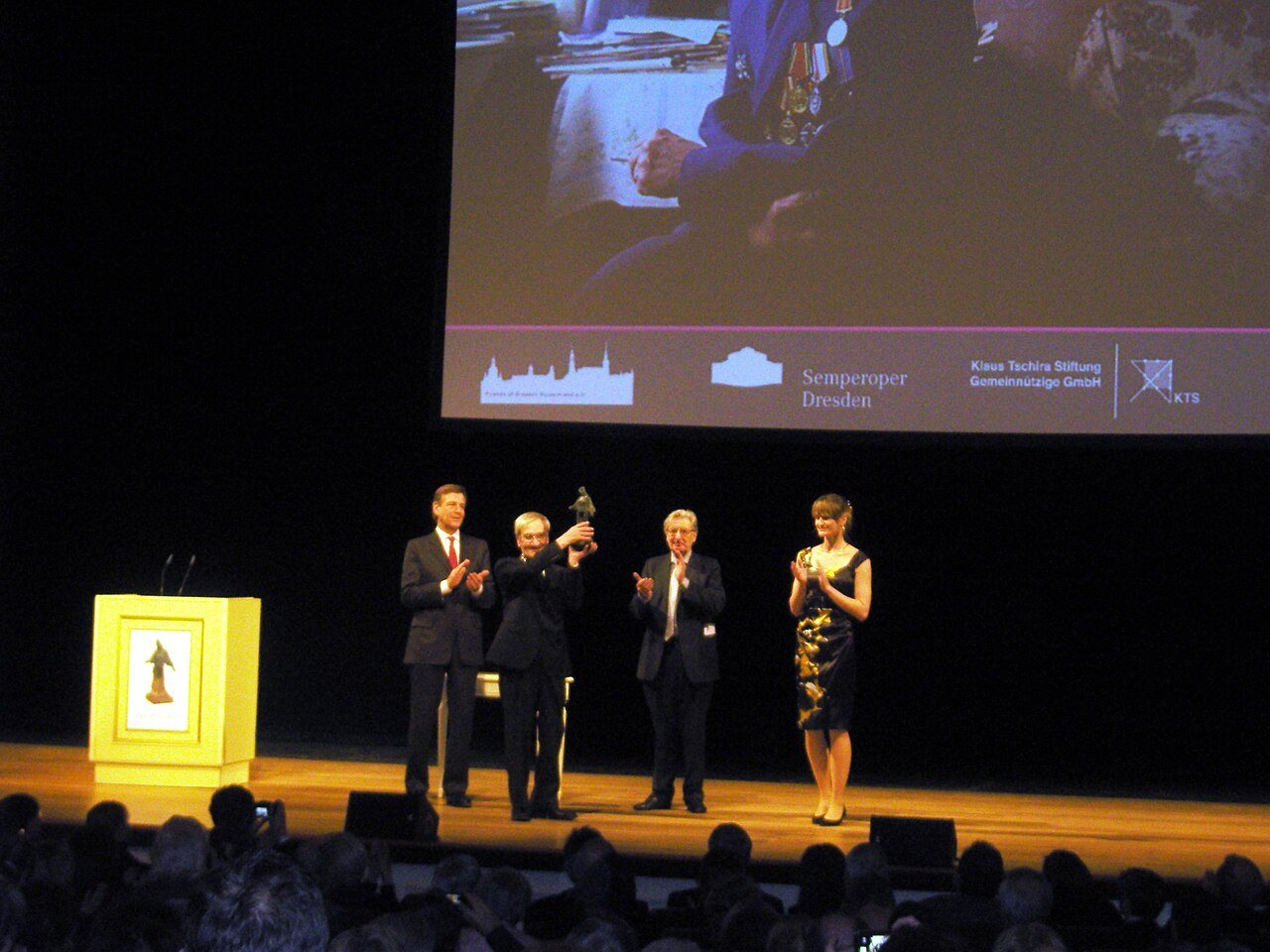
The incident stayed secret for fifteen years, surfacing in 1998 in the memoirs of his commander, Yuri Votintsev. Petrov was neither rewarded nor punished: honoring him would have meant punishing the engineers whose system failed, so the whole episode was quietly buried. He was reassigned to a less sensitive post, retired in 1984, and lived quietly until his death in 2017. The world eventually caught up — the Dresden Peace Prize in 2013, the German Media Award, and a posthumous Future of Life Award in 2018, collected by his daughter Elena.
Petrov refused to call himself a hero. "All that happened didn't matter to me — it was my job," he said. "I was simply doing my job, and I was the right person at the right time, that's all." But that is exactly what heroism looks like: one calm mind, in one dark room, choosing evidence over panic on the night it mattered most.
Photo: Z thomas, CC BY-SA 3.0 (via Wikimedia Commons).