The Little Red-and-White Box That Saved Video Games
On July 15, 1983, Nintendo released the Family Computer in Japan — the console that rescued the video game industry from its own collapse.
In the summer of 1983, the American video game business was dying. Arcades were emptying, home consoles were gathering dust, and retailers had decided that video games were a fad that had passed. Nobody in the United States was paying attention when, on July 15, 1983, a playing-card company in Kyoto released a toy that would save the entire industry.
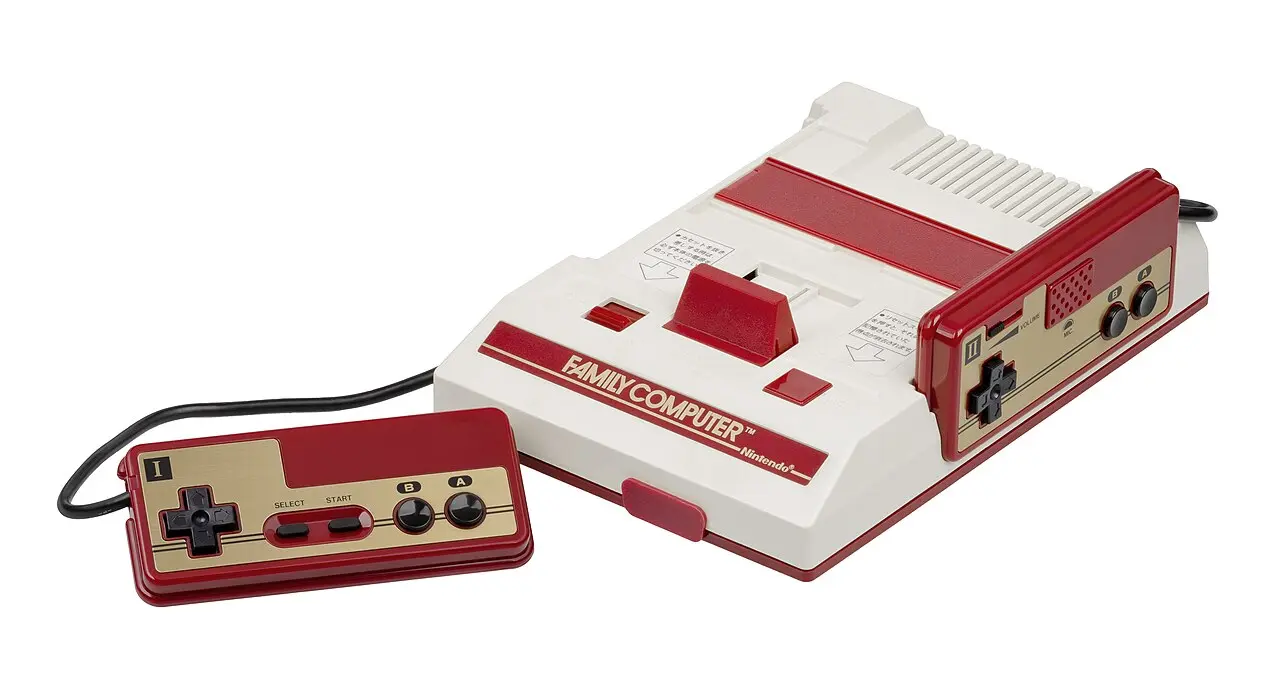
Nintendo had been in business for nearly a century, making playing cards, then toys, then arcade games like Donkey Kong. Company president Hiroshi Yamauchi wanted a home console cheap enough for any family. Designer Masayuki Uemura led the team that built it: an 8-bit machine with interchangeable cartridges, deliberately styled to look like a toy — bright red and white, with two gamepads docked visibly on its sides.
It launched in Japan for ¥14,800 (about $150) with three arcade ports: Donkey Kong, Donkey Kong Jr., and Popeye. The machine even hid a secret weapon in its second controller: a built-in microphone for voice-activated tricks in games. Its red, white, and gold colors were reportedly inspired by a billboard for a Japanese antenna company — and by company president Hiroshi Yamauchi's favorite scarf. It sold 500,000 units in its first two months — and then disaster struck. Many units had faulty graphics chips and froze during play. Nintendo did something almost unheard of: it voluntarily recalled every Famicom just before the holiday season, suspended production, and reissued the system with a fixed motherboard. It cost the company millions — and it bought something priceless: trust.
By the end of 1984, Nintendo had sold more than 2.5 million Famicoms, making it Japan's best-selling console. Meanwhile, across the Pacific, retailers wanted nothing to do with video games. So Nintendo disguised the machine for America: redesigned to look like a VCR, renamed the Nintendo Entertainment System, and test-launched it in New York in October 1985. Retailers were skeptical. By 1987, "Nintendo" had become a synonym for video games, the way "Atari" had been before the crash.
The Famicom went on to sell 19.35 million units in Japan and stayed in production there until September 2003 — twenty years. Its Western sibling sold more than 60 million worldwide.
Why it matters: Industries don't usually get second chances. The Famicom gave video games theirs, and every console under a Christmas tree since owes it a debt.
Photo: Evan-Amos, public domain via Wikimedia Commons. The photo shows the original Nintendo Family Computer (Famicom) console with its red-and-white design and controller.