The Human Fly Climbs the World Trade Center
On May 26, 1977, Queens toymaker George Willig scaled the 110-story South Tower of the World Trade Center with homemade clamps — and was fined $1.10.
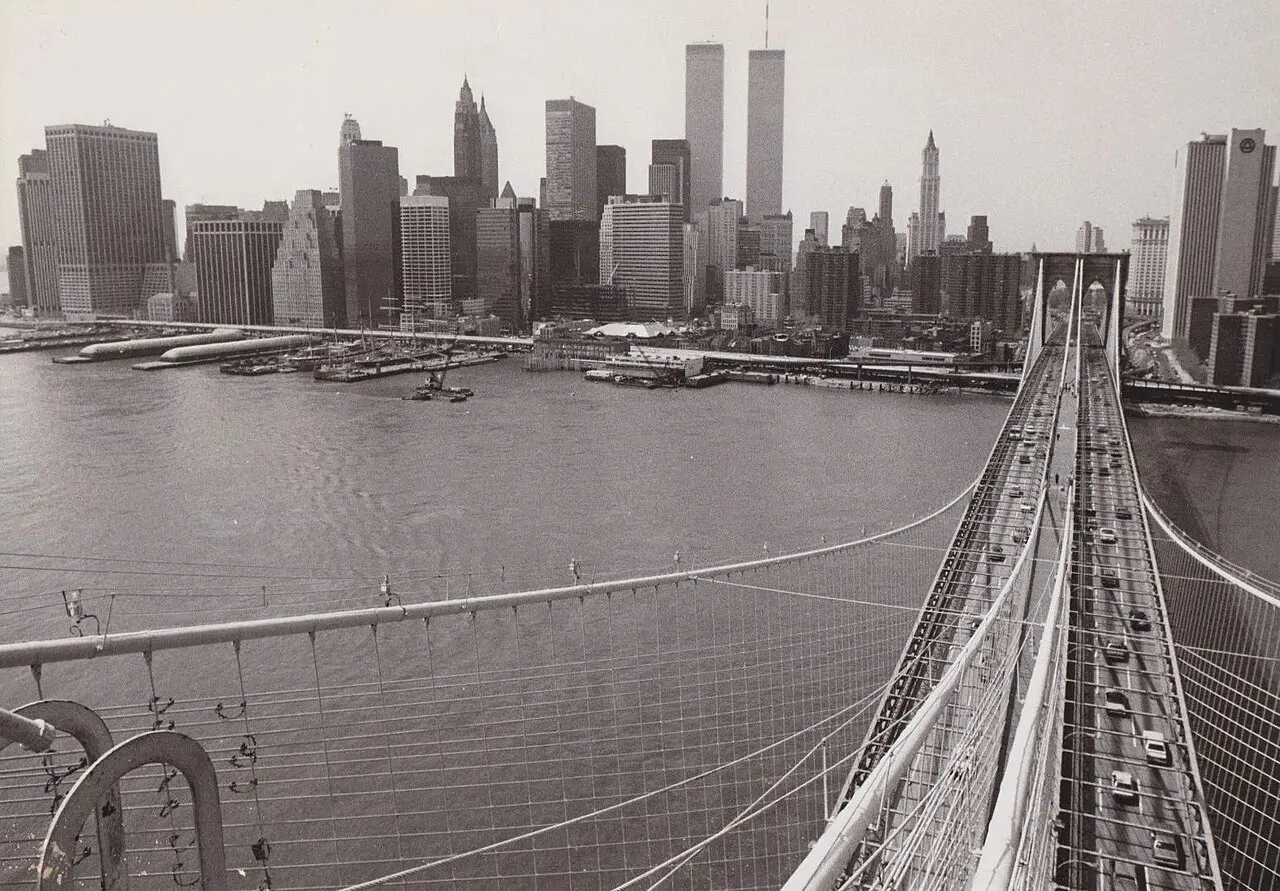
At 6:30 on a Thursday morning in May 1977, New Yorkers looking up at the South Tower of the World Trade Center saw something impossible: a man was climbing the outside of the building, 18 inches at a time.
The climber was George Willig, a 27-year-old toymaker from Queens with a passion for mountain climbing. For more than a year he had been planning his route up the 110-story, 1,350-foot tower — then the third-tallest building in the world, behind its twin and Chicago's Sears Tower. He visited the tower at night, measuring the window-washing tracks that ran up its face, and built himself a set of special clamps designed to fit into those tracks: they locked tight under his body weight and released when he lifted them.
He began his ascent at 6:30 a.m. on May 26, 1977. Word spread fast. By the time he was a third of the way up, thousands of people had gathered in the streets below, and news cameras were tracking his every move. Police lowered a window-washing basket carrying two officers — one of them a suicide expert — to intercept him. Willig simply swung out of reach, chatted with them, and convinced the officer he was in complete control. The officer even passed him a pen and paper, and Willig signed it: "Best wishes to my co-ascender."
Three and a half hours after he started, Willig crawled through a tiny hatch onto the observation deck at the top. Police pulled him through and arrested him — as the cheers of the crowd drifted up from 110 stories below. He signed his name and the date on a piece of metal on the deck, where it would remain for the rest of the tower's life.
New York loved him. The city had initially threatened a $250,000 fine for "the inconvenience," but Mayor Abraham Beame — reading the public mood perfectly — settled the case for $1.10: one penny for each of the 110 stories. The Daily News dubbed him the "Human Fly." Willig made the rounds of the talk shows — Johnny Carson, Merv Griffin, Good Morning America — and ABC hired him to do stunt work on The Six Million Dollar Man. Within a couple of years he had left the limelight behind for a construction career in California.
Willig said the idea had come to him while gazing at the towers from a distance, imagining "an inconsequential speck of a human being climbing one of those buildings." He was following in the footsteps of Philippe Petit, who had walked a high wire between the Twin Towers in 1974 — and he proved that New York, even in its grittiest decade, could still fall in love with a beautiful stunt.
Why it matters: the climb captured something essential about the city — ambition, audacity, and a grudging respect for anyone gutsy enough to try. For one May morning, a toymaker with homemade clamps turned the world's tallest office towers into a playground, and a bankrupt, bruised 1977 New York cheered him all the way up.
Photo: Waring Abbott (AP Newsfeatures), public domain (via Wikimedia Commons).