
Dracula Rises: Bram Stoker's Vampire Novel Is Published
On May 26, 1897, Bram Stoker's Dracula reached London bookshops — a modest gothic novel that went on to define vampires for the next 125 years.
Imagine browsing a London bookshop in the spring of 1897 and picking up a new novel bound in yellow cloth with red lettering. It cost six shillings. The reviews were polite, the sales were ordinary, and the author's mother was one of the few people certain it would be a hit. None of them knew they were holding one of the most influential books ever written.
Dracula was the work of Bram Stoker, an Irish author who spent his days as the business manager of London's famous Lyceum Theatre. He had spent seven years gathering folklore about vampires and building his story into a tale told entirely through letters, diary entries, and newspaper clippings — a clever device that made the impossible feel documented and real. His research ranged from Emily Gerard's 1885 essay "Transylvania Superstitions" to the legends of the 15th-century Wallachian ruler Vlad III, whose fearsome name gave the Count his own.
The novel had almost been called The Un-Dead, the title on Stoker's original typescript, before a last-minute change gave the world the name it would never forget. In the week before publication, Stoker even staged a reading of the story at the Lyceum, with actress Edith Craig playing Mina Harker for a small audience of theatre staff. The publishing agreement with Archibald Constable and Company was signed on May 25, 1897, and the book itself is dated to publication on or about May 26 — Stoker had written to statesman William Gladstone that the novel would be released on the 26th.
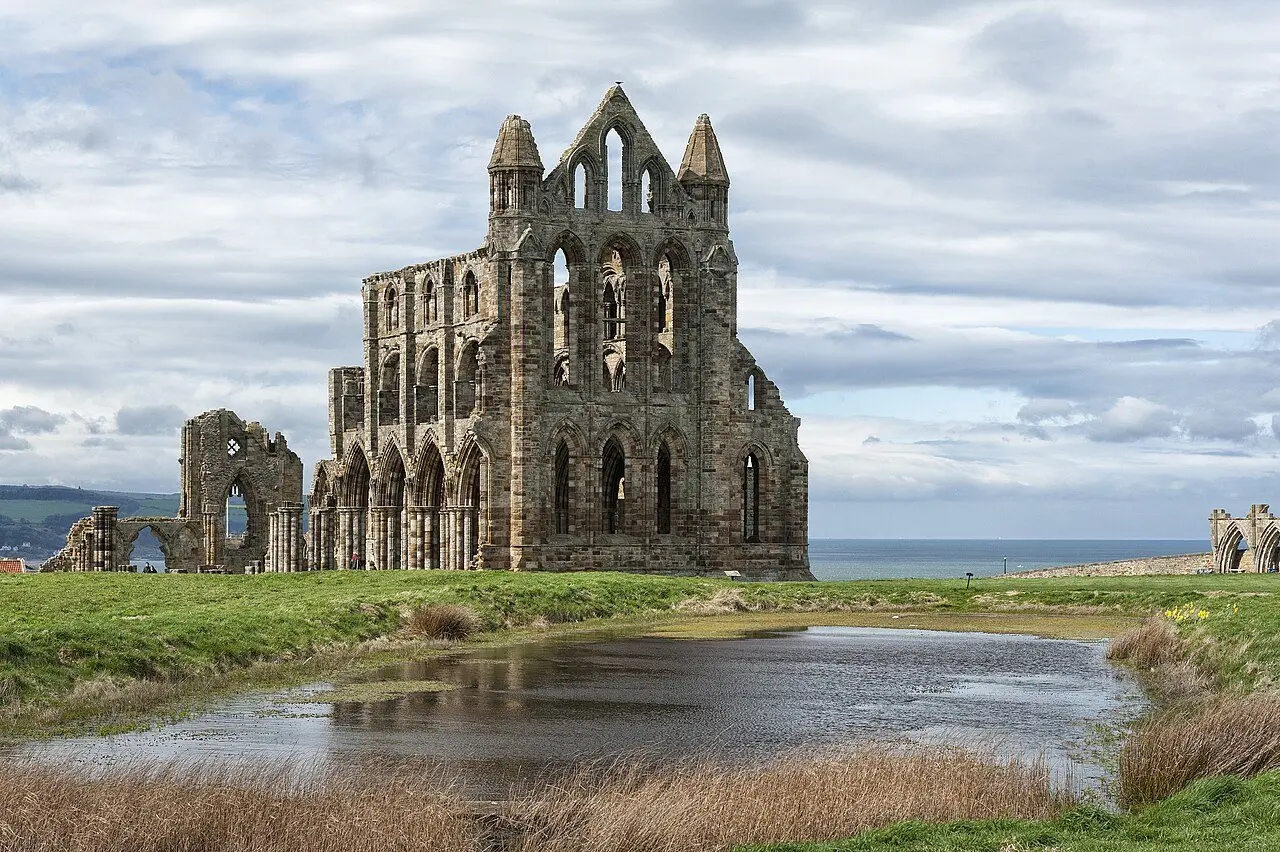
Some of the novel's eeriest scenes were inspired by Stoker's summer holidays in Whitby, a windswept town on England's northeast coast, where the Gothic ruins of Whitby Abbey looked over the sea — the perfect landing place for a vampire arriving by ship.
At first, Dracula was simply a good adventure story, one of many gothic tales thrilling Victorian readers. Stoker died in 1912 without seeing his creation become a legend. But the book never went out of print, and in the twentieth century, stage and screen versions — from the silent Nosferatu to the famous 1931 film starring Bela Lugosi — turned Count Dracula into a global icon.
Why it matters: Stoker didn't invent the vampire, but he wrote the template every vampire story has followed since — the cape, the castle, the fear of the unknown arriving on England's shores. Every fanged villain you've ever met owes him a debt.
Photo: Juliet220, CC BY-SA 3.0 (via Wikimedia Commons).